A decade of apartment living in European cities informed what we were looking for on return to Tāmaki Makaurau in late 2021: a compact and efficient space with character. Sifting through listings in a scorching property market left a tepid pool of matches. The unfolding of the Auckland Unitary Plan had catalysed an abundance of townhouses, but their compressed proportions and awkward cuts seemed designed to maximise developers’ profits rather than residents’ quality of life.
As we recalibrated our expectations to the constraints of our budget, glimmers of promise arose in late mid-century townhouse complexes tucked away in the city’s inner suburbs. Built with simple materials enhanced by the architect’s touch, they balanced economy and design through thoughtful planning. Freemans Bay is home to many of them, but we found ours off an unassuming thoroughfare in Sandringham.
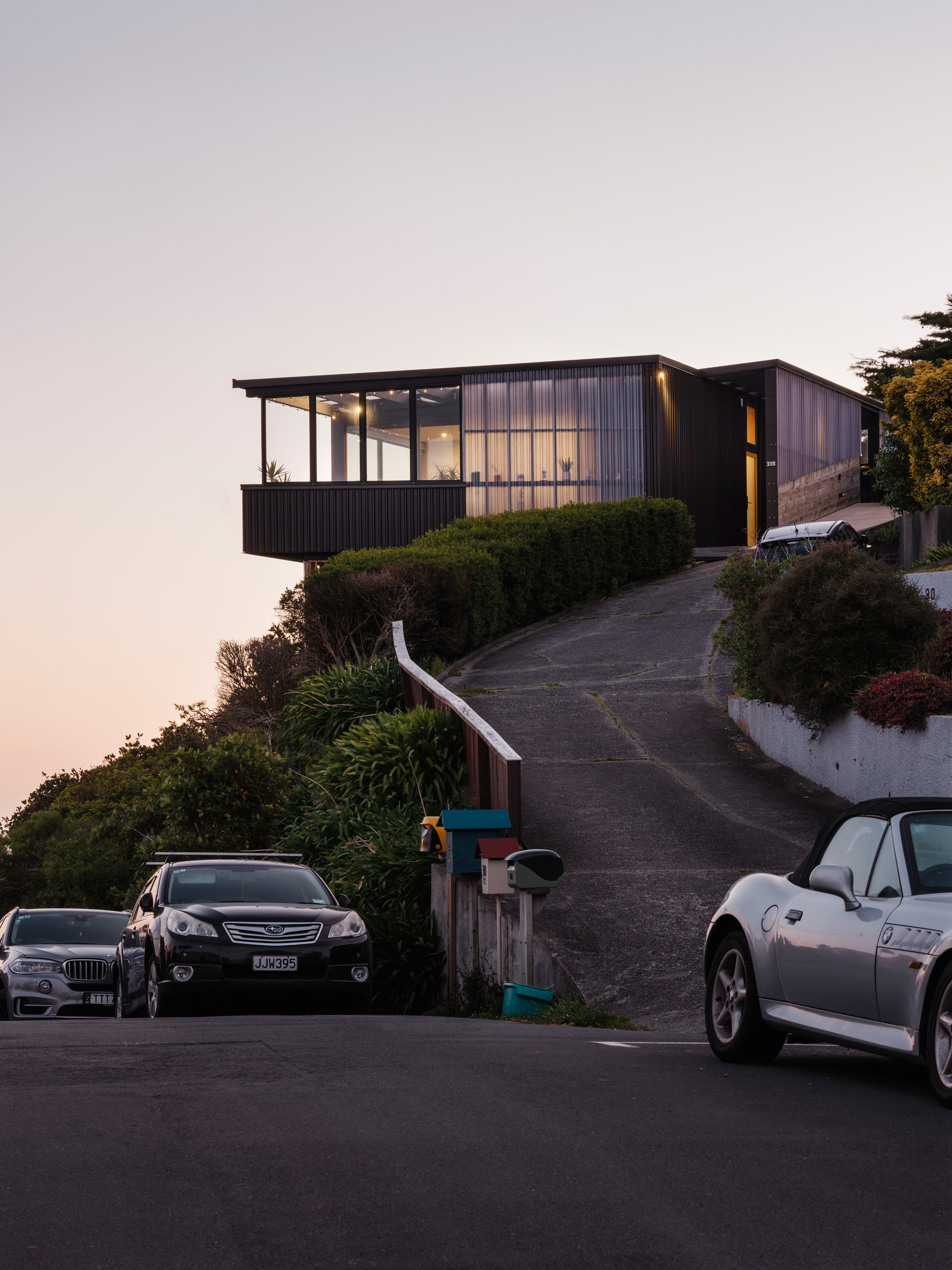
Set back from the street on a gentle rise, 12 terraced houses are arranged in a horseshoe around a central carport. Their 1975 mid-century design – uniform on the outside with two interior variations – bears the imprint of Marshall Cook and Terry Hitchcock, before they partnered with Pete Sargisson to form one of Aotearoa’s most influential practices, Cook, Hitchcock and Sargisson.
Oriented towards the common carport, each residence is framed by a pair of courtyard terraces, giving it privacy, breathing space and room for a garden. Mature trees and bushes invite a daily dawn chorus of tūī while shielding second-storey sightlines from suburban sprawl. When the breeze rustles a towering eucalyptus, tossing dappled light around the garden, our little patch of land feels like a spacious hideaway.




In summer, we can double our living space by sliding open a large timber-framed door, painted in an ultra-1970s palette of yellow and brown mandated for each townhouse’s exterior. Inside, the open-plan ground floor is designed for flow and flexibility, adapting to a variety of resident and lifestyle configurations. The complex’s diverse community of couples, retirees, and young families is testament to its success.
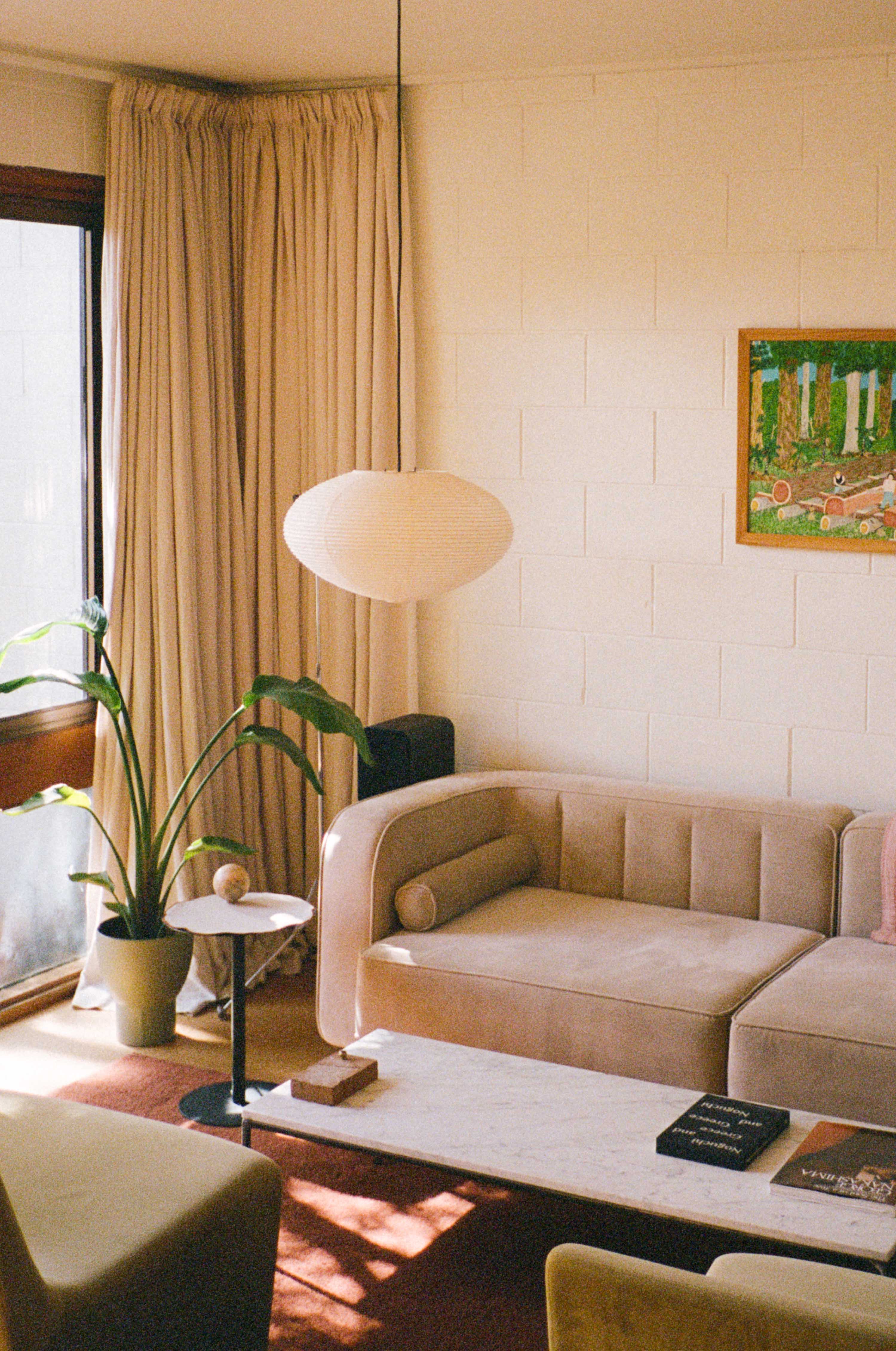
When we began peeling back the layers of a dull 1990s renovation, our goal was to restore the original spirit of the house. The cheap linoleum-clad kitchen and scratchy carpet we removed couldn’t conceal its solid foundations: a generous configuration that gave way to an atmosphere of convenience and calm.
The timber staircase, doorways and window frames soften the starkness of the concrete-block walls. Pleasingly proportioned windows and a skylight above the stairs slant daylight throughout the living spaces. Raking ceilings make the three upstairs rooms feel loftier than their modest floorplan. A surfeit of built-in storage keeps spaces uncluttered. In our bedroom, French doors open to a small balcony, ideal for drying laundry or reading in the sun.
The gestures are simple: largely utilitarian, tweaked with a few flourishes. Their collective effect makes us feel uplifted and cared for. Half a century since our home was built, in a vastly different urban context, the relevance of its design principles has only increased. In the current wave of densification, Cook and Hitchcock’s townhouses reaffirm the value architects bring to housing conversations in Aotearoa.


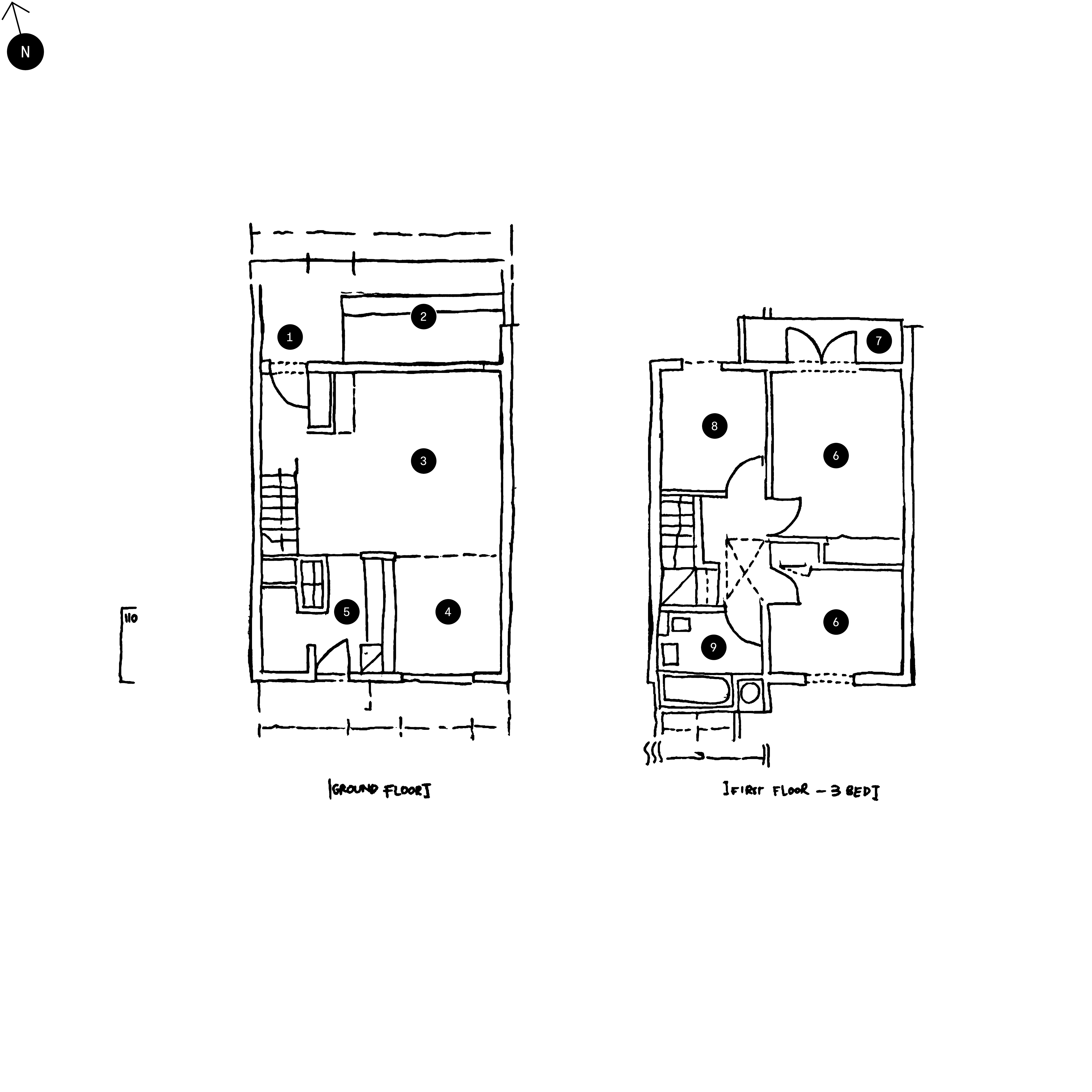
1. Entry
2. Courtyard
3. Living
4. Dining
5. Kitchen
6. Bedroom
7. Balcony
8. Office
9. Bathroom