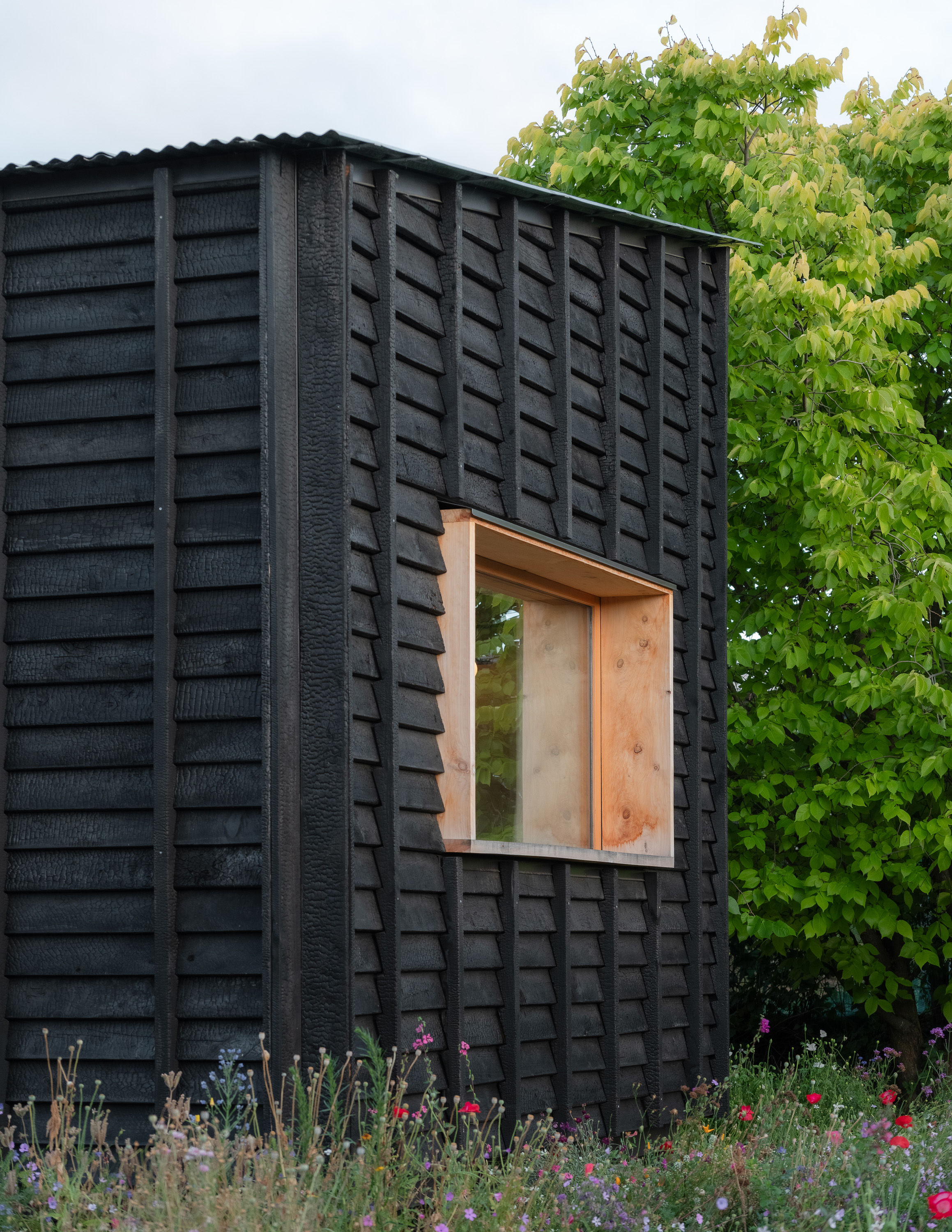
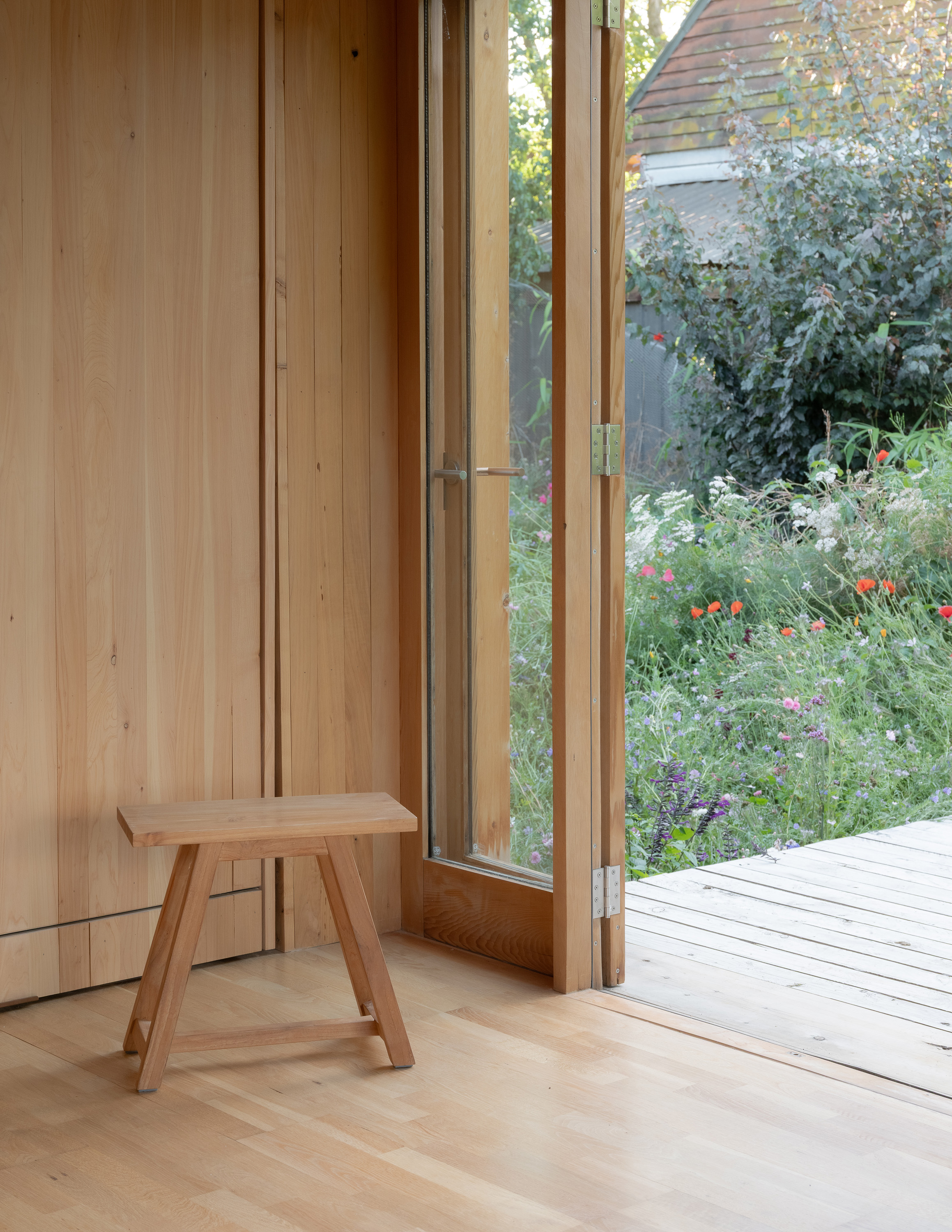
This charred Wānaka cabin is one of the more inventive responses to the increasingly complex first-home equation – and it starts with a plot twist. Its young owners, US-registered architect Charlotte Muschamp and her partner, StrawSIPS founder Stefan Warnaar, don’t actually own the land it sits on.
“Buying land in Wānaka just wasn’t an option, so we’re leasing the backyard of this holiday home from some very generous owners,” says Muschamp, who designed the cabin with an exit strategy in mind. “It treads very lightly on the site, and we built it on piles, so it can be relocated if – or when – we can afford our own site.”
When Muschamp says “we built it”, she means literally. The architect designed the 30-square-metre home, and the industrious couple toiled away on its construction after work and on weekends. “We wanted to make it as natural as possible, using repurposed materials, StrawSIPS, and an old door and window we had lying around,” she says. “We live outdoors, so we adopted the mindset that we just needed somewhere to sleep, wash, and cook.” To work out exactly what they needed from the tiny home, the couple laid out all their possessions on the ground and designed the house around them. “It was about working out how to live as big as possible in the smallest way. It’s a house built precisely for us – like a custom-tailored jacket.”
Being first-time builders, they kept the form simple and dialled back the principles of geometry, then channelled their creativity everywhere else. Curious and brave, the couple tested ideas as they went. Some – like the pull-out wardrobe that banks flush into the wall – were triumphs. Others went belly up. “The bed was originally on a hydraulic joist that lifted it to the ceiling, but that totally broke,” Muschamp laughs. “So we have a Murphy bed now.” The home champions this kind of kinetic and built-in furniture, transforming throughout the day, in step with the couple’s routine.
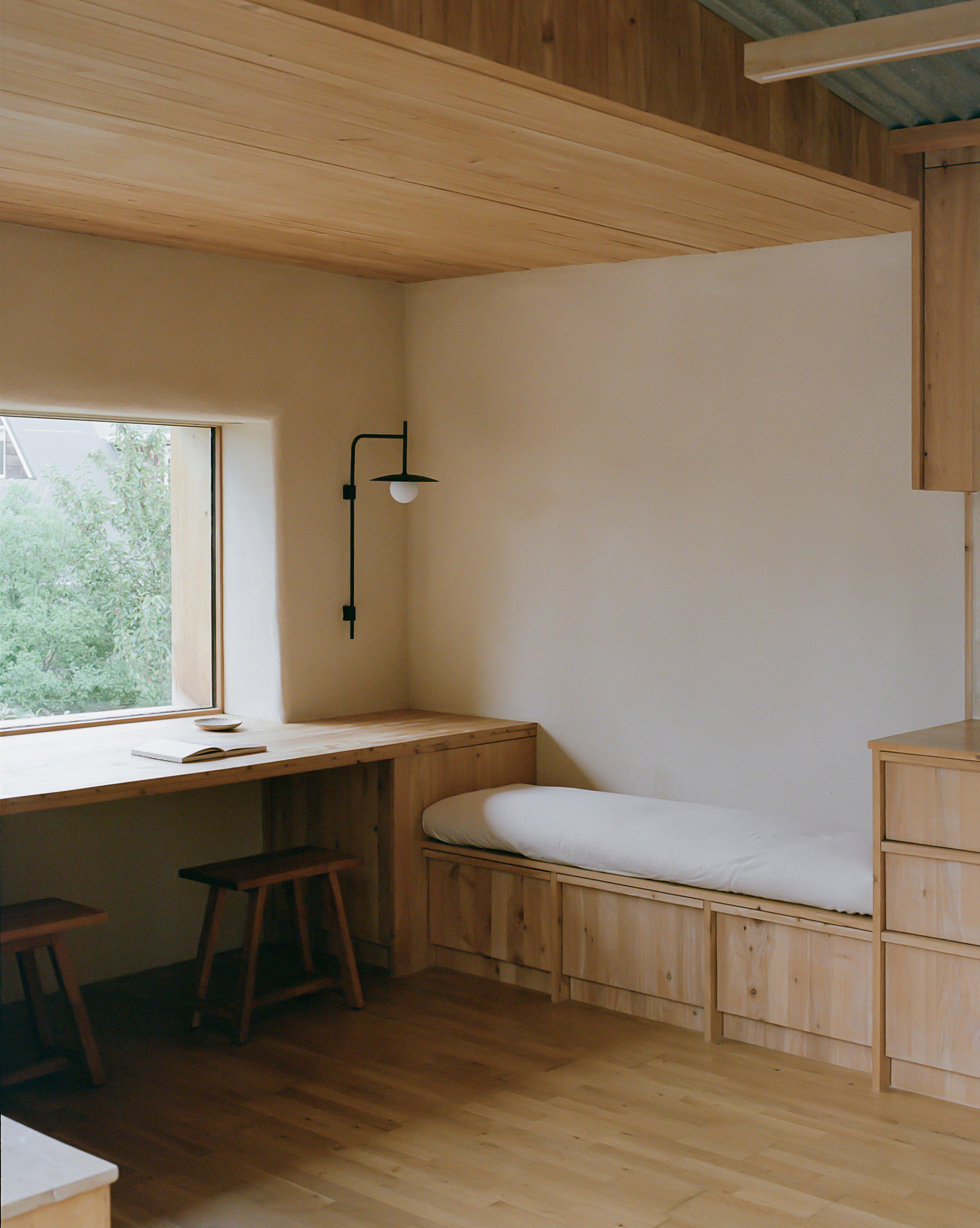
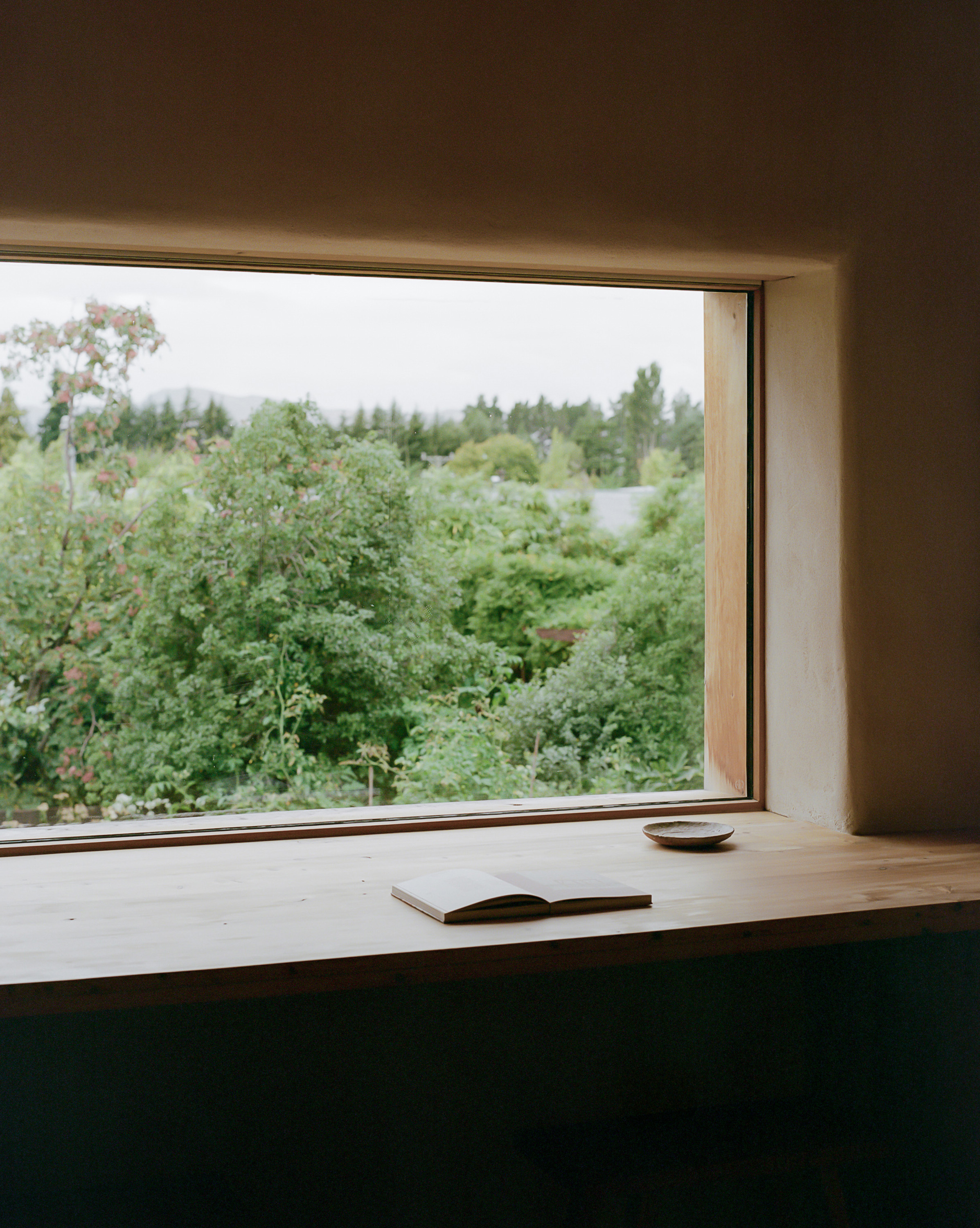
It’s calm and restrained inside, with notes of wabi-sabi, a burst of green tadelakt (traditional Moroccan waterproof plaster) in the bathroom, and that lovely, puffy, plaster finish. Made from Central Otago clay, the textured material forms an airtight seal over thick panels by StrawSIPS. These modular walls were made down the road at Warnaar’s factory in Alexandra from sustainable timber and compressed local straw, then trucked to site and installed in just two days. Carbon negative and thermally formidable, the house doesn’t need a heating system. Solar gains, a compact footprint and simple body heat do the job. If, however, the temperature dips or the inversion layer rolls in, Muschamp has an innovative fix: “I’ll bake some cookies or a loaf of bread, and the oven will heat the home for the rest of the day.”
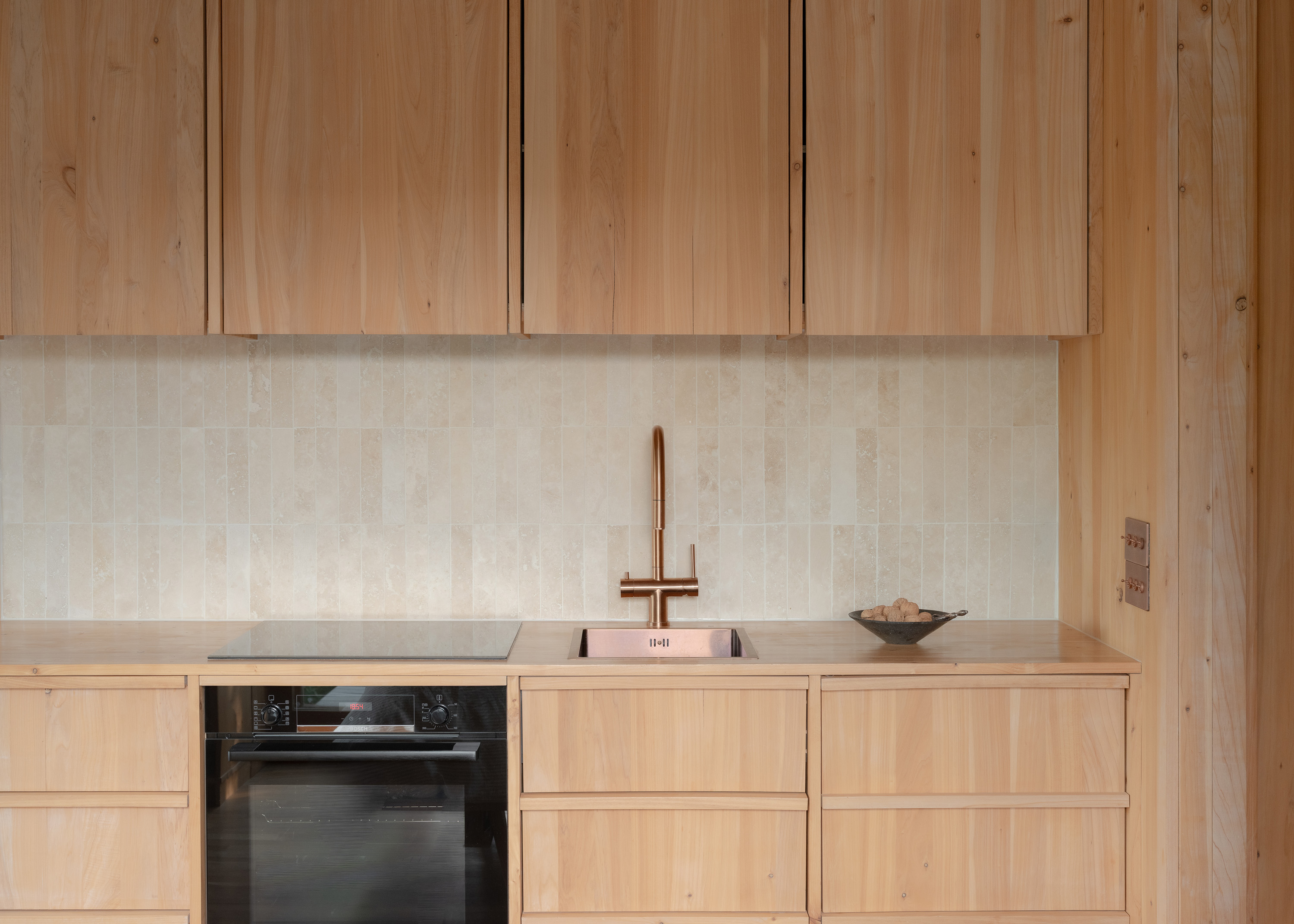
The kitchen is made from macrocarpa trees Muschamp used to climb as a child on her parents’ Southland sheep farm. Felled 30 years ago, the timber had sat accumulating bird and rat droppings in a shed ever since. “Building the kitchen was tough,” she admits. “Working with reclaimed timber, we had to plane it, square it, straighten it, laminate it – all by hand, literally from scraps.” Taking in the sophisticated, flush finish, it’s incredible to think that the couple were learning as they went. “I’d never built anything before. It was a really honest way to put yourself in the builder’s shoes and has definitely made me a better designer.”
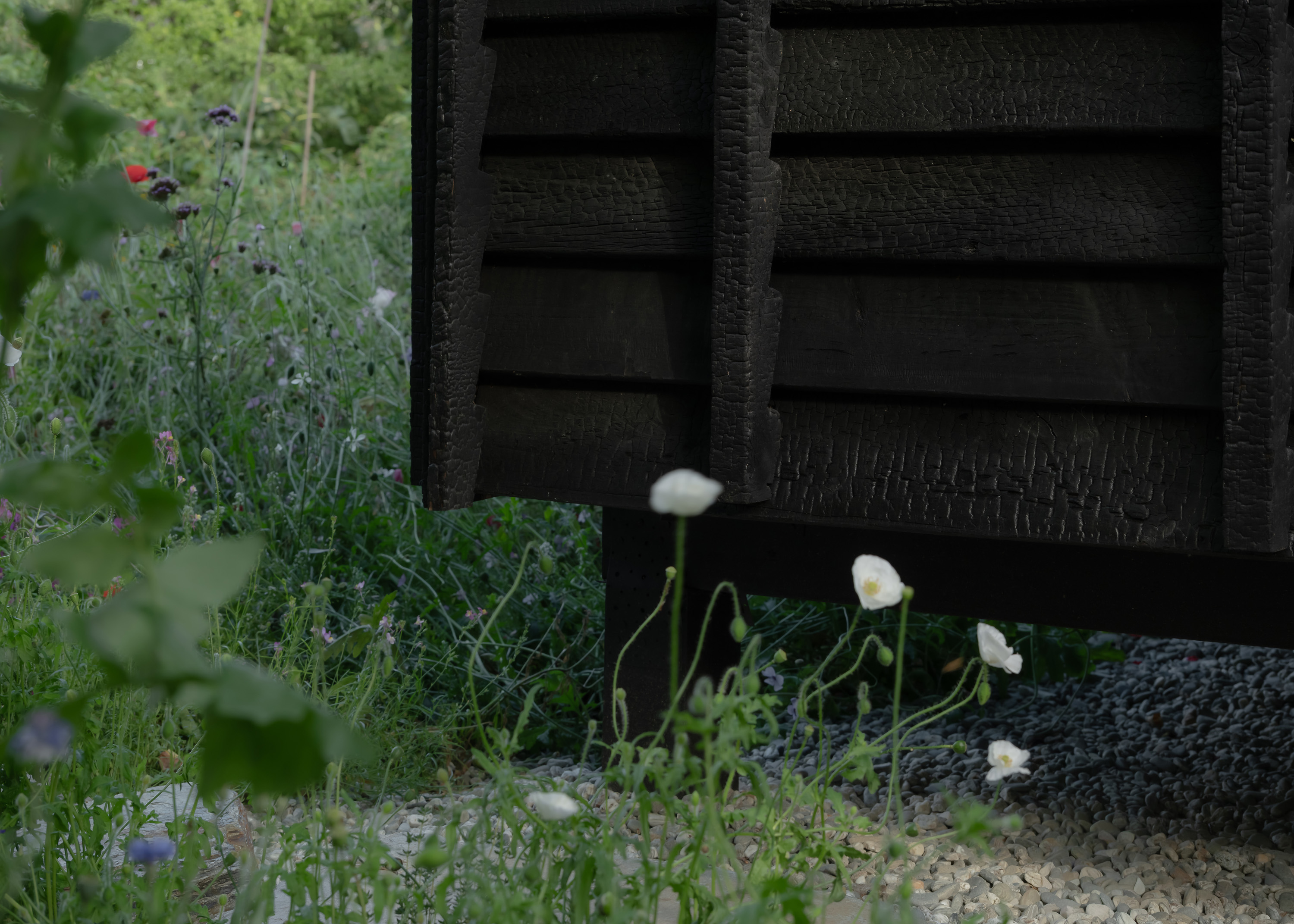
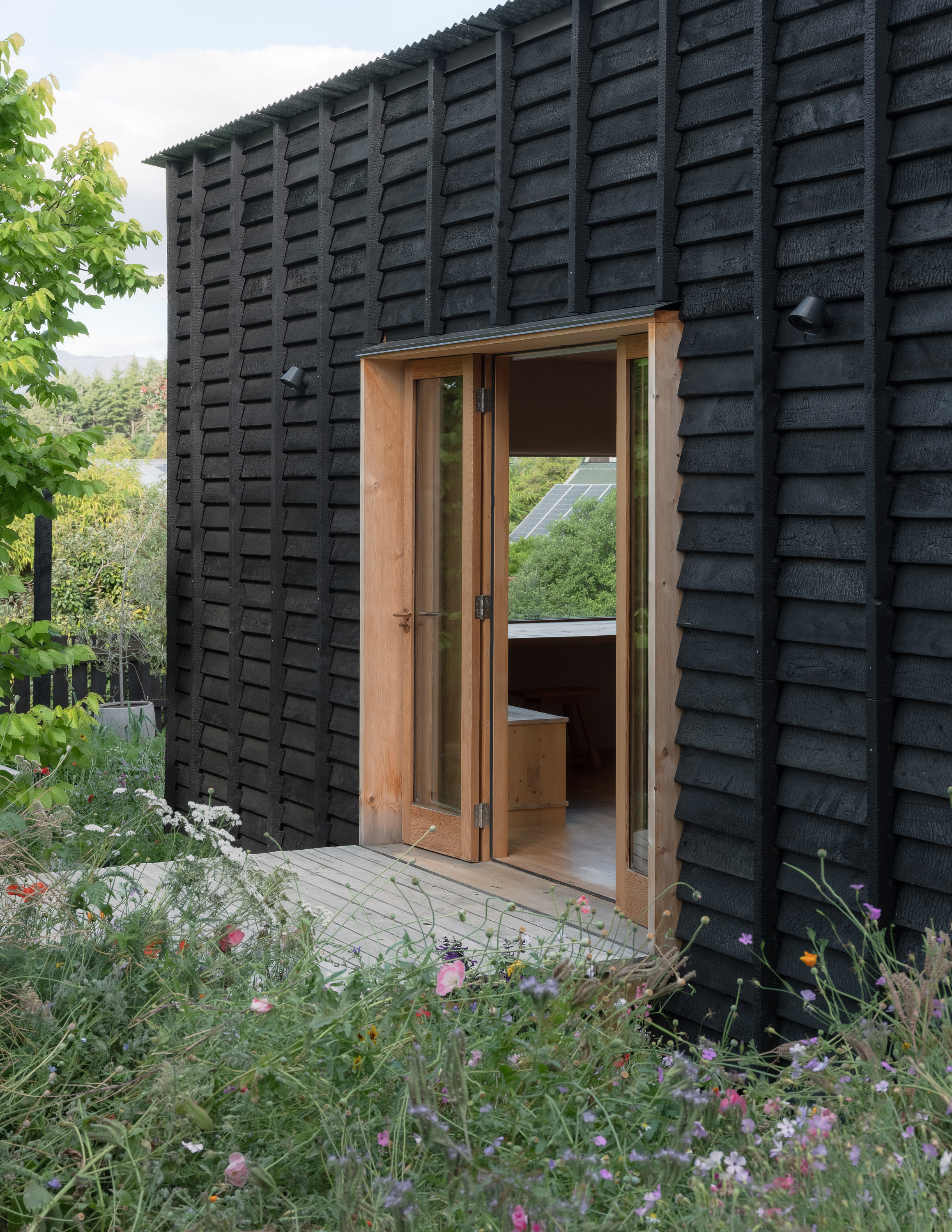
The cladding is macrocarpa from the farm too, charred using the traditional Japanese yakisugi technique (or shou sugi ban) to blur the imperfections of the old wood. Groups of three planks were bound together into a chimney shape and lit from the base, the fire evenly blackening each face and creating a handsome contrast against the pale windows and doors. The roof, meanwhile, was salvaged from an old cowshed. The secondhand steel sits on top, with fresh metal – acid-washed to appear aged – on the ceiling, and insulation sandwiched between. Altogether, it creates the illusion of a simple tin roof. “But without having the old cowshed roof on the inside,” says Muschamp. “I’m all for recycling, but that was a step too far.”
Sustainability underpins the project. Formed almost entirely from reclaimed materials, there’s no concrete or steel; grey water irrigates the garden, while an incinerating toilet produces a handful of ash every few weeks to toss back onto the soil. The once-scrappy backyard was transformed with a generous scattering of wildflowers and vegetable plots, and then left to evolve informally. If the couple ever do pick up and leave, they’ll do so knowing they left the land in better shape than they found it.
The graft and ingenuity Muschamp and Warnaar poured into this place are remarkable. It’s an unconventional route to a first home, but one they finished in six months for less than $100,000, all while holding down full-time jobs. Self-funding the build, they weathered the odd stumble between paycheques, surviving off the garden’s potatoes and tomatoes for a good stretch, but the result is a beautifully resolved, deeply personal wee home. “Oh, yeah, it got grim for a while there,” laughs Muschamp. “But it was well worth it.”
Related Stories: