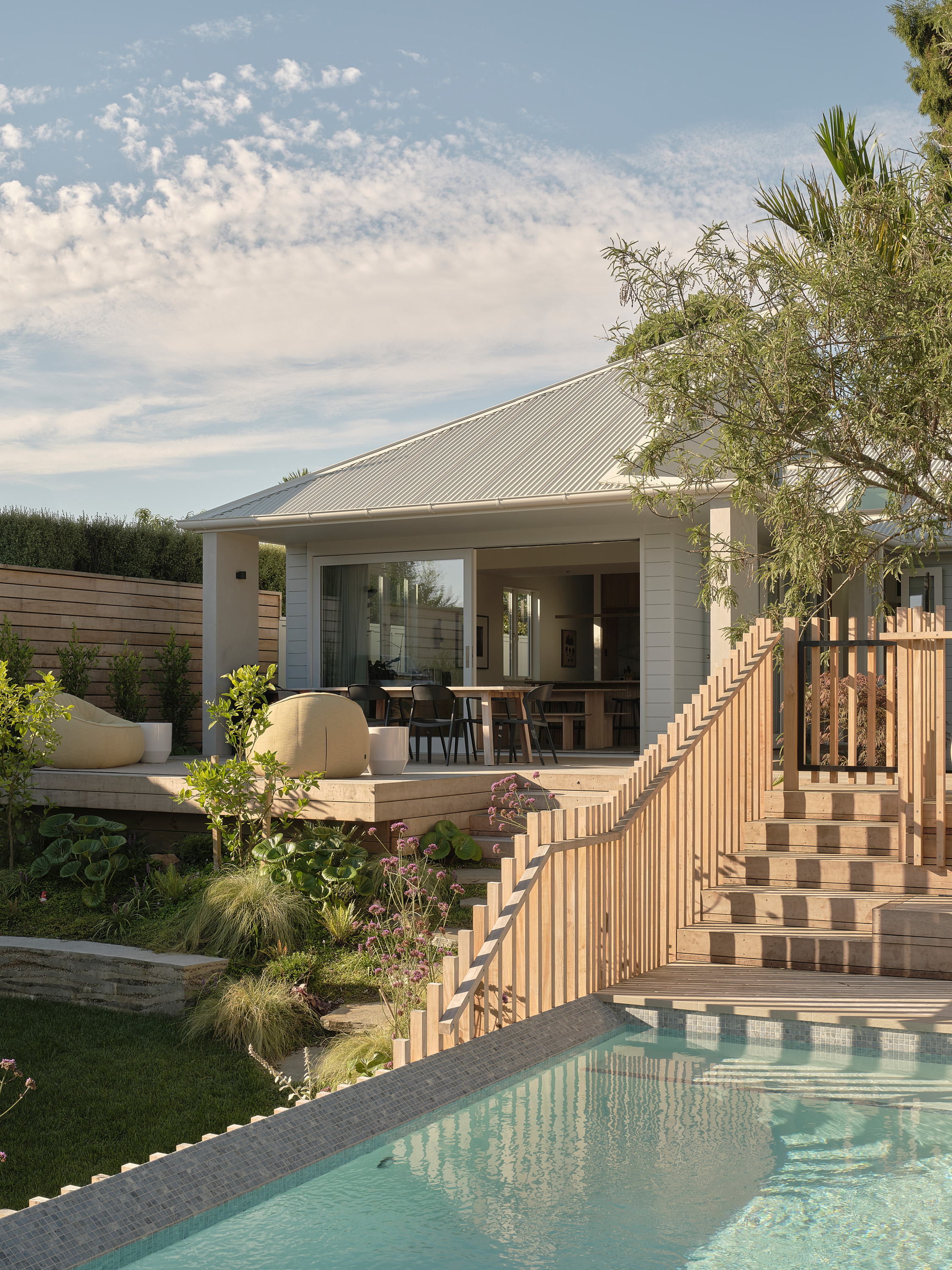
Most renovations are about additions. This one is more about subtraction. It’s a familiar story: a century-old, south-facing pile in a character suburb in Tāmaki Makaurau Auckland that needed better access to the outdoors, and which unfolded through a series of meandering rooms to a kitchen with a low ceiling and a lack of natural light. And yet, where most people end up adding much-needed square metres, here, the footprint has barely changed. “We’ve added less than two metres to the back of the house,” says Pac Studio principal Eric Abba. “But the biggest difference was in the spaces. Taking advantage of the height introduces so much more volume and light.”
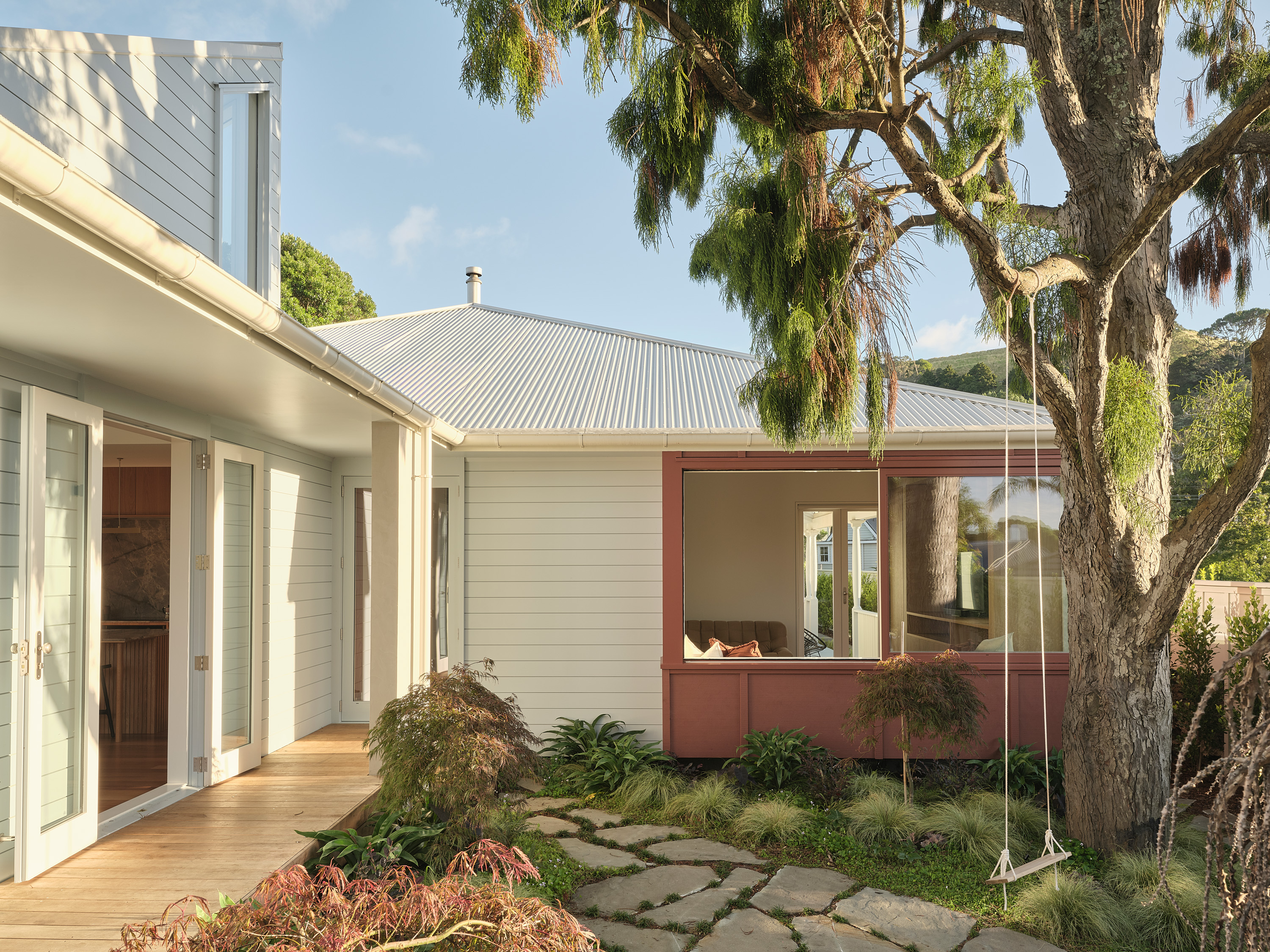
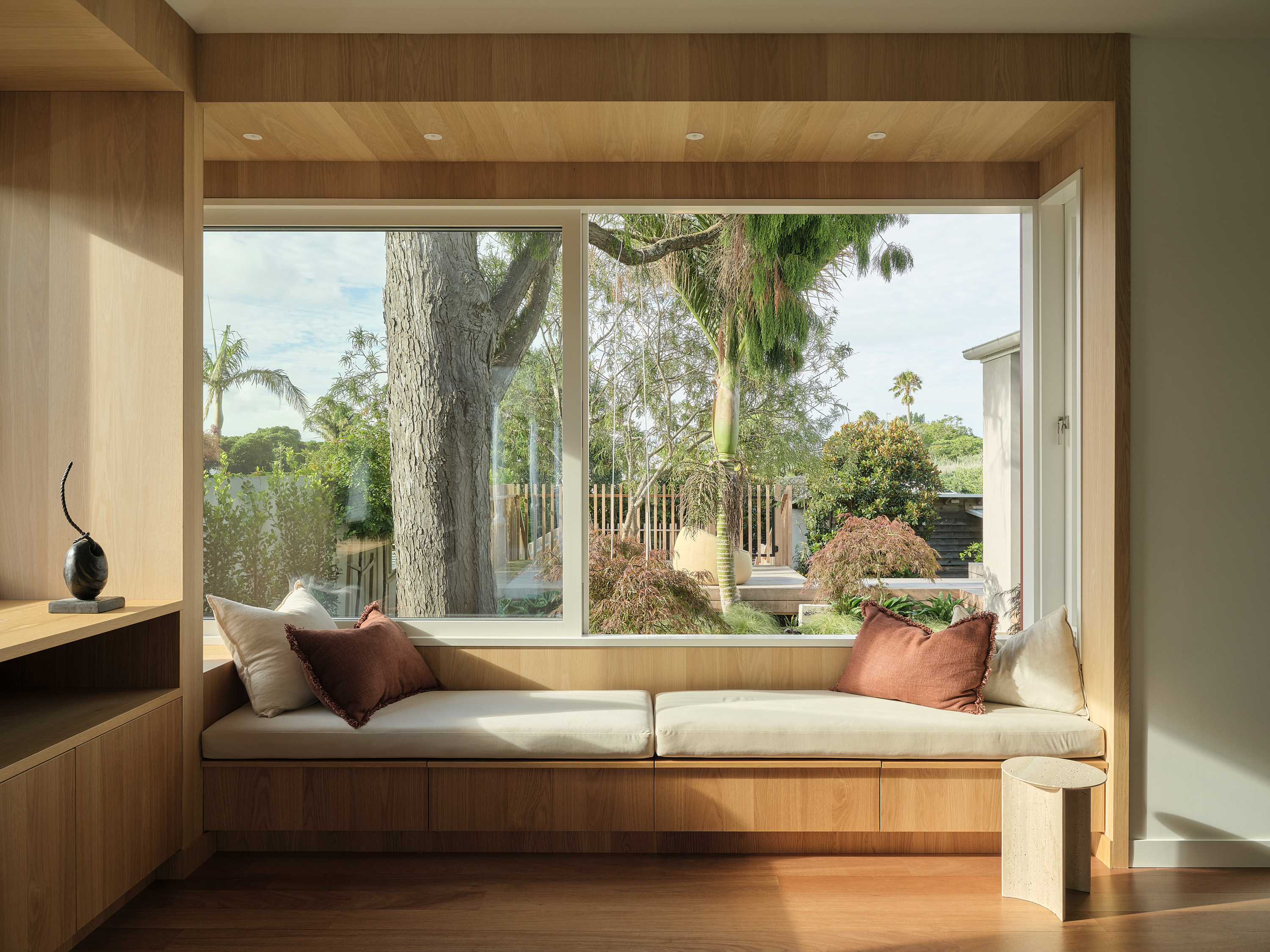
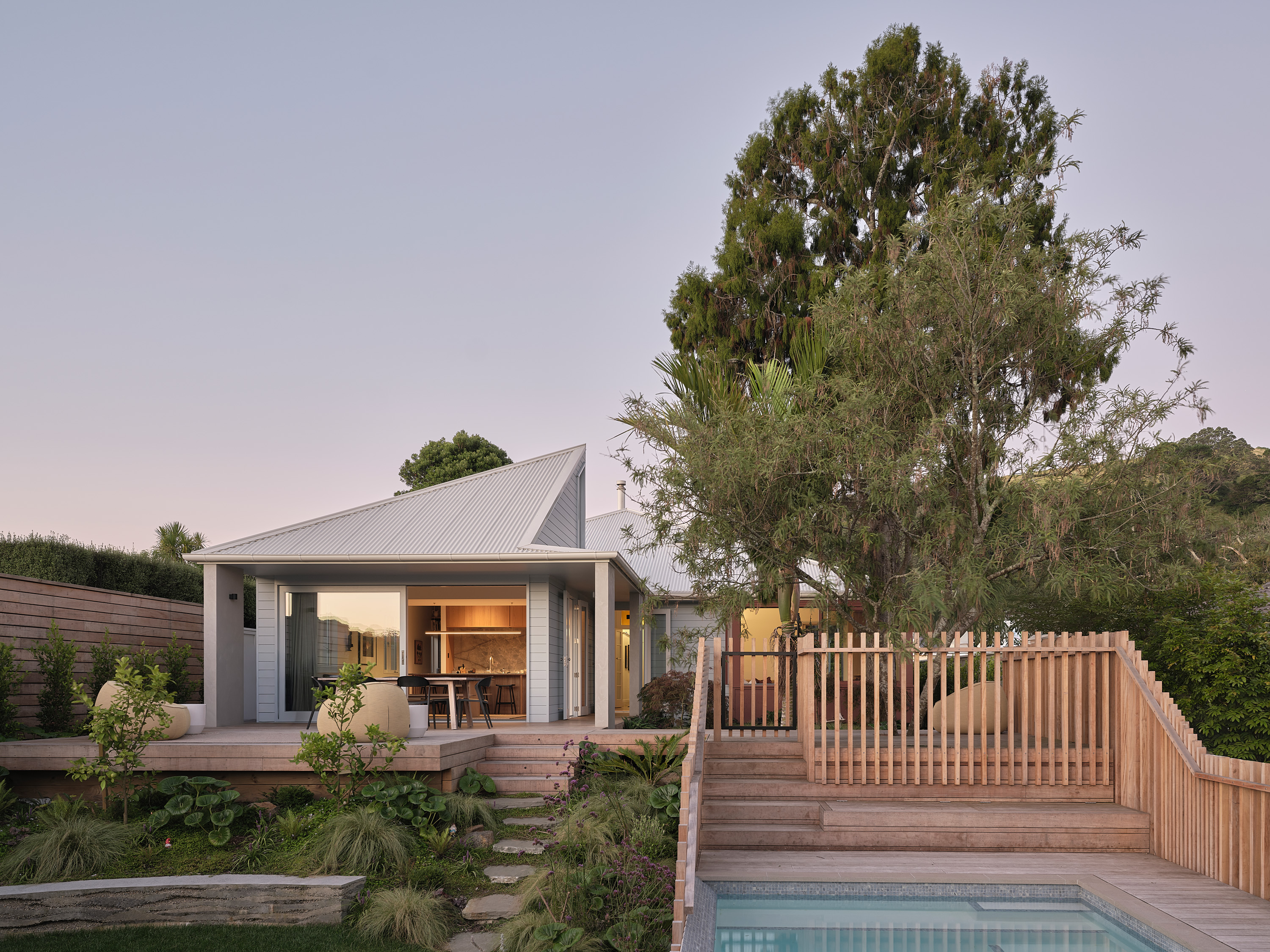
There’s a good reason for the restraint. At the rear of the house, just off the back wall of what is now a very lovely living room, there is an established rimu. Planted long ago by a past owner, its roots were incredibly close to the house. “We could have brought down the tree,” says the client, “but we just couldn’t bring ourselves to bring down an old native, even though it is a bit of a pain. Now we get to enjoy it.” The rimu became a kind of anchor point around which the house revolves. It stands at the centre of a planted courtyard that creates an L-shaped extension at the back.
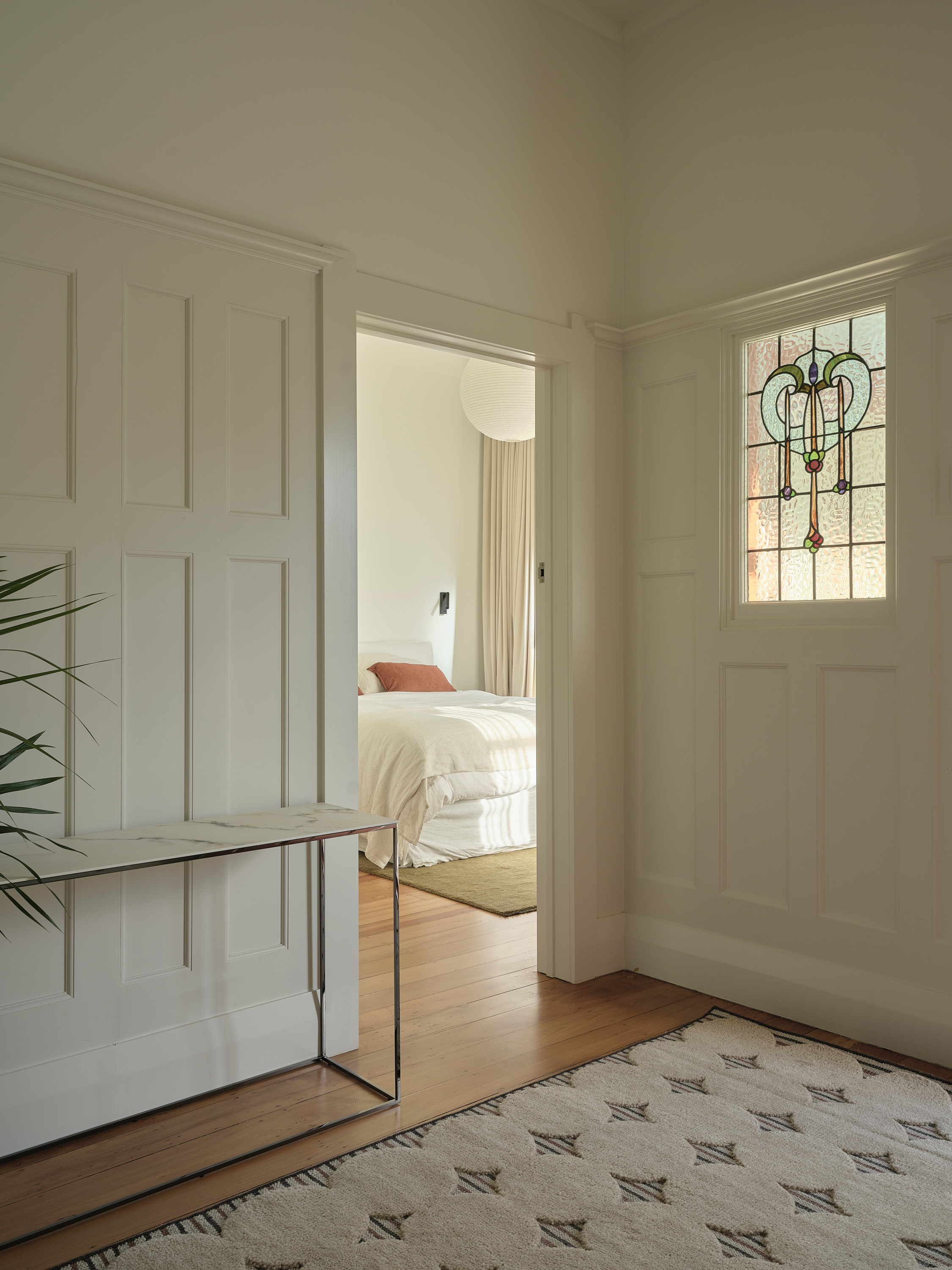
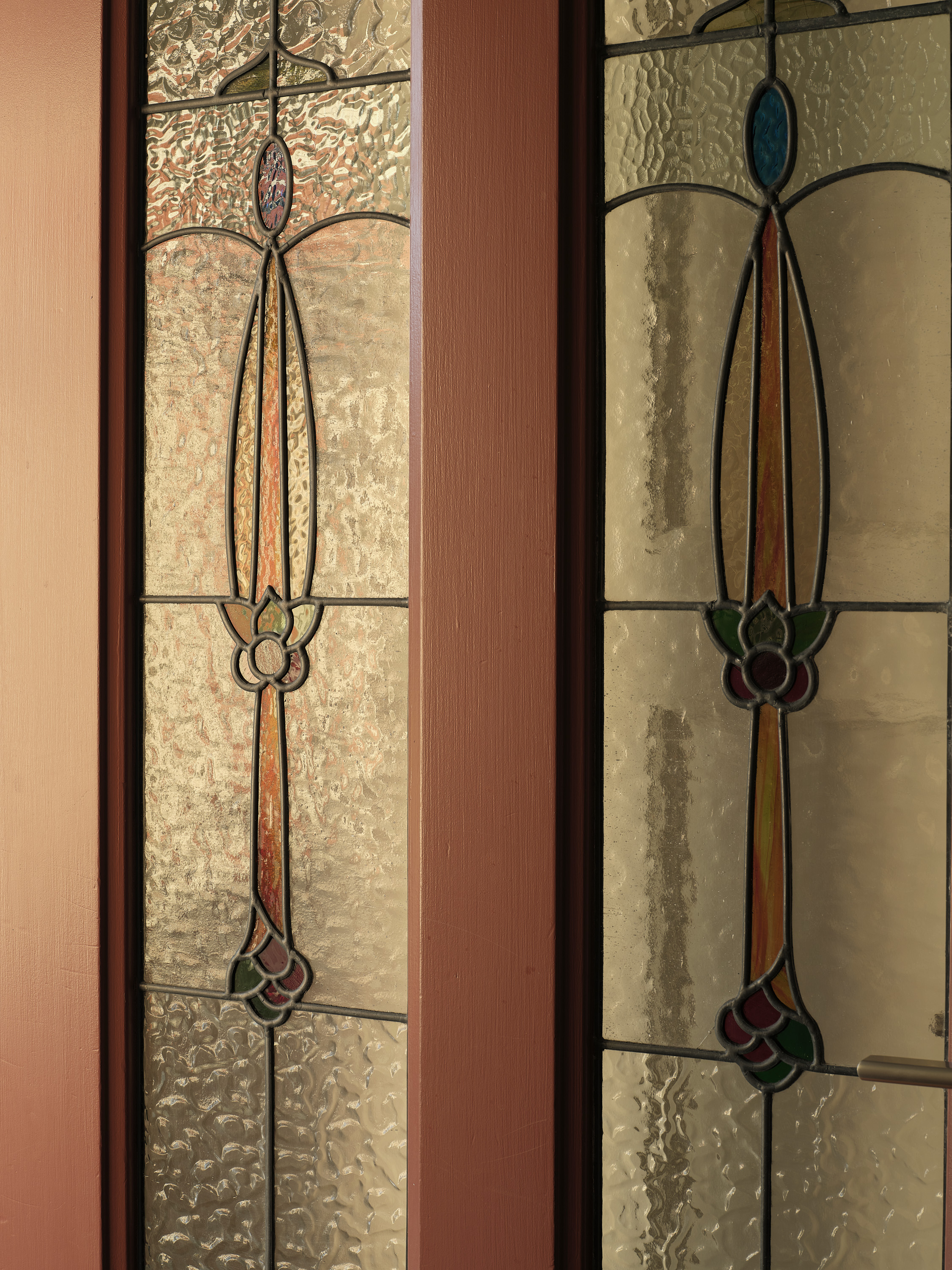
Architecturally designed in the 1910s, the original house is a grand old thing with a portico entry, lofty rooms, and details that lean more towards bungalow or arts and crafts than Victorian frou-frou. A glorious verandah frames the home on two sides. This place has seen some living. During the 1970s, its generous rooms had been crudely cut up into flats. When the current owners bought it in 2019, it had been converted back to a single dwelling. But vestiges of its mutilation prevailed, most obviously in the way you came down the grand hallway and dog-legged right into the dining room, before turning another 90 degrees into the kitchen, which ran out to the back garden. In all: a muddied flow.
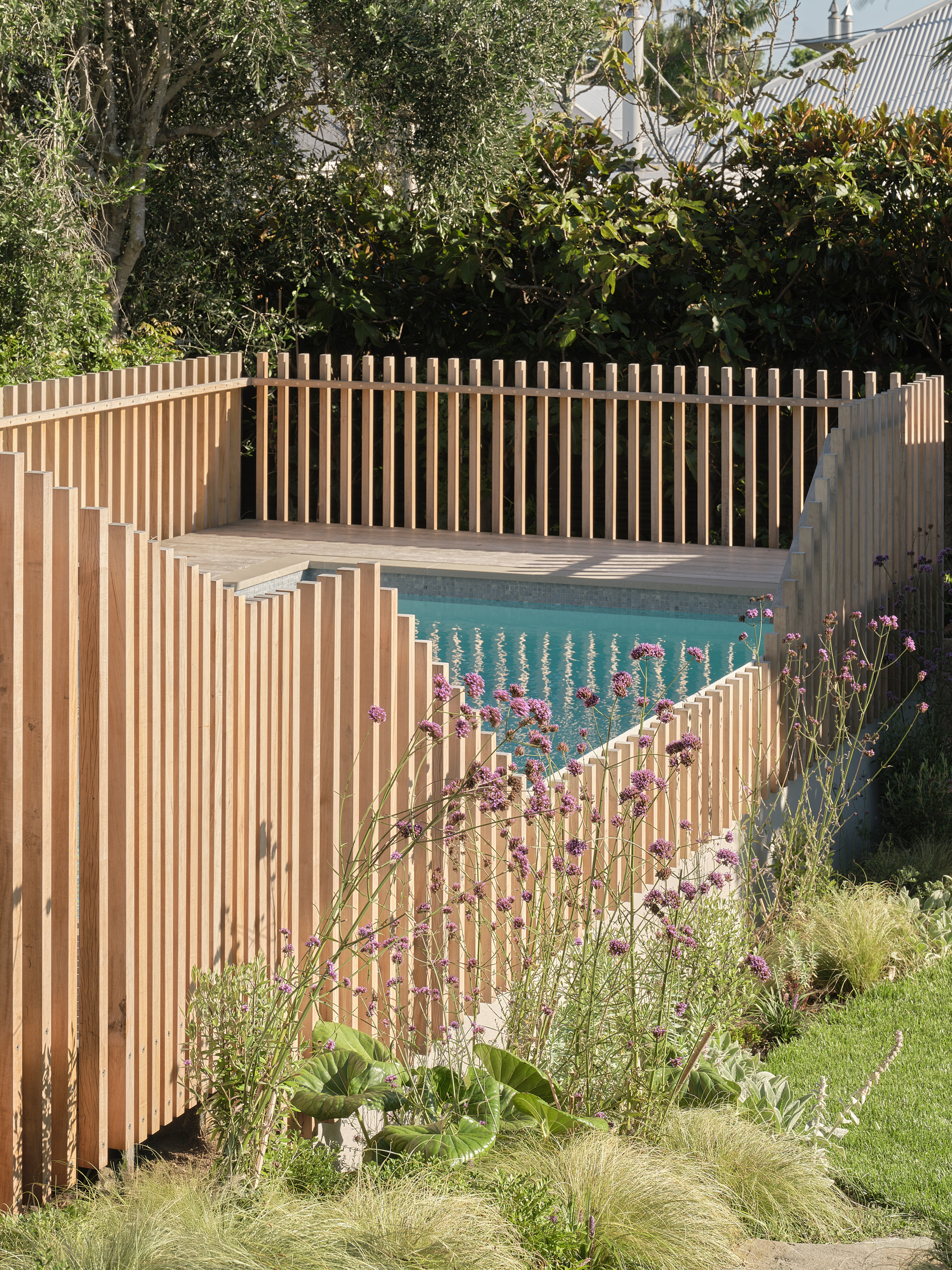
For several years after they bought it, and even after engaging Pac Studio to redesign the place – having seen the Pac renovation on the cover of the very first issue of Here – the owners came and went on what to do. “We toyed a lot with selling and buying something that had already been done,” says one. “But we’d go and look, come back here and we’d say, ‘No, we like this.’” You can see why. It’s a big section – 800 square metres, set well back off the road. Previous owners had built a concrete double garage at the front of the site, which is now covered with a living roof. While it faces south, the house is sheltered and quiet, with a view of the nearby maunga and room for a pool. You’re close to a set of shops, but it’s very private. Eventually, they decided they were staying.
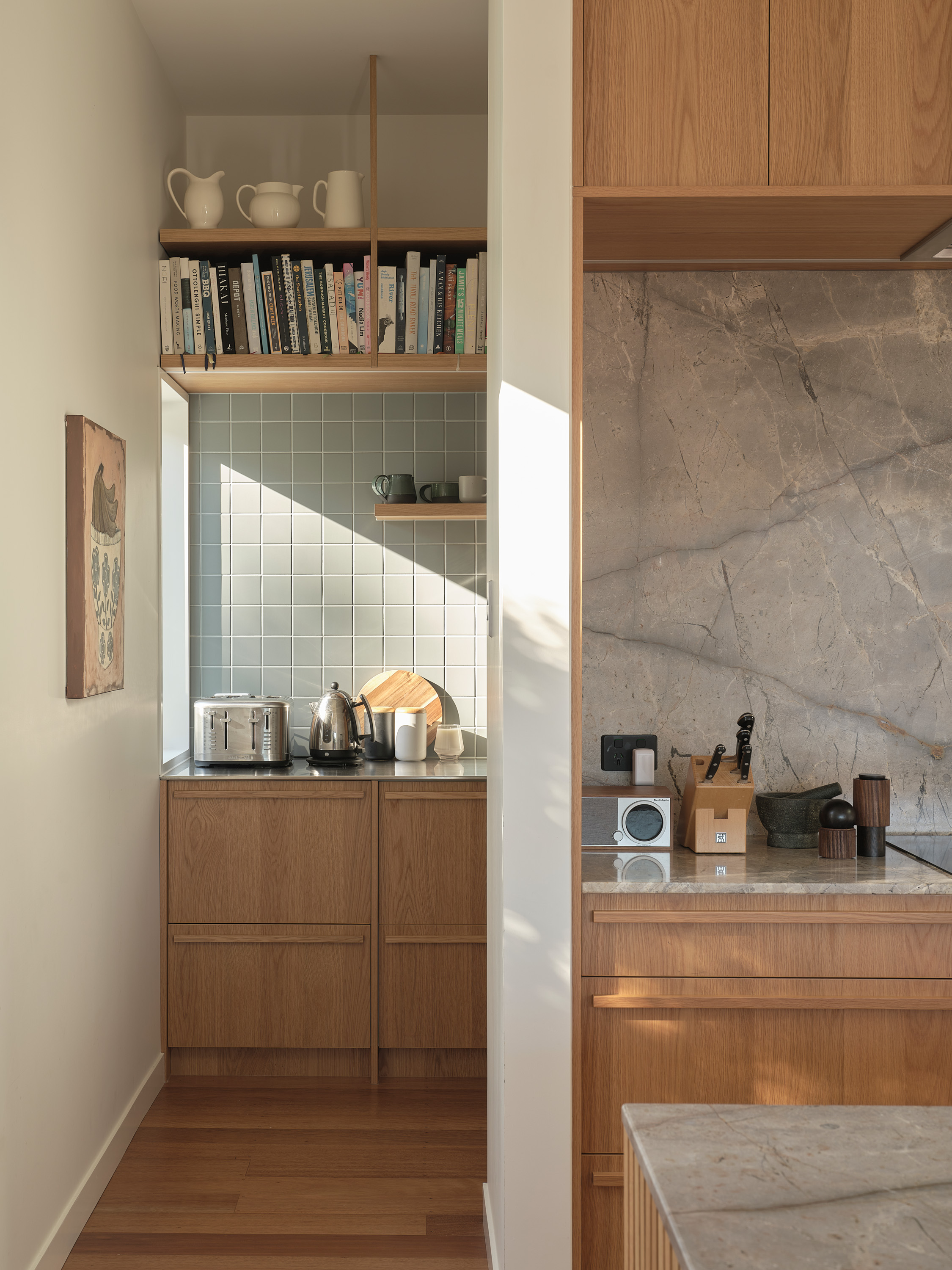
Pac’s first move was to demolish most of an early 2000s extension – retaining the beautiful hardwood floors – and to open up the axis that runs from the front door to the back garden. They shuffled rooms in the front of the house to create a new main bedroom suite, along with a TV room, laundry, bathroom and office – it was Covid, after all – and while most rooms are in the same spot, not many are their original sizes. “A lot of the work was really rationalising the interior, and trying to retain a lot of the beautiful character,” says Abba. “The ceilings, the floors – they all come up beautifully.”
Then, they conceived a new extension to contain the living spaces. Built by Warwick Gair Builders, largely on the footprint of the previous social areas, it connects to the verandah, and continues the elegant drape of the hip roof. For this, they started in the most prosaic of places. “We did the gutter first,” says director Aaron Paterson. “We made the gutter work, and then tried to work out what type of roof we could get above it.”
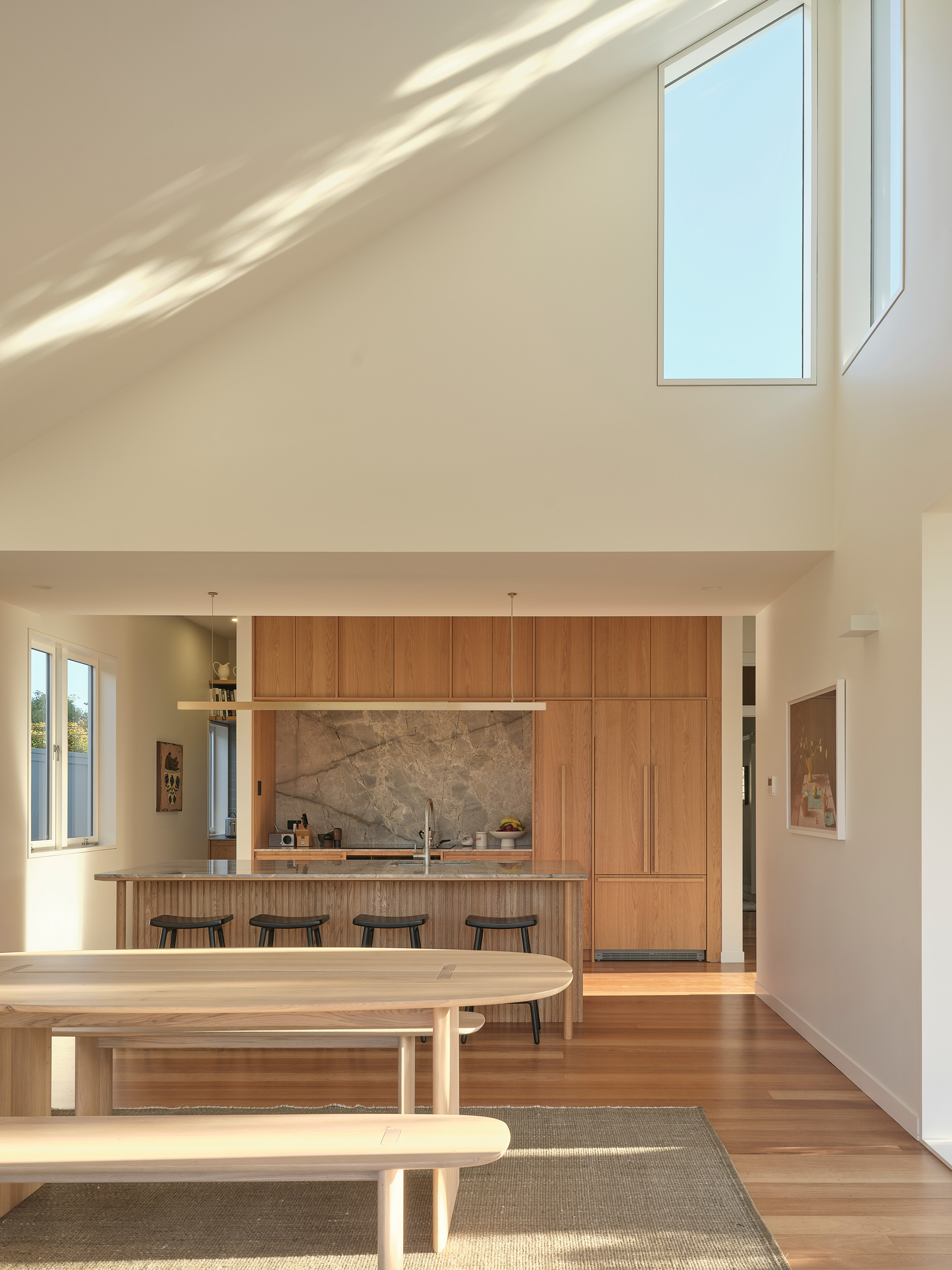
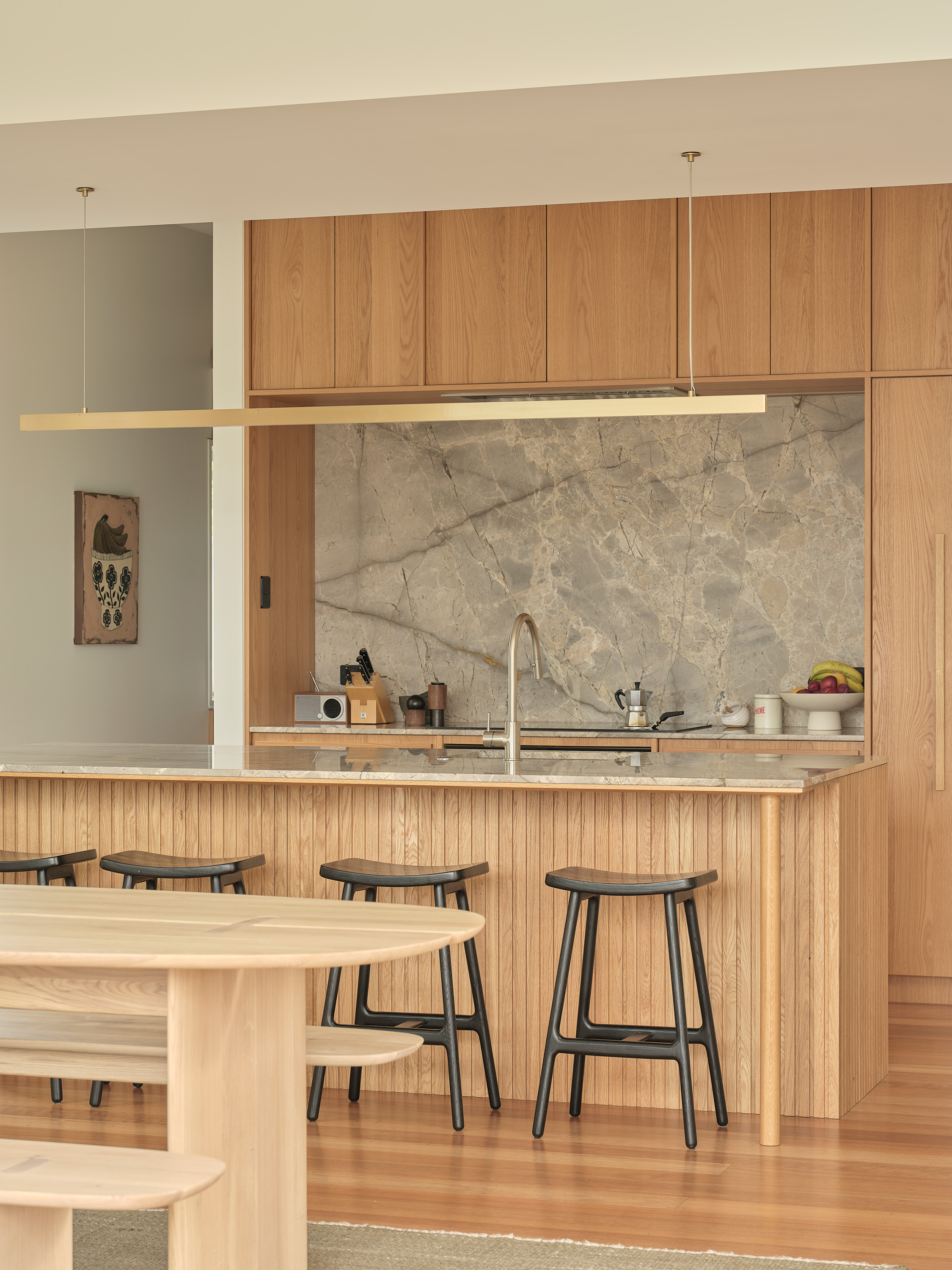
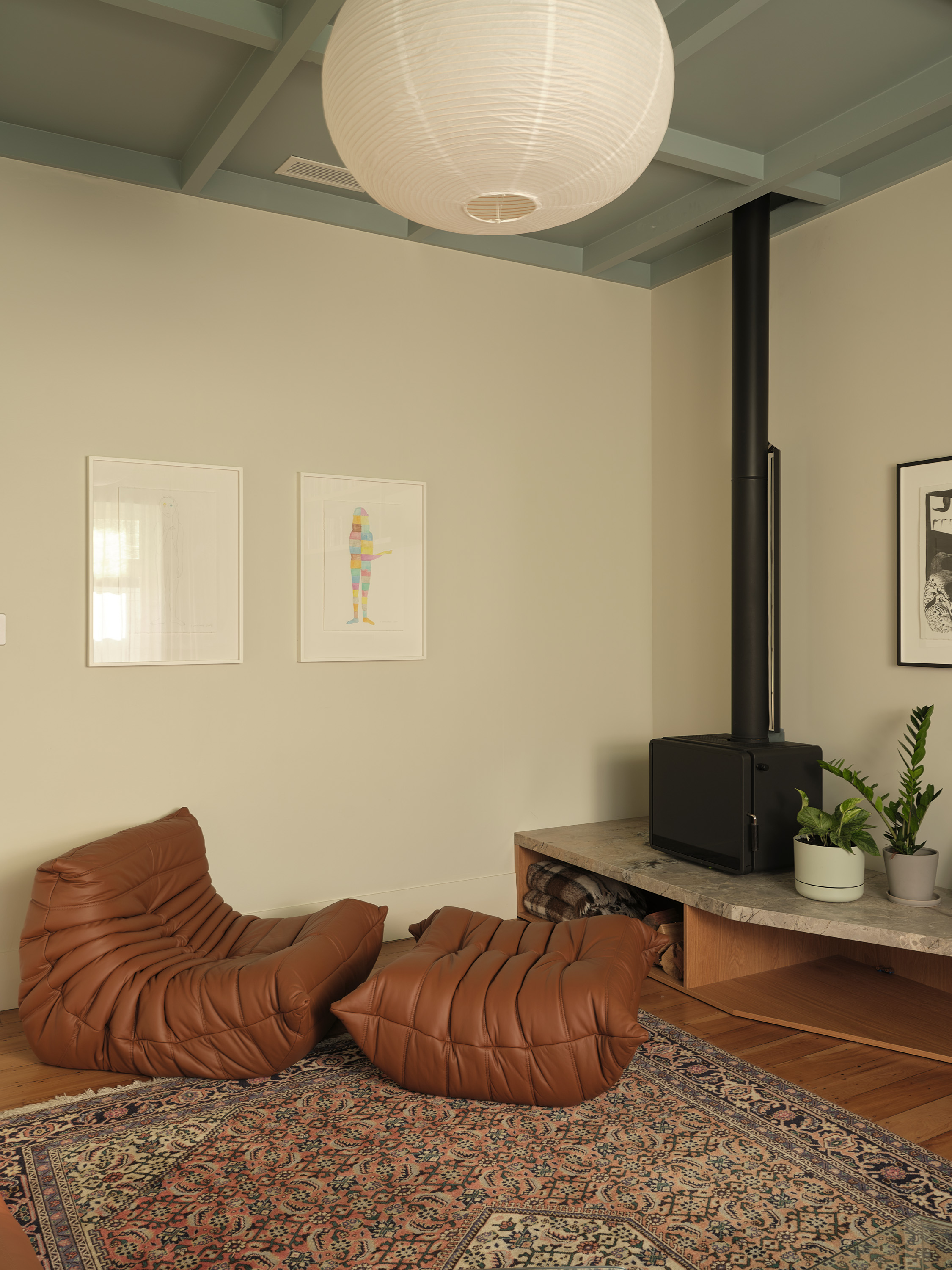
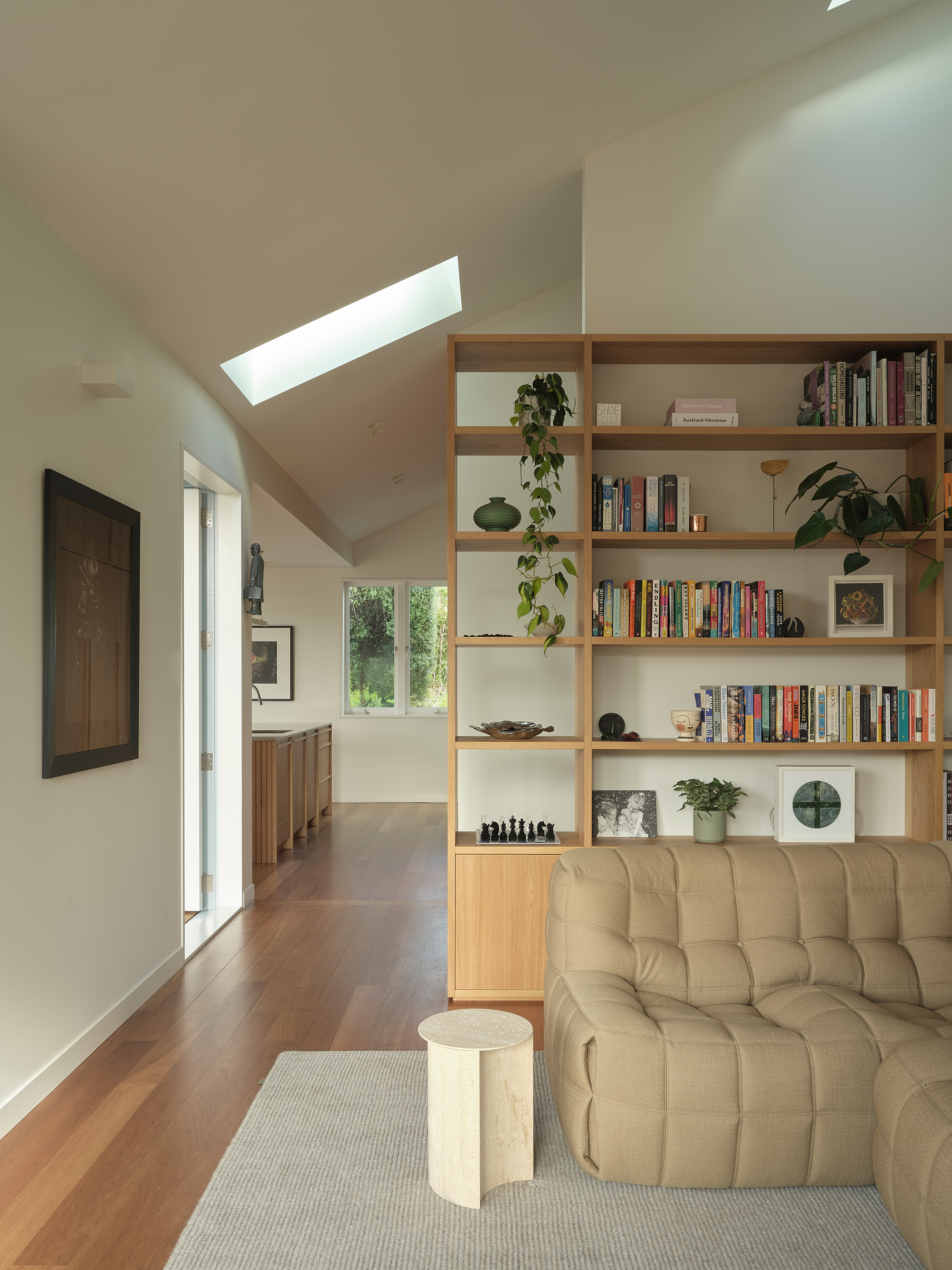
Their original scheme featured a high ridge coming out of the existing roof, turning into a sort of monopitch form with lots of glass opening to the east. But when they put the model into sun studies, they realised its height would “blitz” sun in the courtyard. “So the main idea became about keeping the roofline as low as possible, getting the gutter as low as possible and taking the mass out of it,” says Paterson. “You don’t want to make yourself a courtyard and then not be able to use it.”
Instead, they extended the ridge, creating a big draping roof that covers most of the living room, falling to the same level as the rest of the house. They created a lower, flatter portion over the kitchen area, followed by a wedge-shaped roof above the dining space that kicks up with windows to the north, dragging light deep into the space while sun reaches over the roof into the courtyard. Rather than using a membrane roof on the flatter bits, Paterson managed to shoehorn in a low-pitched corrugate roof, which finishes at the all-important gutter.
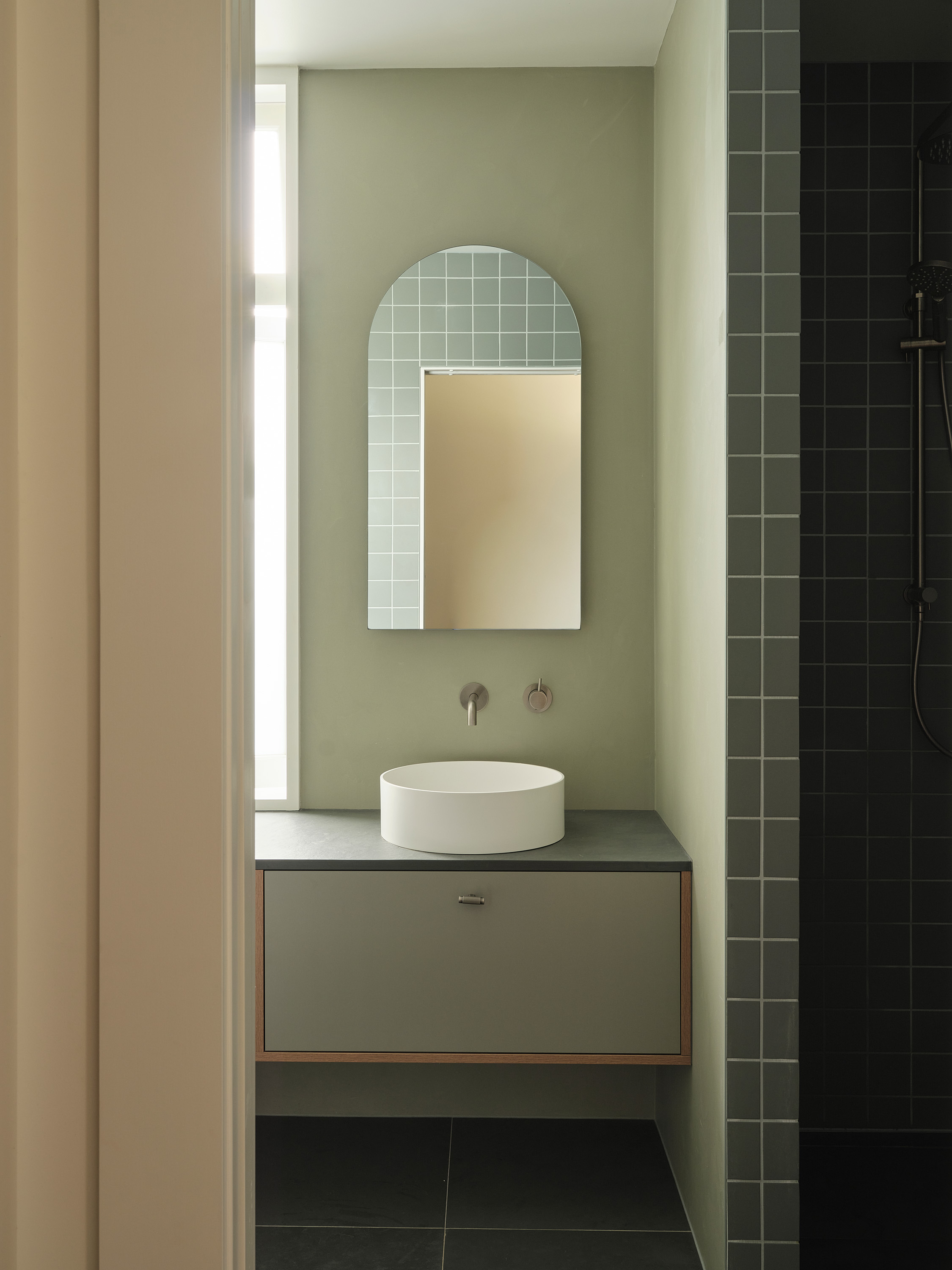
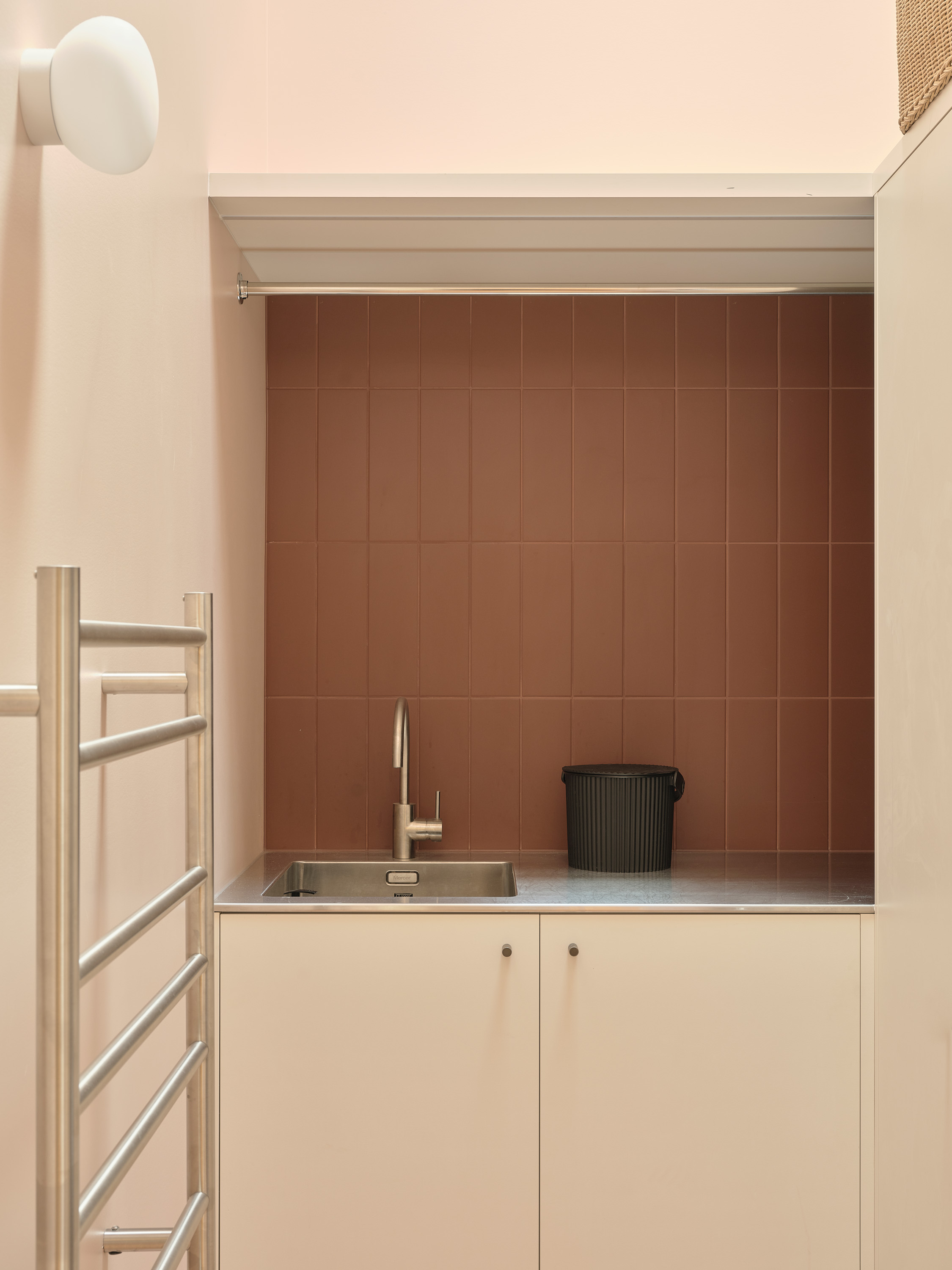
To this elegant scheme, the team at Pac have applied their characteristic use of colour – something the owner readily admits she found challenging. “I’m a black-and-white sort of person,” she says. “It was definitely beyond my comfort zone.” So, while most of the interior is painted in a restful shade of white, the outside is a pale blue-grey, contrasted with a warm red-brown used for windows and other details. The dominant shade shifts and changes in the light: sometimes it’s baby blue; other times grey. In bedrooms and the snug, beamed ceilings are painted in blue, green and pink; while the main bathroom and powder room feature pinky plastered walls by Ambitec.
When you come to the house now, it feels very settled, partly thanks to the established garden, including the rimu and a big nīkau. Both predate the renovation and are visible from every part of the living space, which runs onto the verandahs on multiple sides. The connection to the rimu is delightful, and intimate in a way that the old house, with its corridors and awkward spaces, never was. And there is light, bouncing in from those high north-facing windows, endlessly shifting and changing throughout the year, which the family find captivating. “I was a bit late to something the other day,” says the owner, “and when they asked why, I told them it was because I was taking photos of the light.”
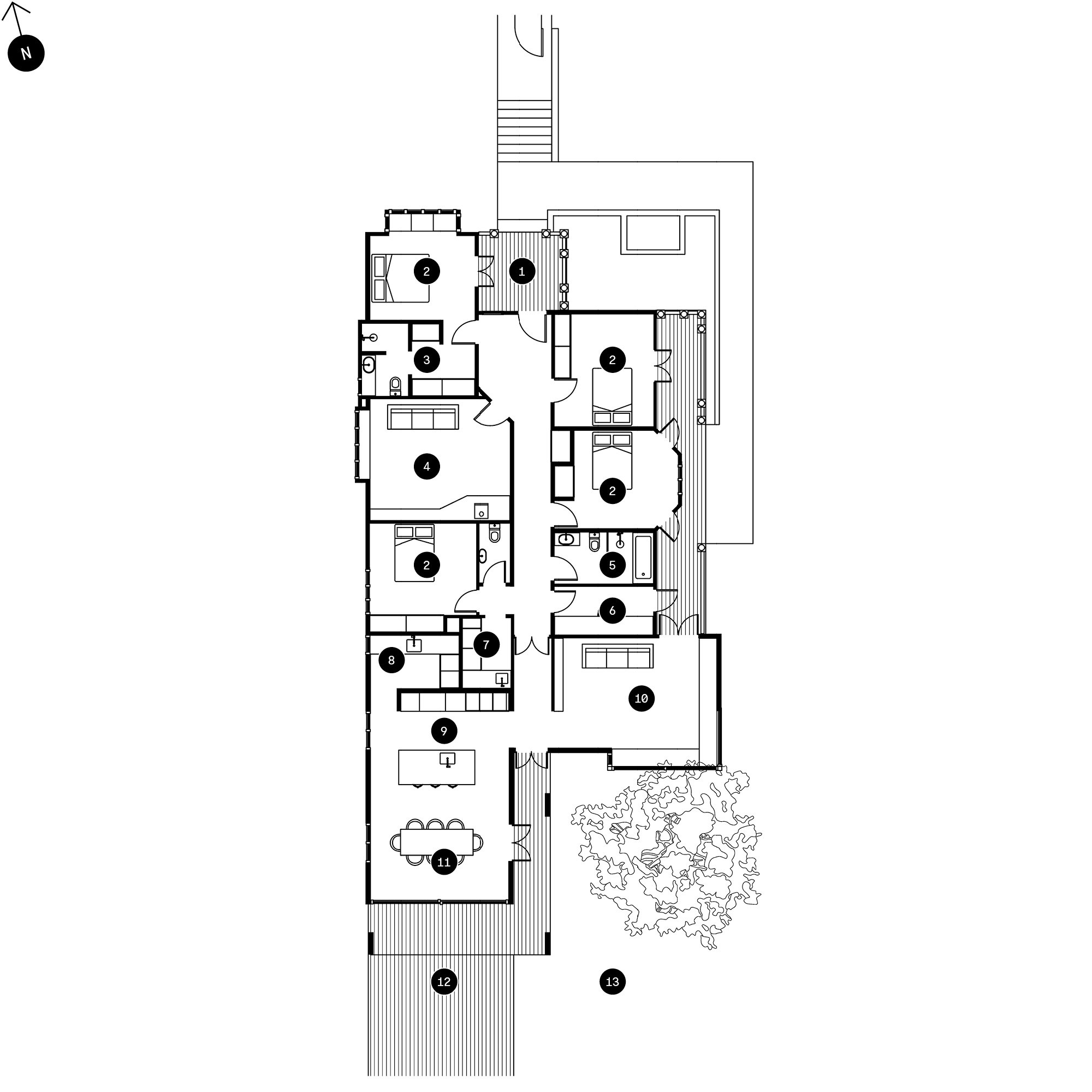
1. Entry
2. Bedroom
3. Ensuite
4. Sitting
5. Bathroom
6. Study
7. Laundry
8. Scullery
9. Kitchen
10. Living
11. Dining
12. Deck
13. Garden