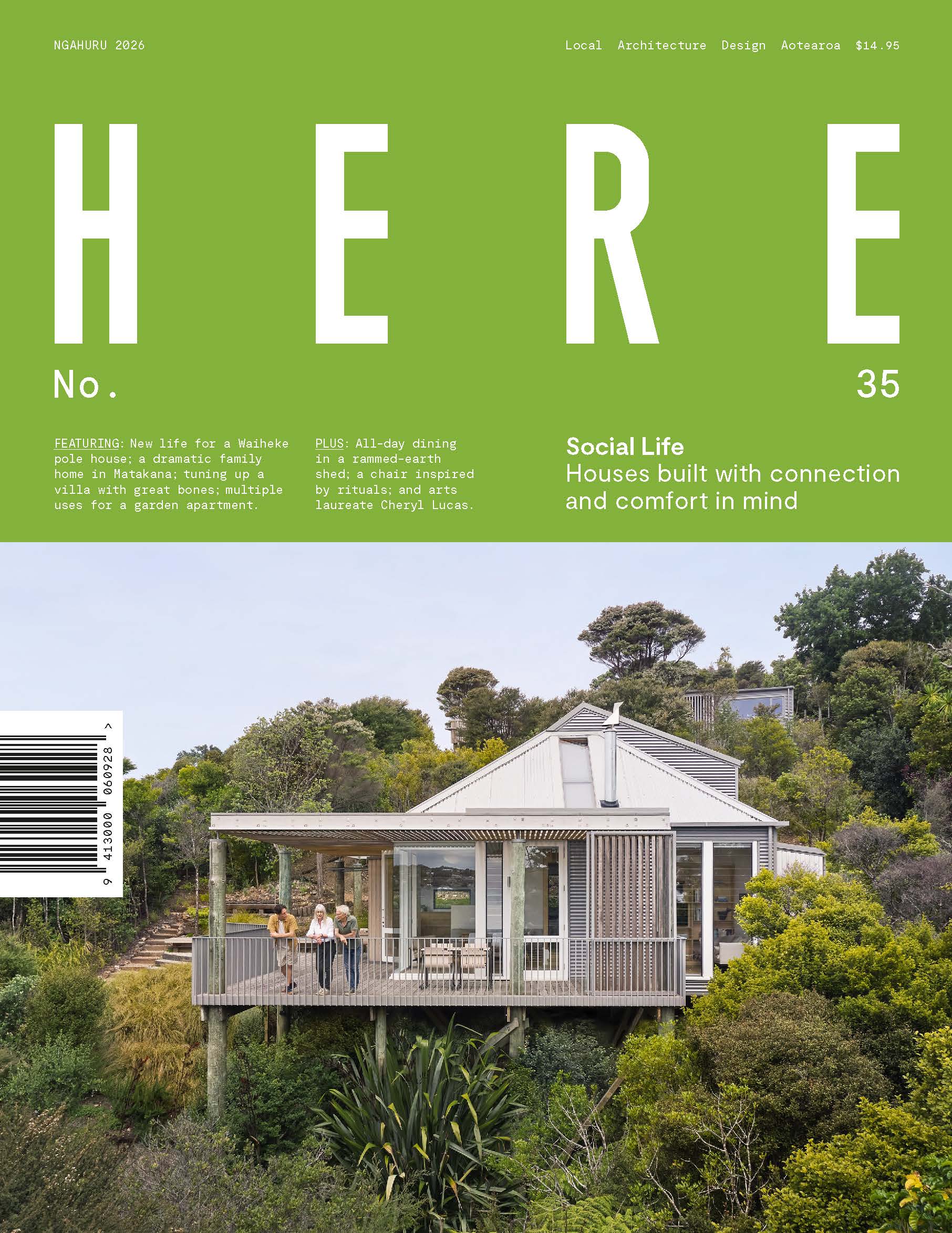
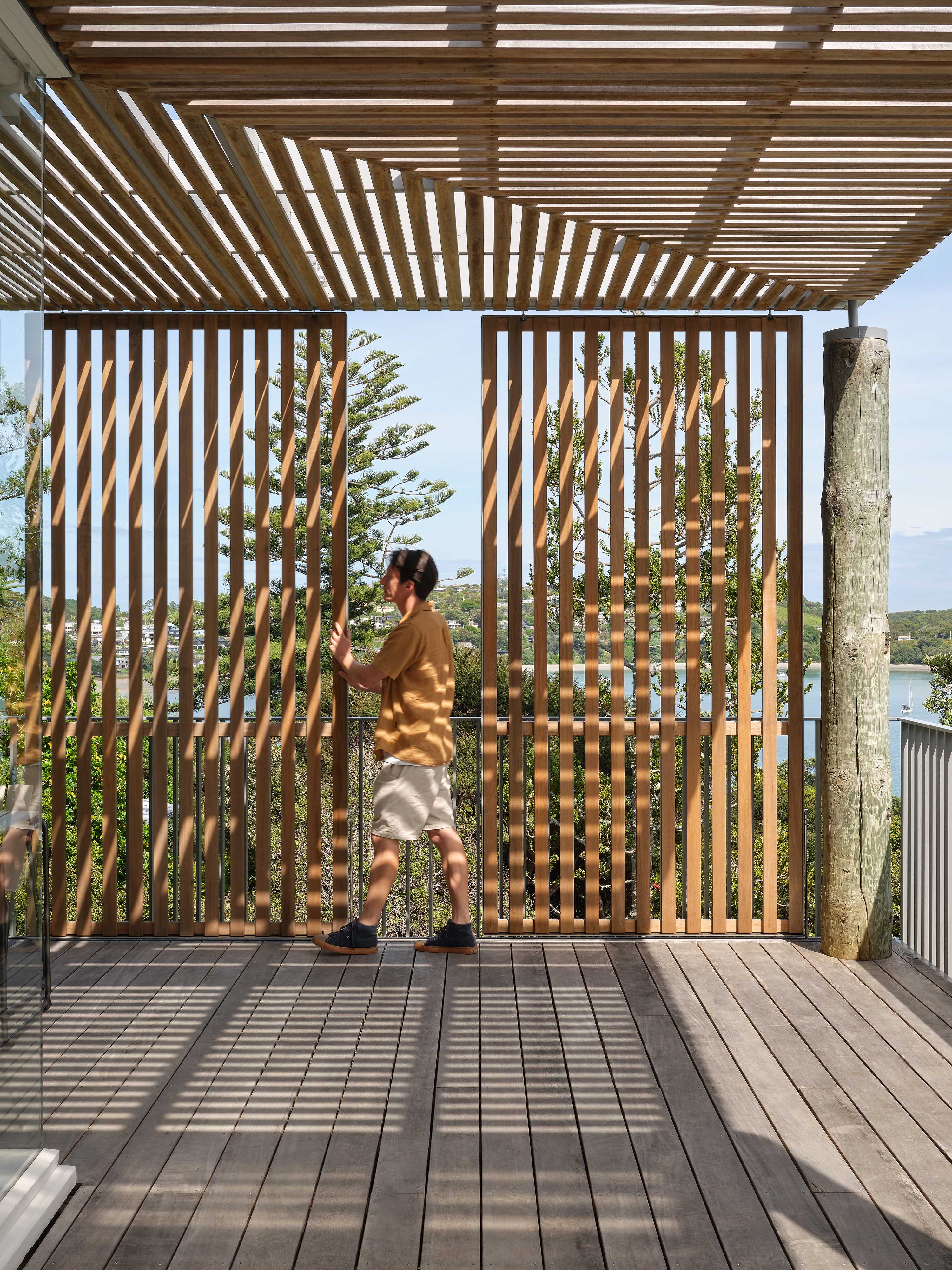
There’s a moment of pause as you teeter on the edge of a renovation. You start with destruction and mess, before something new and pure emerges from the old thing, but just before that happens, you wonder quite what you’re doing. In this case, Denis and Desna Jury had bought their 1980s home above Oneroa on Waiheke Island in 2020. It came partly furnished, with a grab bag of items left behind by the previous owner, and they had never seen it completely empty. “We took a lot of photos of it in its raw state,” says Desna, “and it actually looked really beautiful – it had these two big pillars and the mezzanine going across. It was sort of like an altar.”
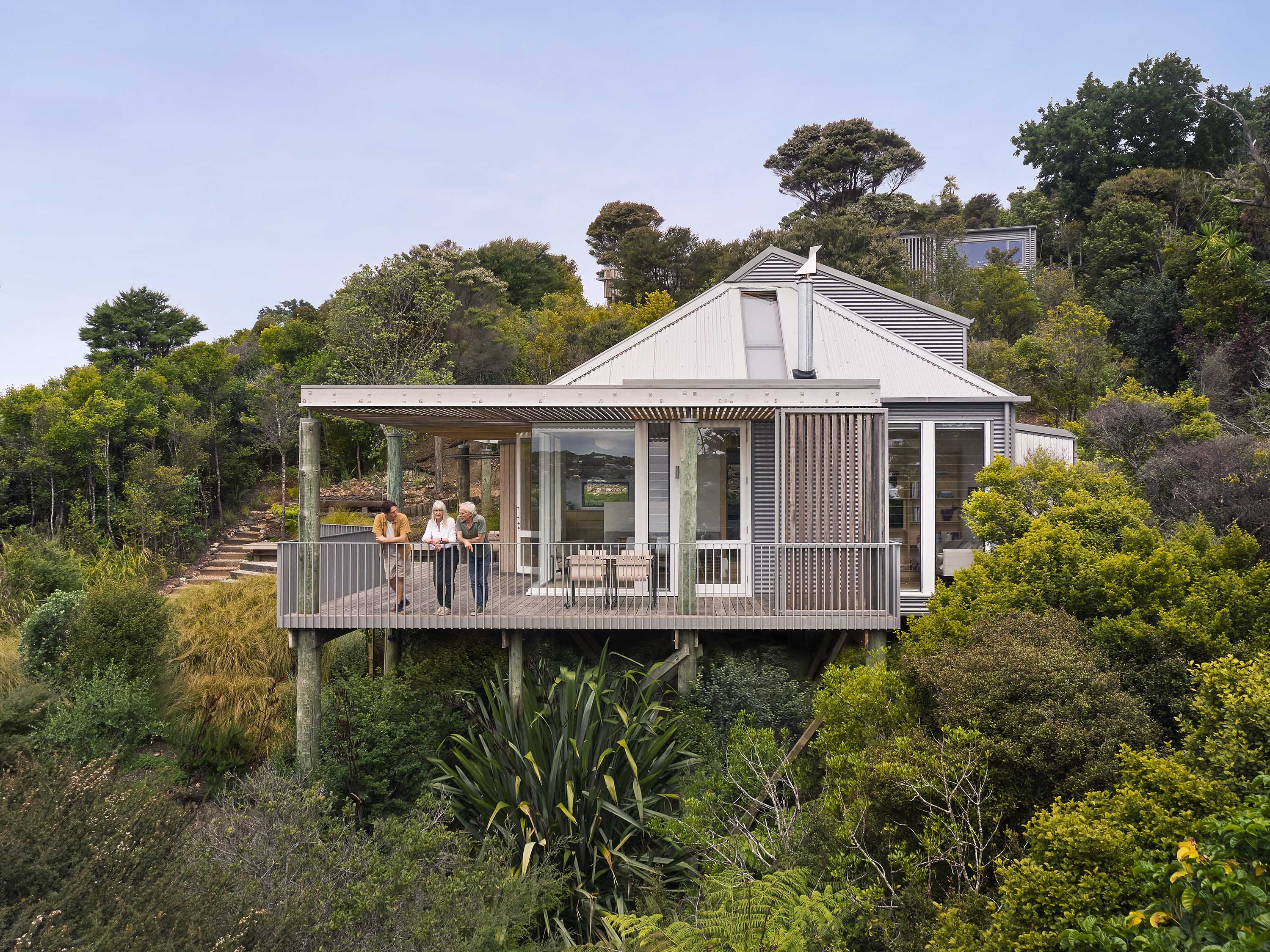
The house in question was designed by a local architect in the early 1980s in what might be described as a kind of post-modern pole-house style, with a deep commitment to 45-degree angles. There were many things right about it – the soaring cathedral ceiling in the main living area, lined with kauri sarking, was a grand opening of a space in beautiful contrast to the low ceilings in the entry.
It sat lightly in the perfect spot on a very steep site, and had an intimate relationship with the bay below – so much so that you could hear the conversations of people on boats. It also connected with the land in a way many pole houses don’t. It sat neatly facing north, the sun tracking from kitchen to living area over the course of a day. A deep, partially covered verandah offered shelter from the elements. It was also very private, hidden from the road and other houses.
That was the front of the house. The back was a different story. The entry and bathroom sat in a low-roofed box positioned at an angle to the rest of the house, almost as if one corner had been detached, turned 45 degrees, and glued back on. “So you just ended up with a knotty, knotty business,” says architect Dave Strachan, of Strachan Group Architects (SGA). There was no proper bedroom – just an open mezzanine – and no bathroom upstairs. The stairs were narrow and treacherous, and there was a sort of gallery in the middle of the house that didn’t do anything. “It didn’t make any sense – and the builder in me said we’ve just got to sort this out.” The final issue? There was no parking, and access was restricted to a goat track with hundreds of randomly spaced steps down the very steep slope.
Dave and the Jurys have worked together on three projects, including this one. The first was the extensive reworking of their 1950s home in Remuera, Tāmaki Makaurau Auckland, which made sense of a post-and-beam house with quirks in a densely planted glade. The second was a small renovation to their former bach in Taupō.
This one, on Waiheke, was to set them up for retirement. The house falls somewhere between home and bach: simple enough to feel like a getaway, but sophisticated enough to spend long stretches of time in. “They’re just such wonderful people,” says Dave affectionately. The Jurys often attend SGA’s Friday-night talks, and Dave’s wife Colleen, a real-estate agent, is now selling their Remuera home. “One of the best things as an architect, really, is to say these people like us enough to trust us – because it’s a heap to go through the process again.”
Let me just say here that the Jurys have excellent taste. Since their mid-20s, the couple have spent a lot of time in Scandinavia, returning often for work and pleasure. Desna is the former dean of design at AUT, and Denis spent his working life in the health system, first as a biomedical researcher and then as a manager. “We left Copenhagen the first time saying, ‘This is amazing, we’ve got to come back here,’” says Denis. “I think it was being exposed to this different sort of life to what we’d known, without even realising it was influencing us.”
You can see the traces of this, more in the clarity of the spaces than in an overtly aesthetic way. “Generally we just like things simple,” says Denis, sitting at their dining table, looking over the bay. I’ve come for lunch, which involves locally baked bread, fresh tomatoes and ham. “Whether it be food, houses, cars or gardens, we don’t like things overworked – my approach to work was the same. Keep it simple, guys, don’t overwork it. Keep your mind clear.”

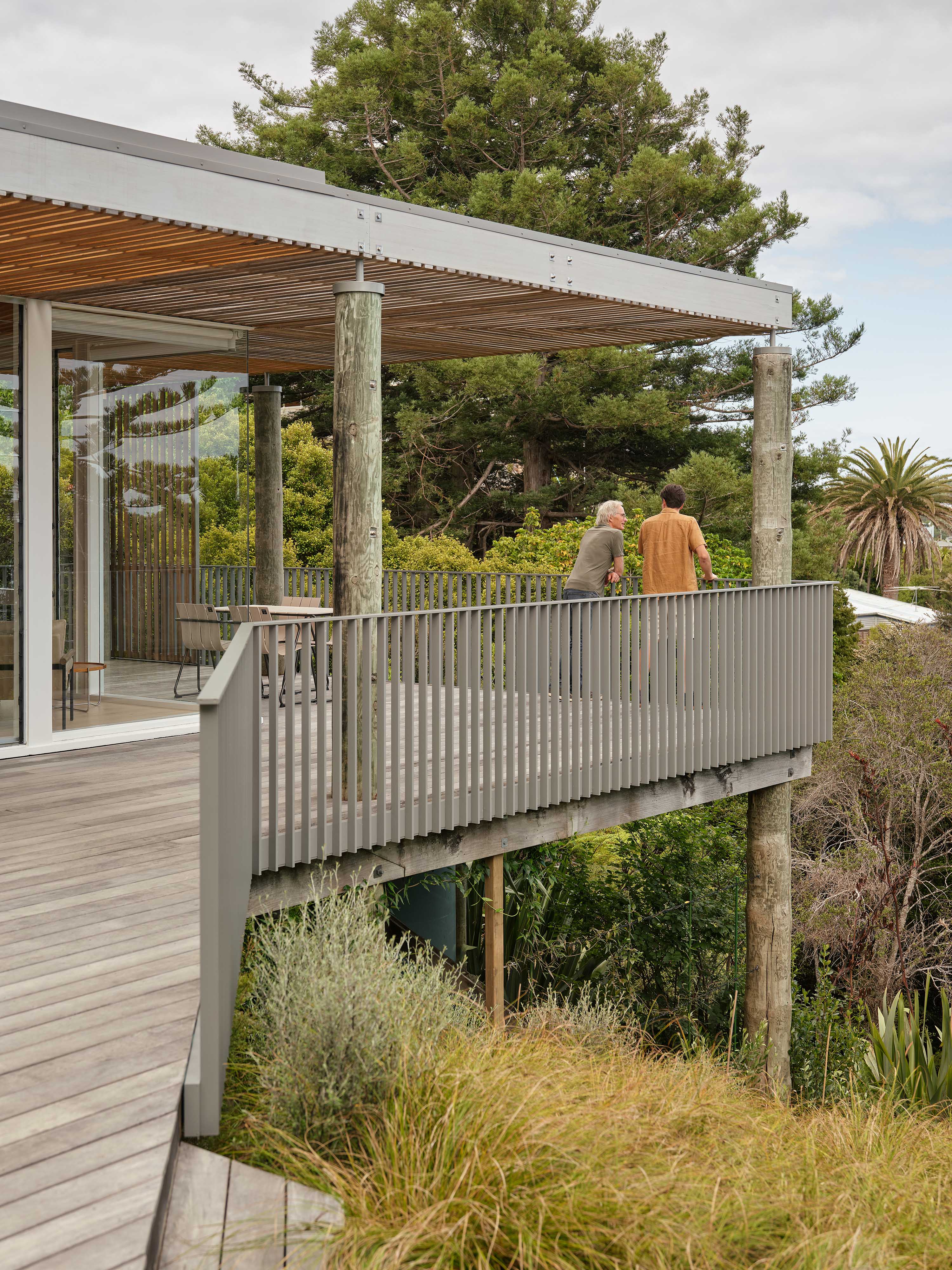
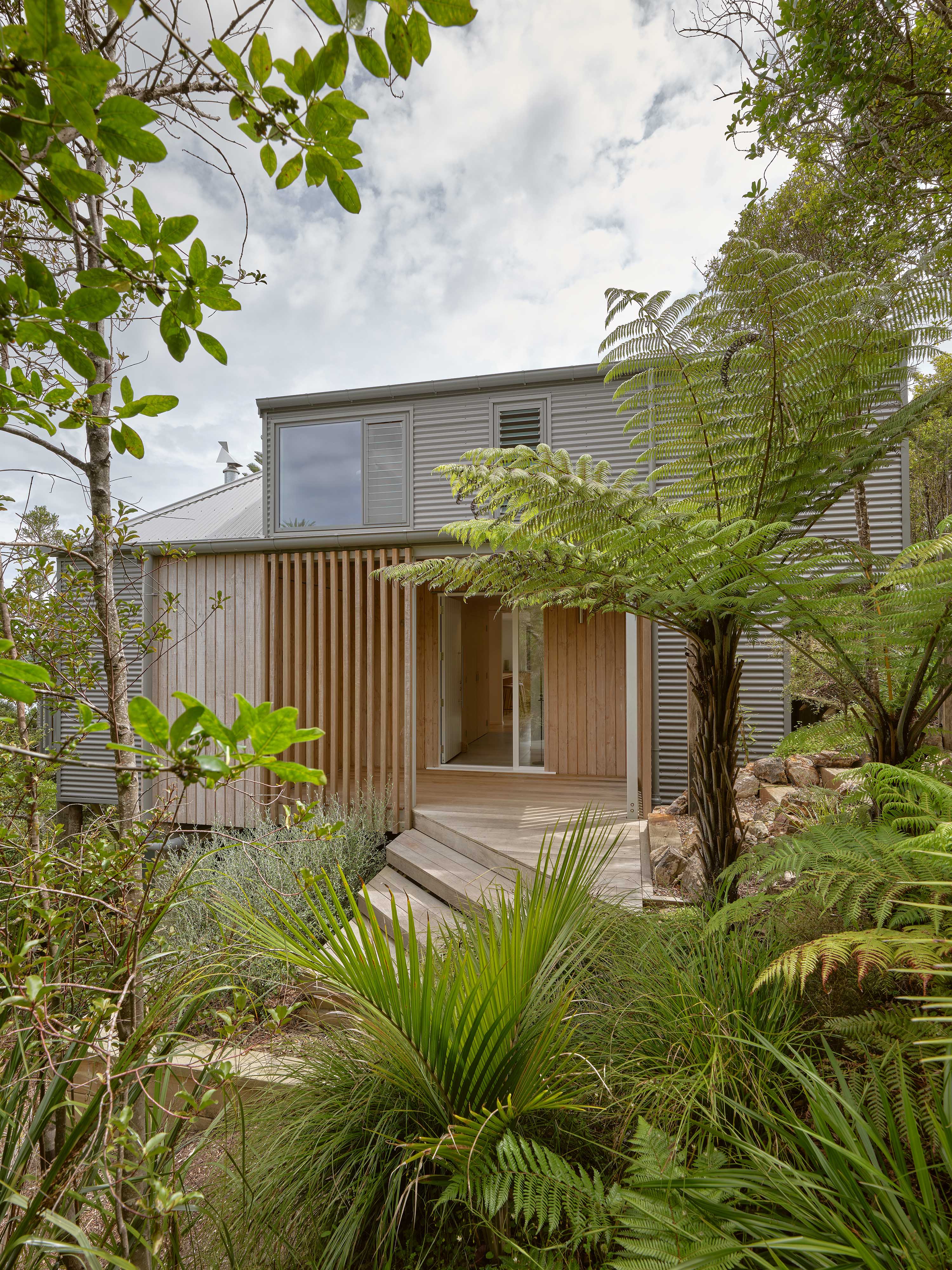
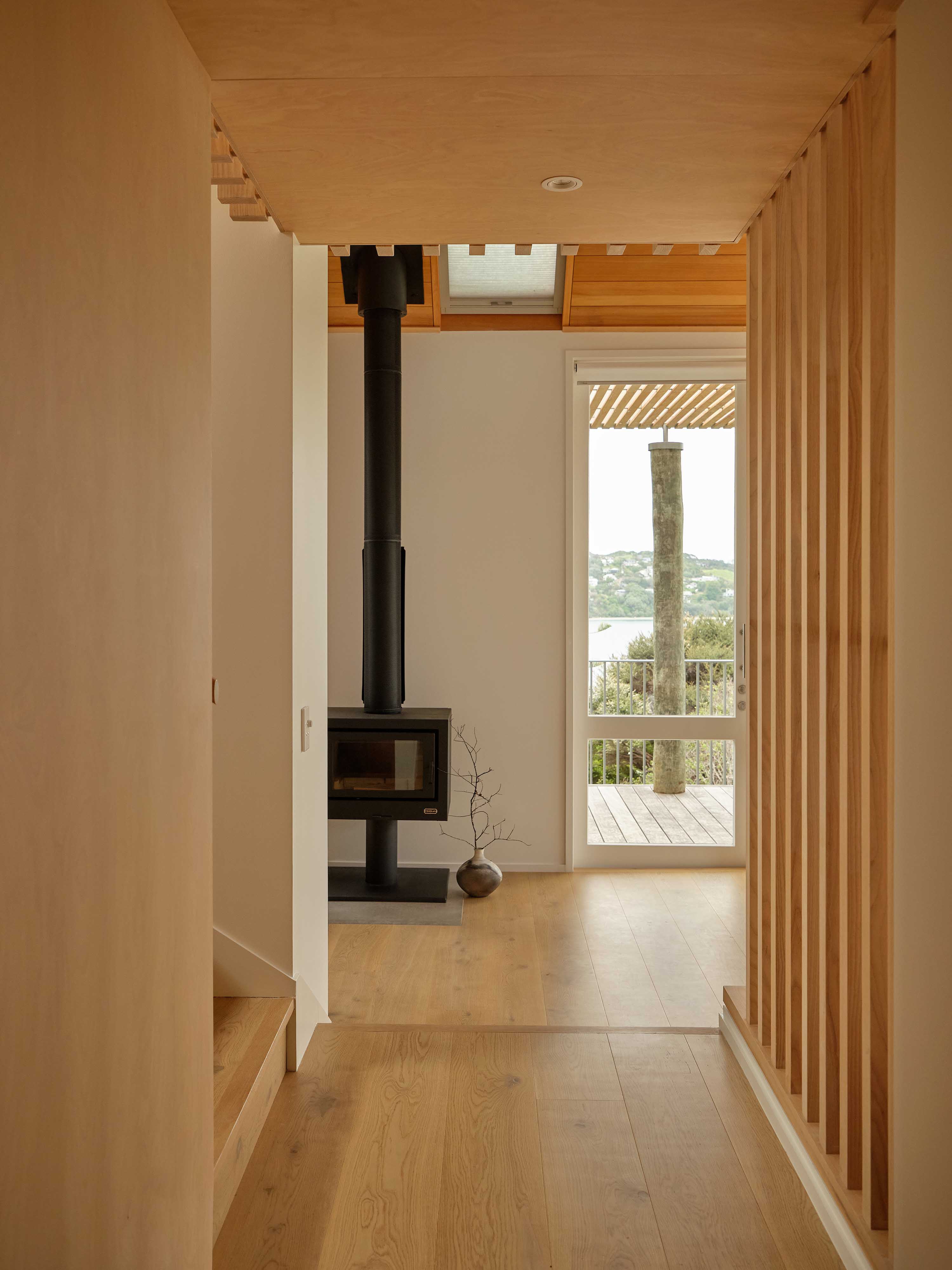
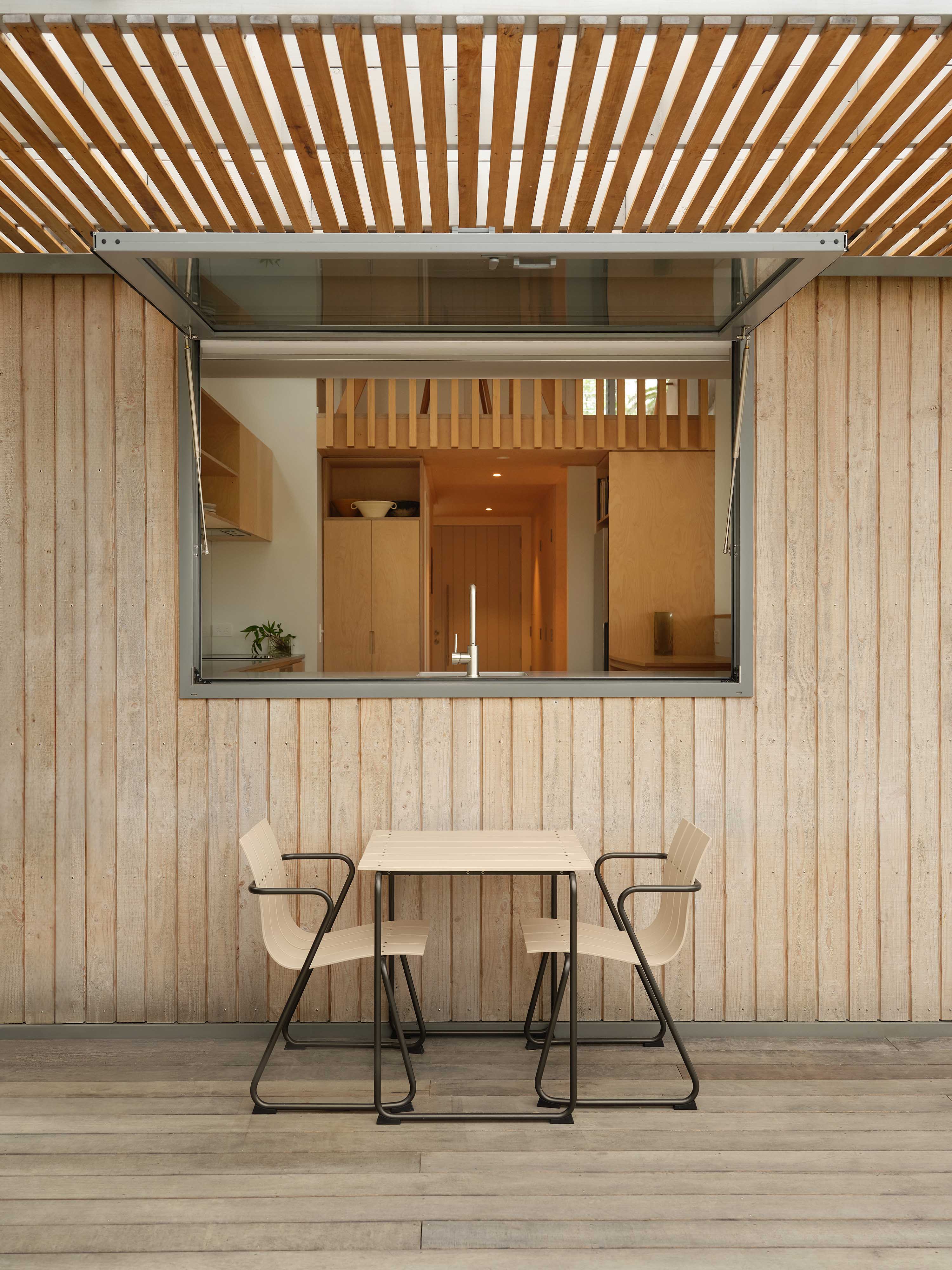
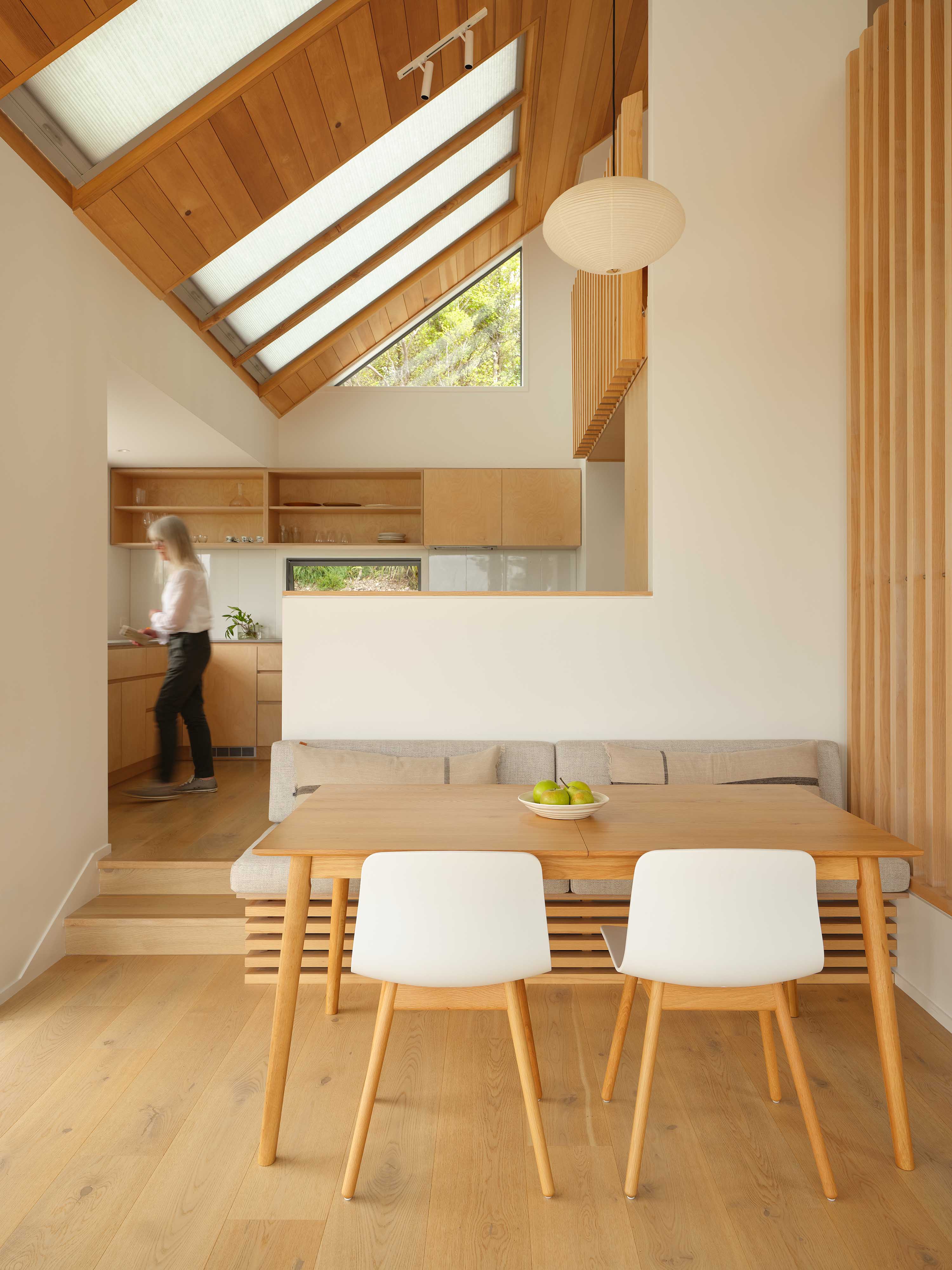
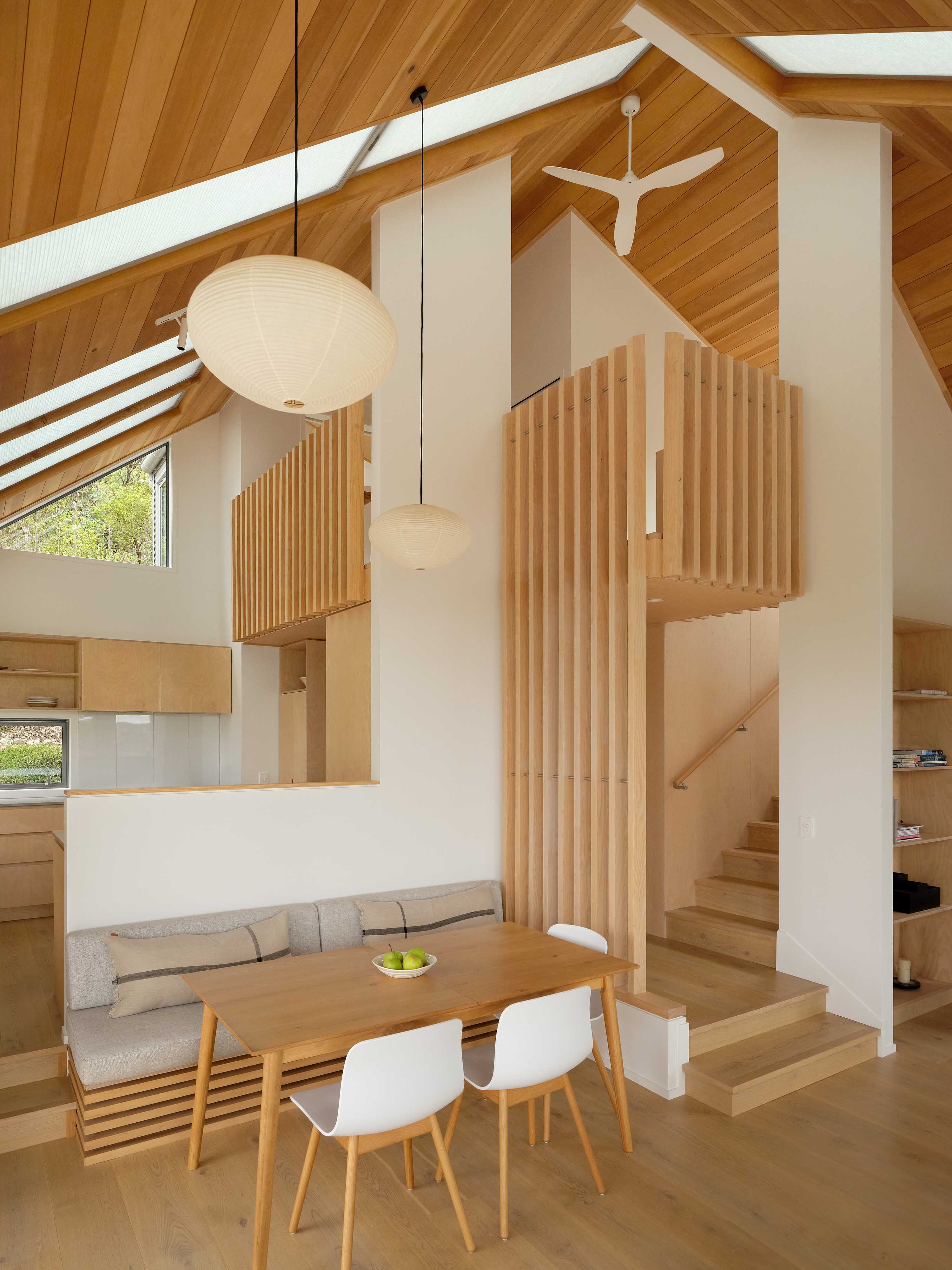
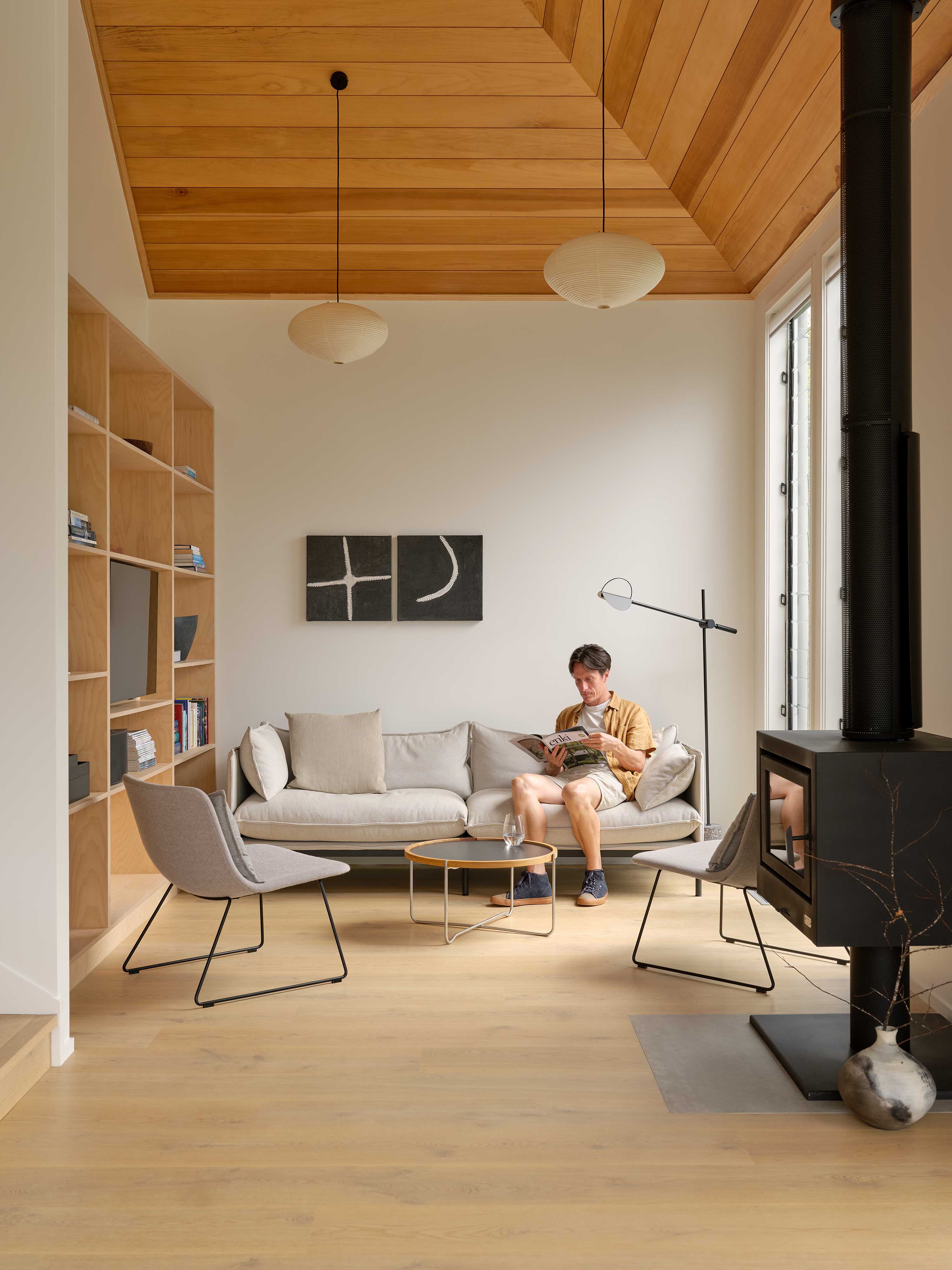
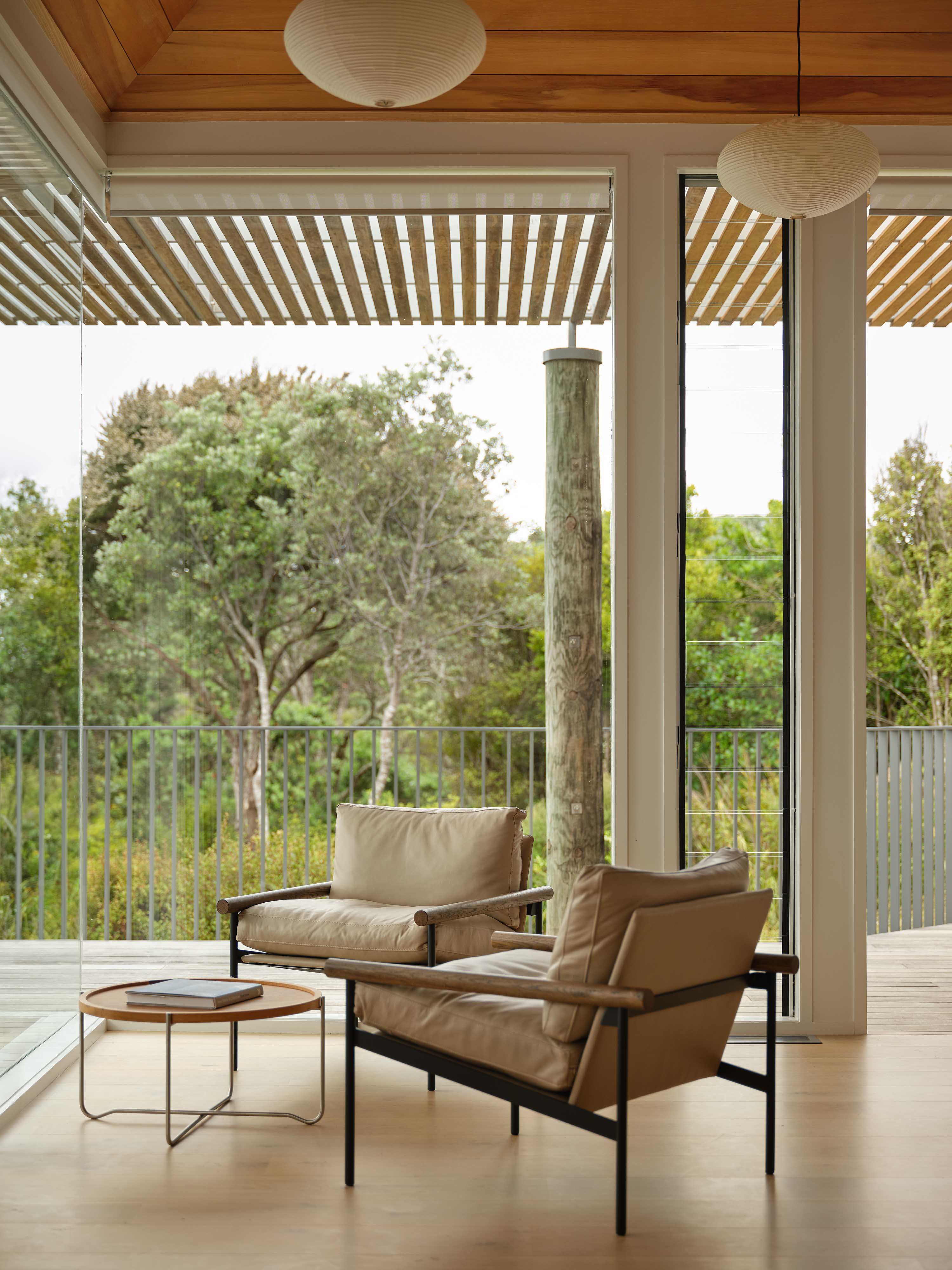
At Oneroa, the couple wanted to preserve as much of the house as they could. They loved the deep verandah and cathedral ceiling, and they liked the pragmatic pine poles that held the whole thing up. They were also fond of a timber-framed corner window flanked by two tall doors that took your eye out to the view. “I guess it’s the way it is because we really liked those things,” says Desna of the renovation, “and we really wanted to keep them. To some extent that dictates what you do with the rest of the place – it just fell into place around that.”
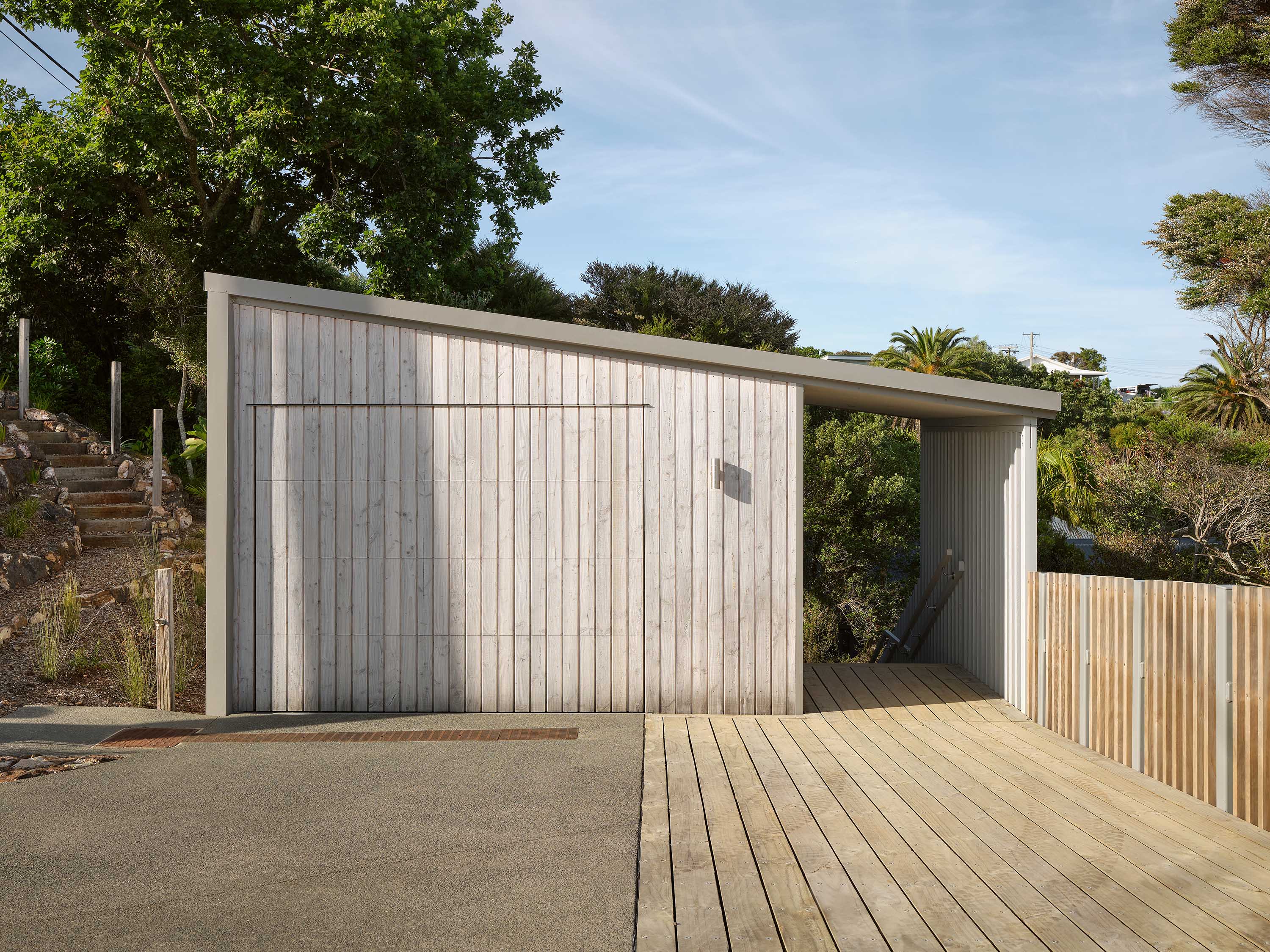
Dave and project architect Tim Sargisson’s plan was simple. At the top of the slope, they devised a single-car garage and workshop reached by a blissfully not-steep new concrete driveway, the resource consent for which can only be described as torturous. They also devised a screened entranceway under cover to the side of the garage. It provides a moment of pause before you descend the slope through a new garden, down stairs formed from reclaimed jarrah and local stone.
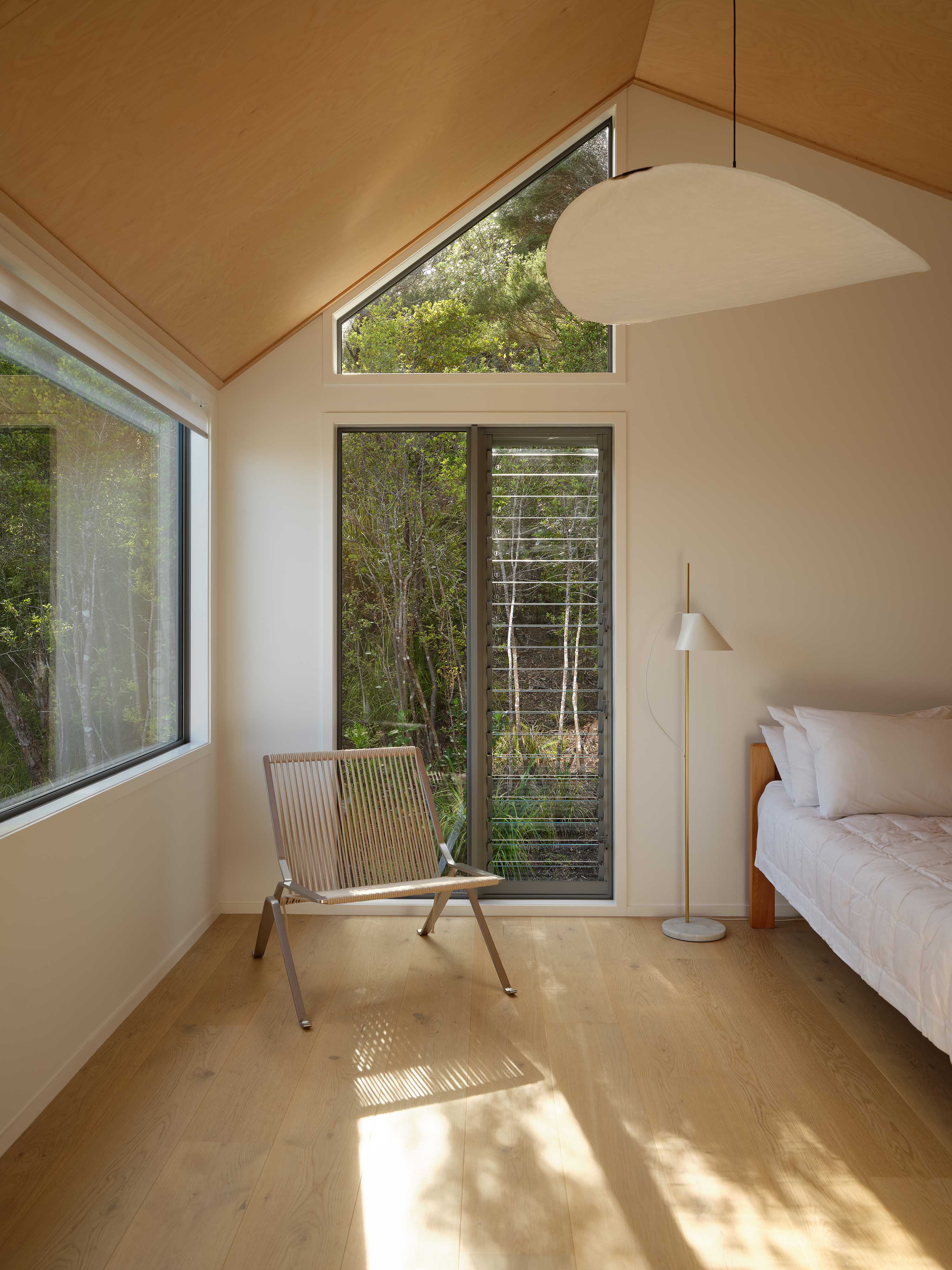
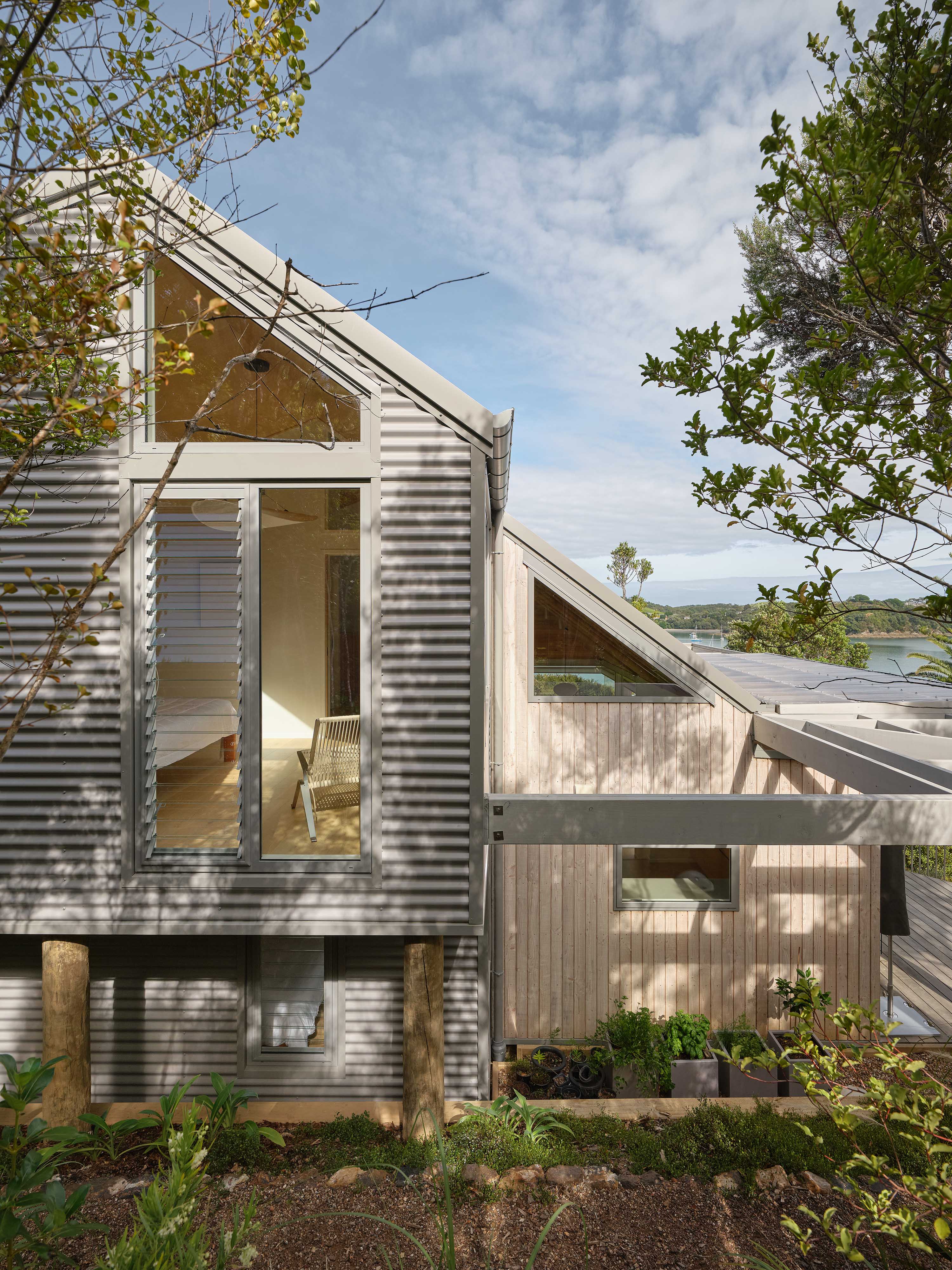
In the main house, they left the living spaces in the same spots, but chopped off the now-rotten block at the back, extending the main gable towards the hill. Here, they squared off the plan to create room for a bedroom and bathroom on both levels, along with a new staircase. It is orthogonal and straightforward, impeccably planned and logical, but it also preserves the magic of the place as you come through the low-ceilinged entry portal into the living space with its lofty honey-coloured sarking.
Dave had the same pause as they kicked into the renovation. “It’s really a story of them cleaning it up,” he says. “And you do wonder, ‘Are we right? Getting back to orthogonal?’ I think we were, because the stairs got cleaned up, we’ve got extra space for a bathroom upstairs and we’ve got room for a guest bedroom downstairs. But we still committed to that main volume.”
Throughout, they gently tidied and rationalised the edges, extending the deck where it had originally finished on a 45-degree angle, leaving a pole isolated in space holding up a corner of the pergola. They reclad and relined where necessary, but kept as much of the building as they could. The pine poles, for instance, had never been capped and were rotting from the tops. The builders cut them back to good timber, then topped them with steel spigot caps which provide a moment of lightness between the poles and the beam – a delightful moment that comes from a place of deep pragmatism.
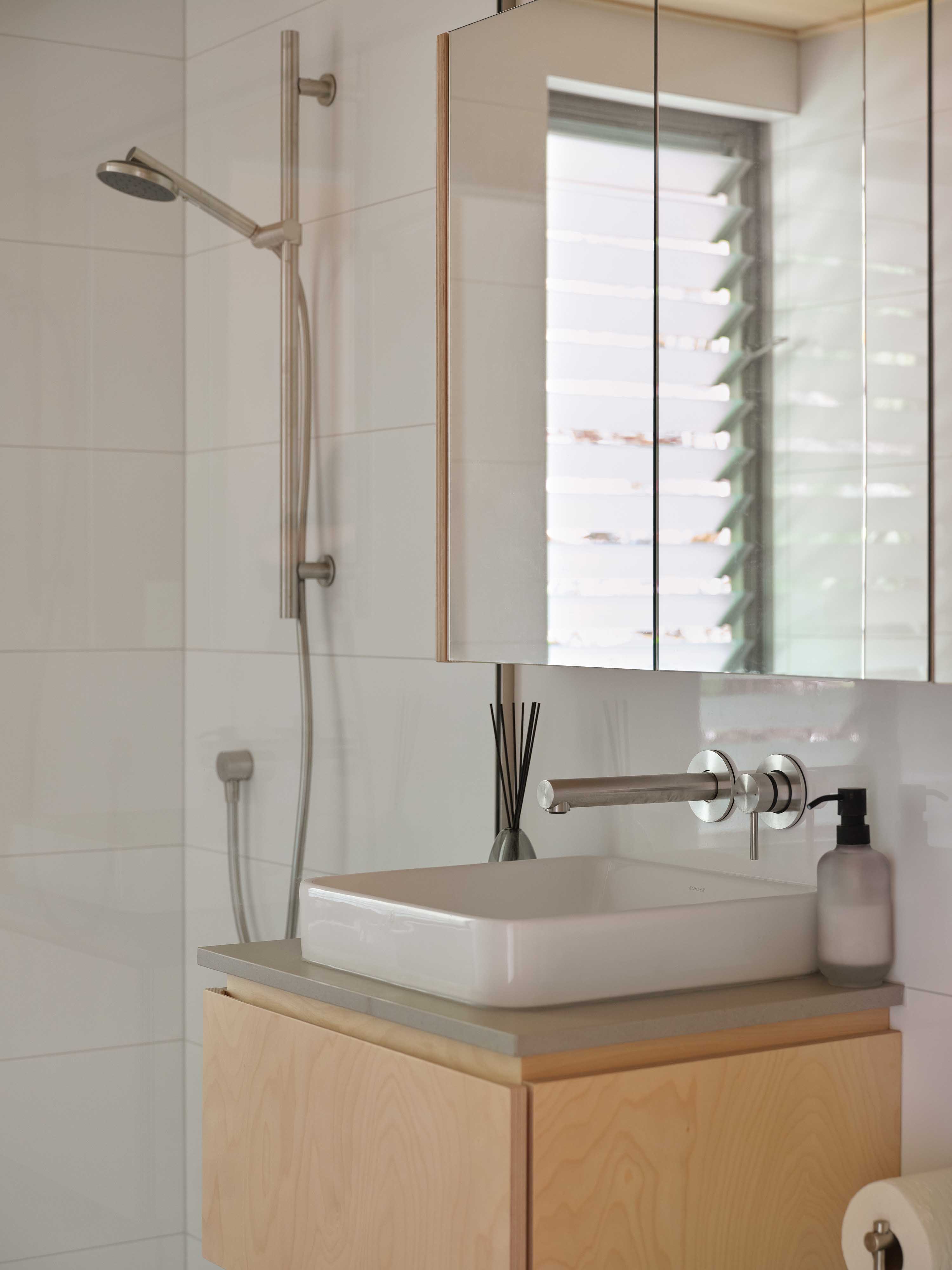
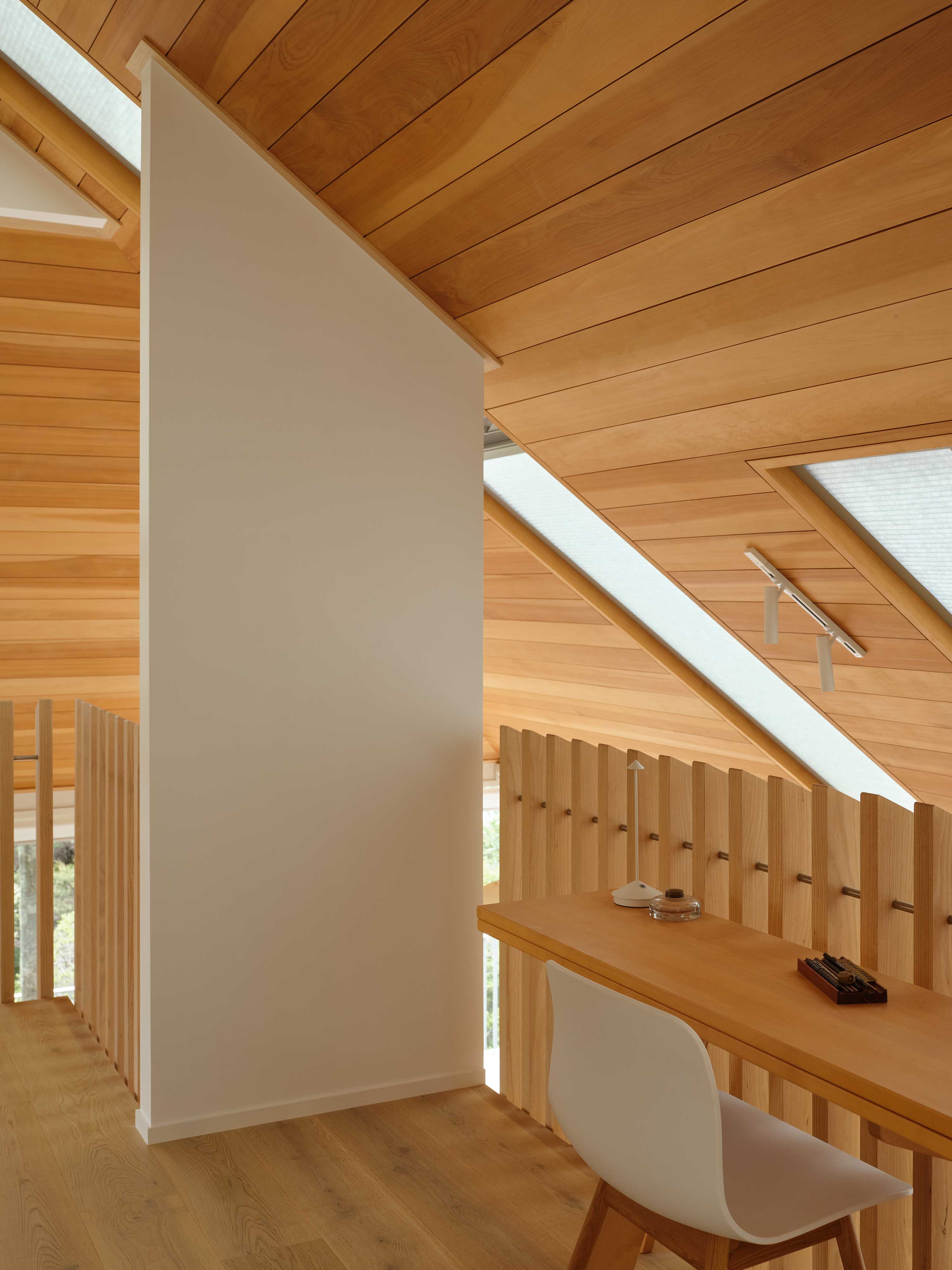
The result is serene. It honours the original parts of the house that everyone loved, while introducing a calm, consistent palette throughout – birch-ply cabinetry, large-format tiles, oak floors, white walls and Malaysian kauri ceilings. It’s spare, but not cold: there are places to withdraw to by the fire, and places to sit in the view. It’s not a big house, but it is a generous one. “This place kind of cast a spell on us,” says Desna. “It’s a quiet place, so it would just feel wrong to do anything other than what we’ve done.”

1. Entry
2. Bathroom
3. Laundry
4. Living
5. Dining
6. Sitting
7. Deck
8. Kitchen
9. Bedroom
10. Study
Related Stories: