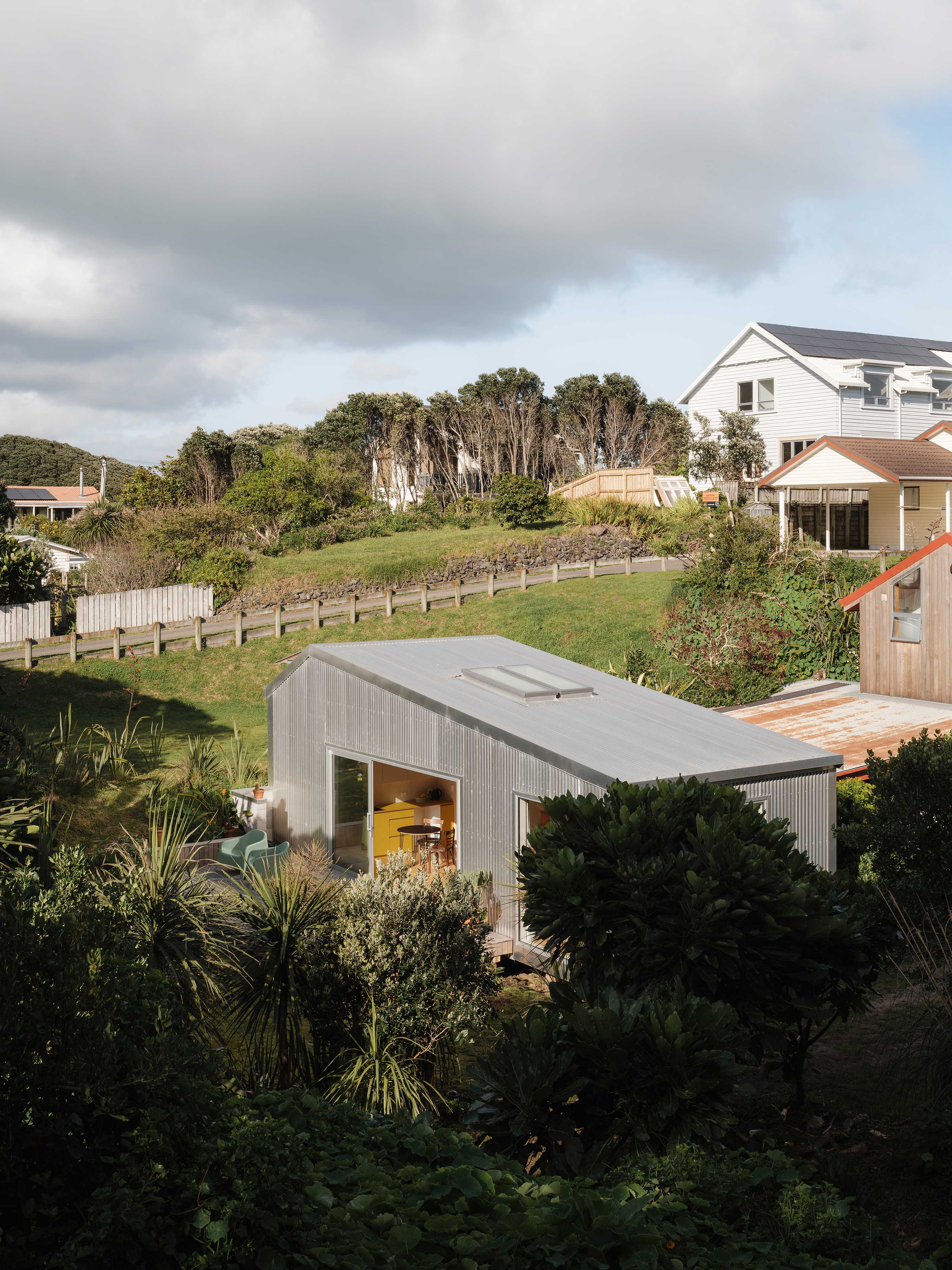
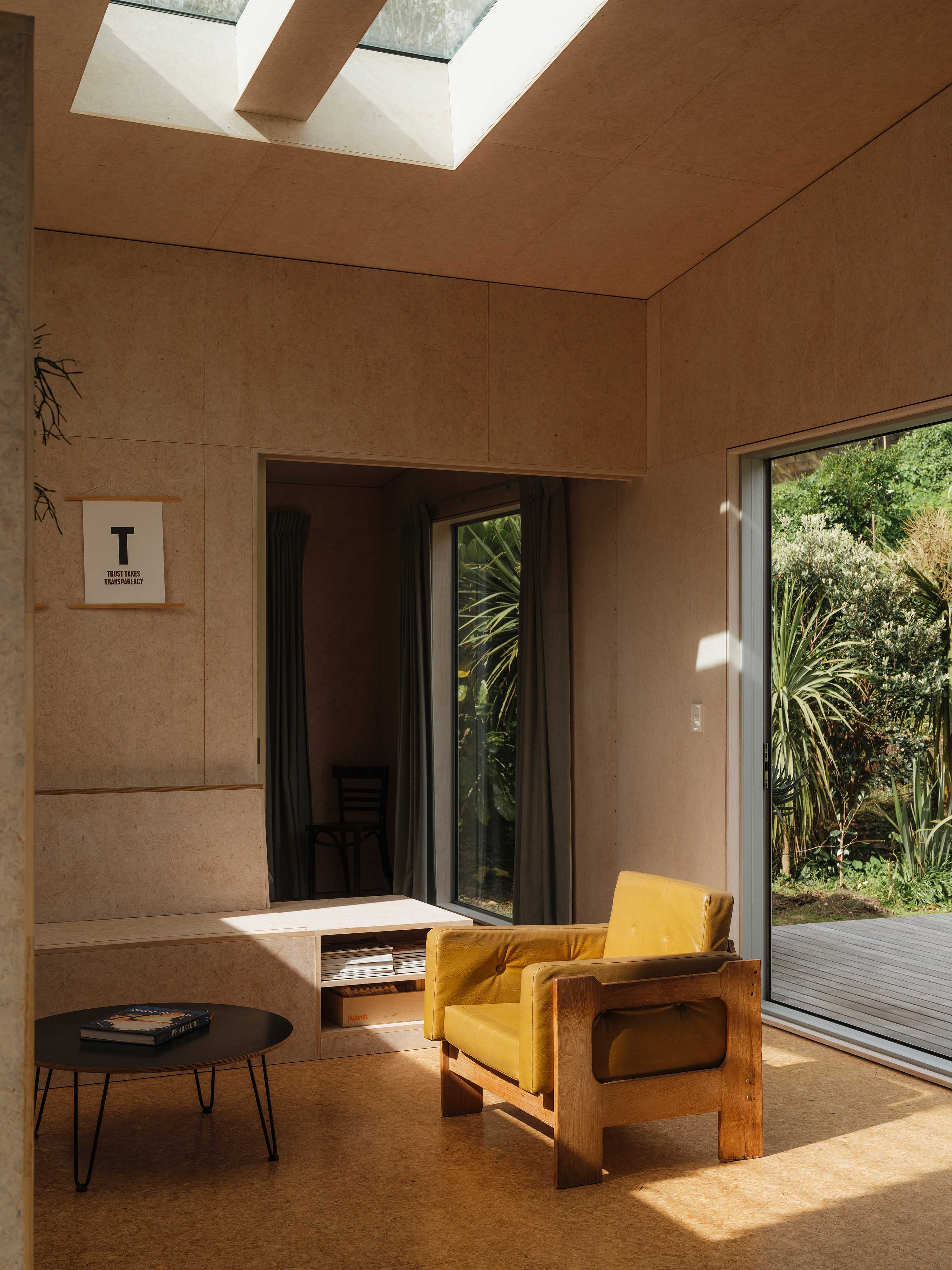
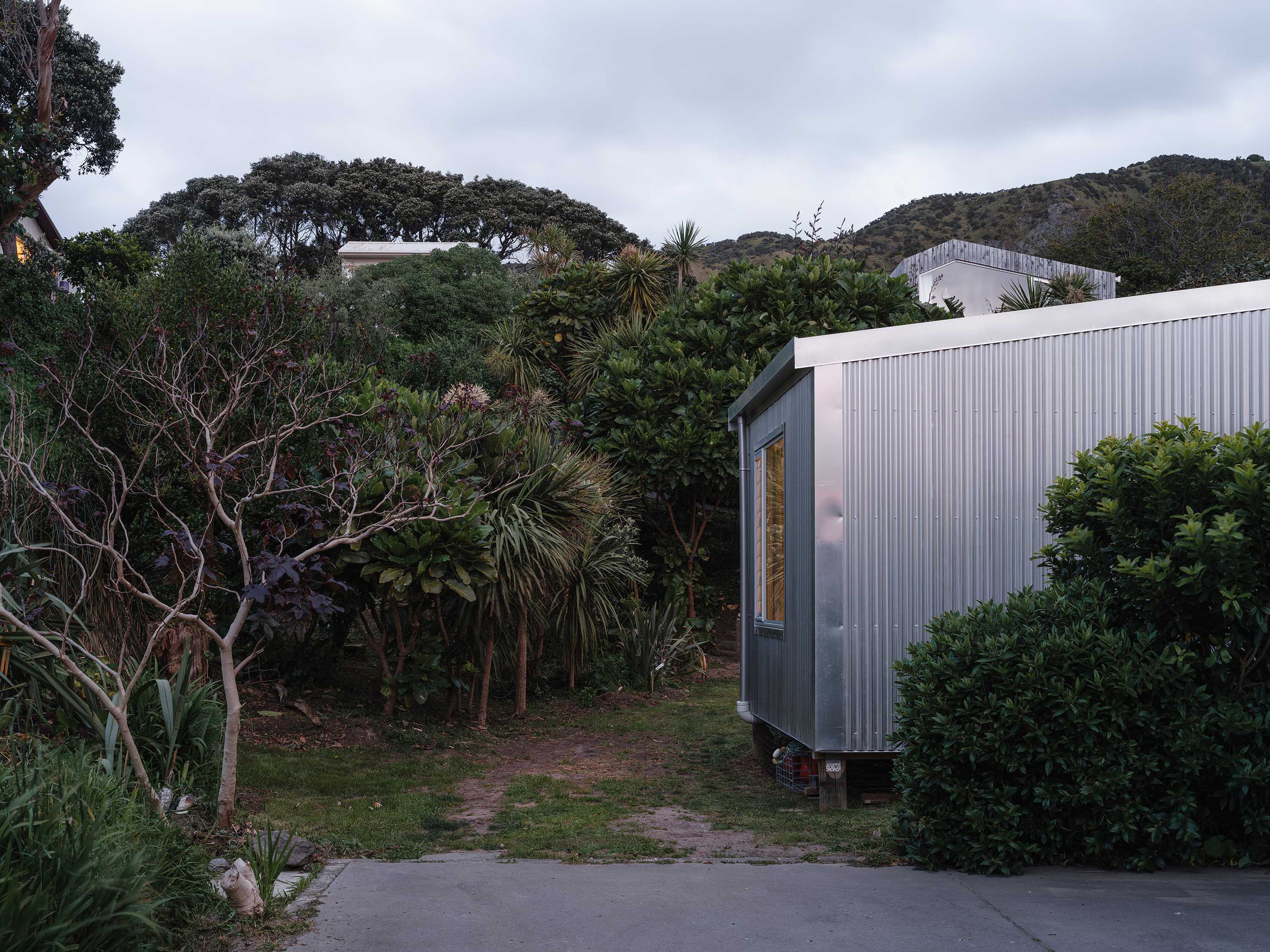
William Giesen always knew he’d do something with the little bit of land tucked at the bottom of his Paekākāriki section. Back when the architect and his wife Tanya bought the coastal property in 2009, he began mulling over prospective ideas for the sheltered wee dell. Prioritising renovations on the family home up the hill, he chipped away at the landscaping over the years, planting some 80 cabbage trees along the border of a prospective building platform. When the time came to put plans into practice, this 45-square-metre asymmetric apartment was built. Part accommodation, part office, part teenage hangout, with a broad deck opening to the east, it makes a compelling case for a well-considered, multifunctional footprint.
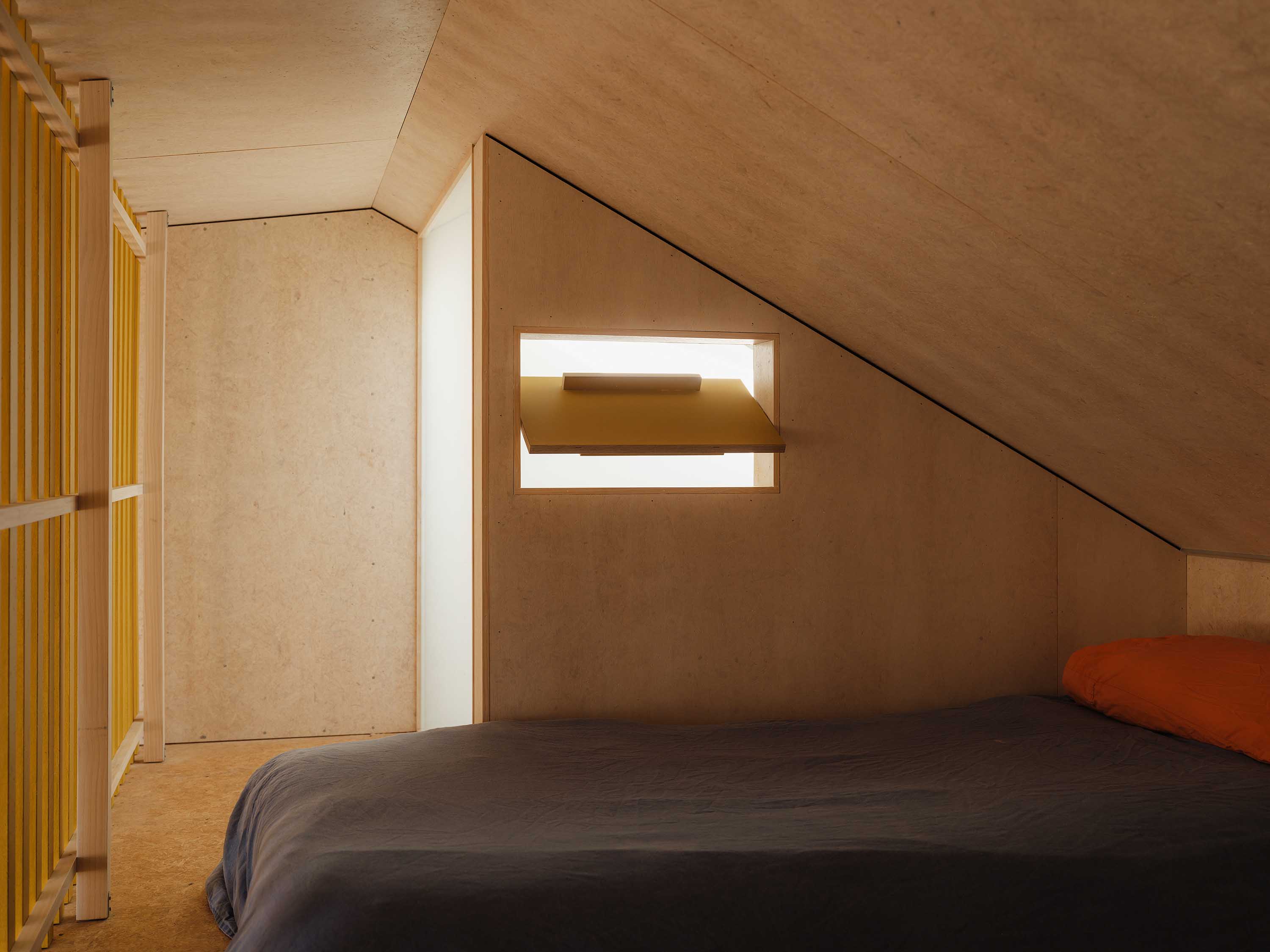
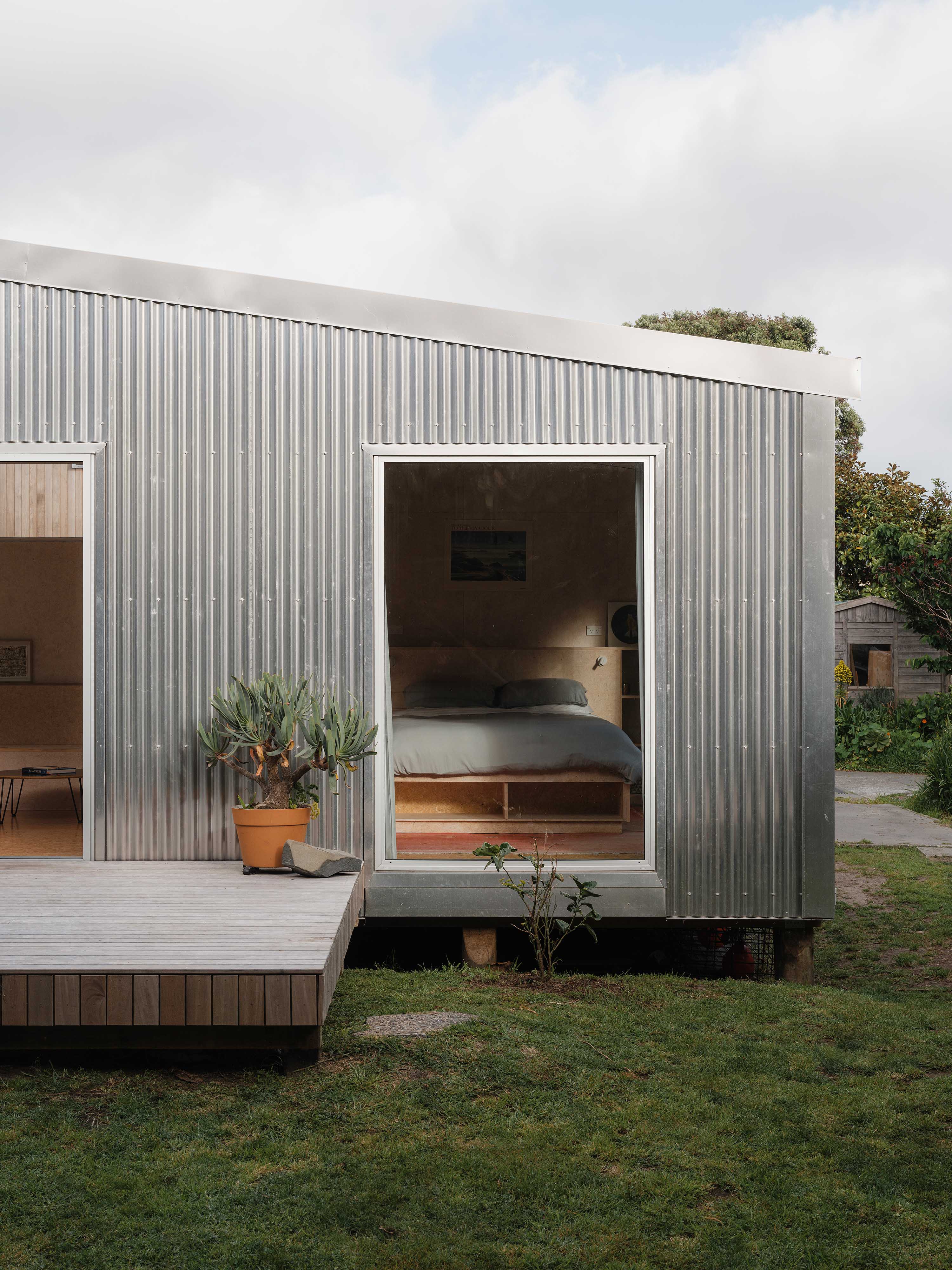
“I’ve worked on many small projects over the years, and there are certainly a few tricks and recurring themes I’ve brought into this one,” says Giesen. The offset roof, which creates space for a mezzanine bedroom, is a familiar move in tiny-home design, as are the shutters and skylight that promote cross ventilation. While studying in France, Giesen was drawn to the minimalist design priorities of French firm Lacaton & Vassal, and a similarly pared-back sensibility is evident here. Everything has a purpose and a place. “I wanted it to be straightforward, simple, and to feel unpretentious,” he reasons. “We also knew that it would be built by a one-man band, so it couldn’t be overcomplicated.”
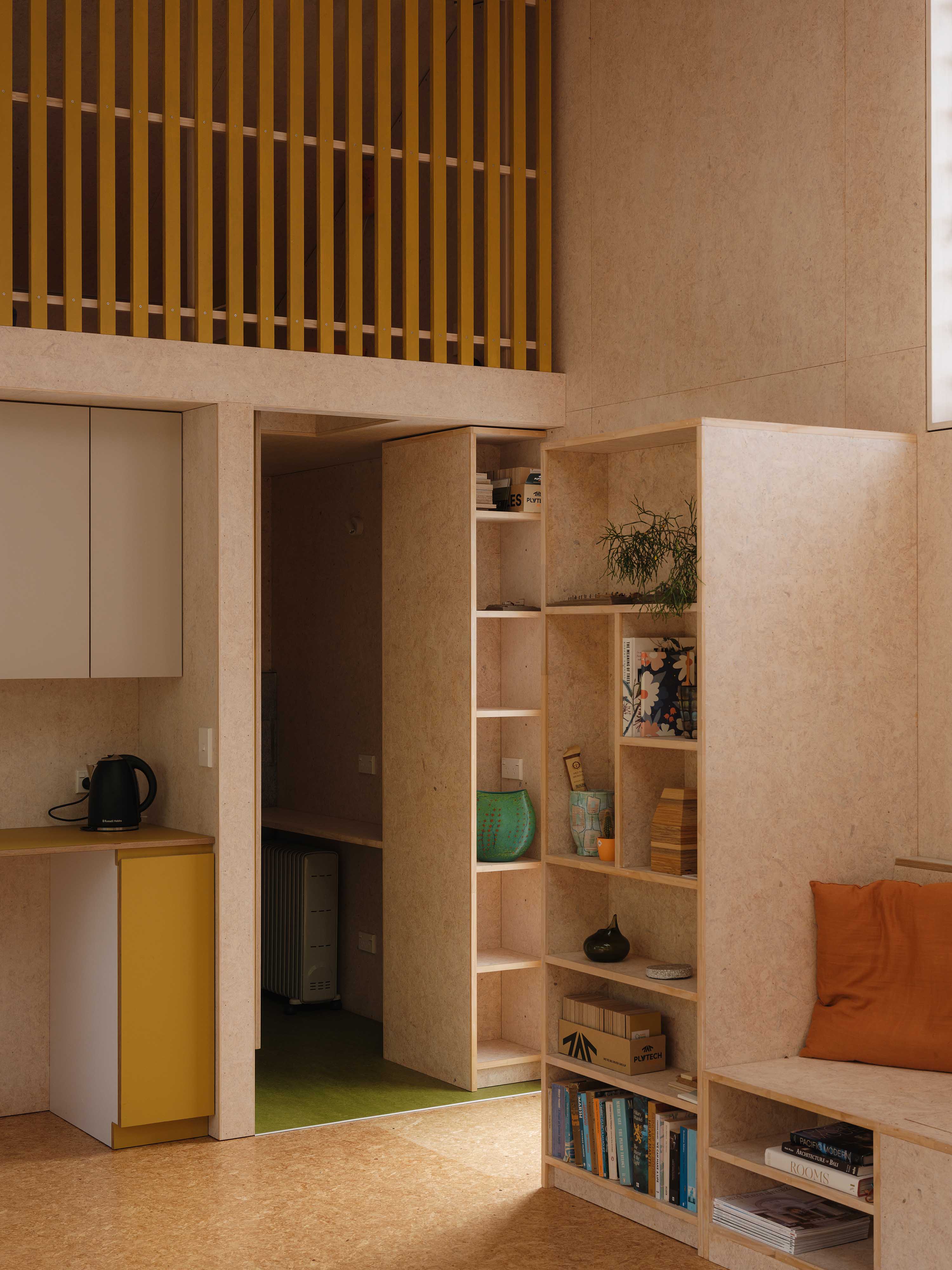
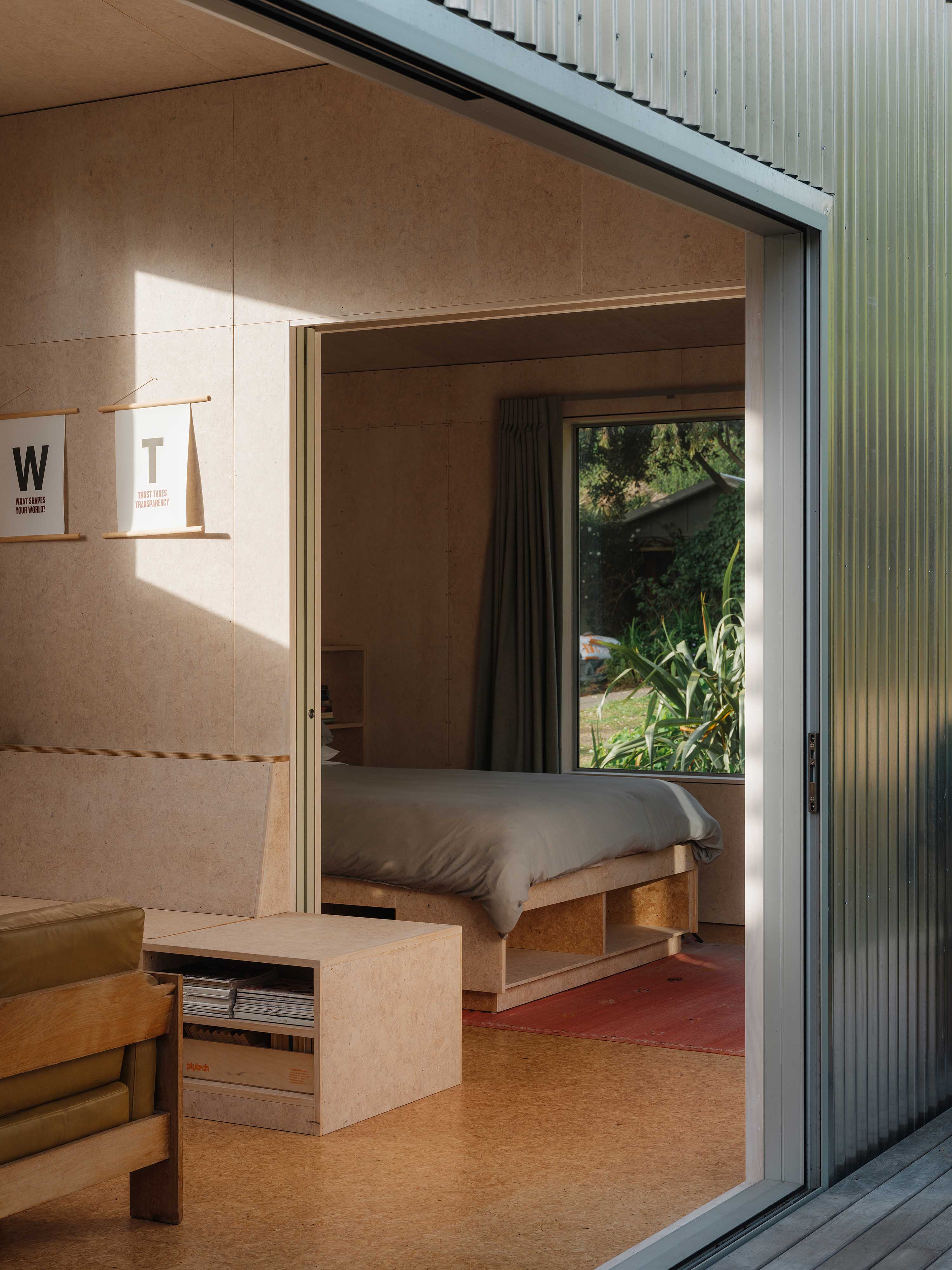
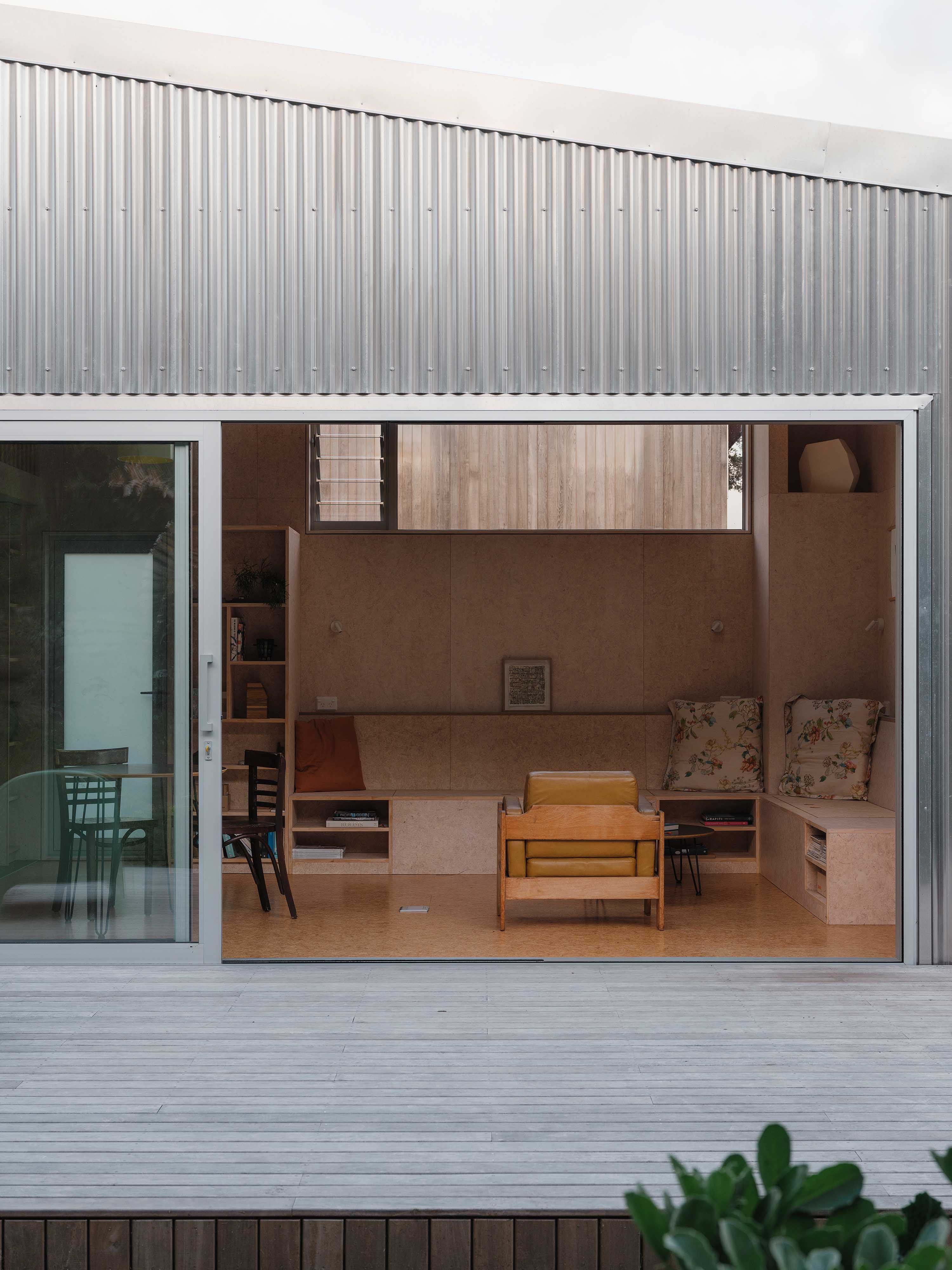
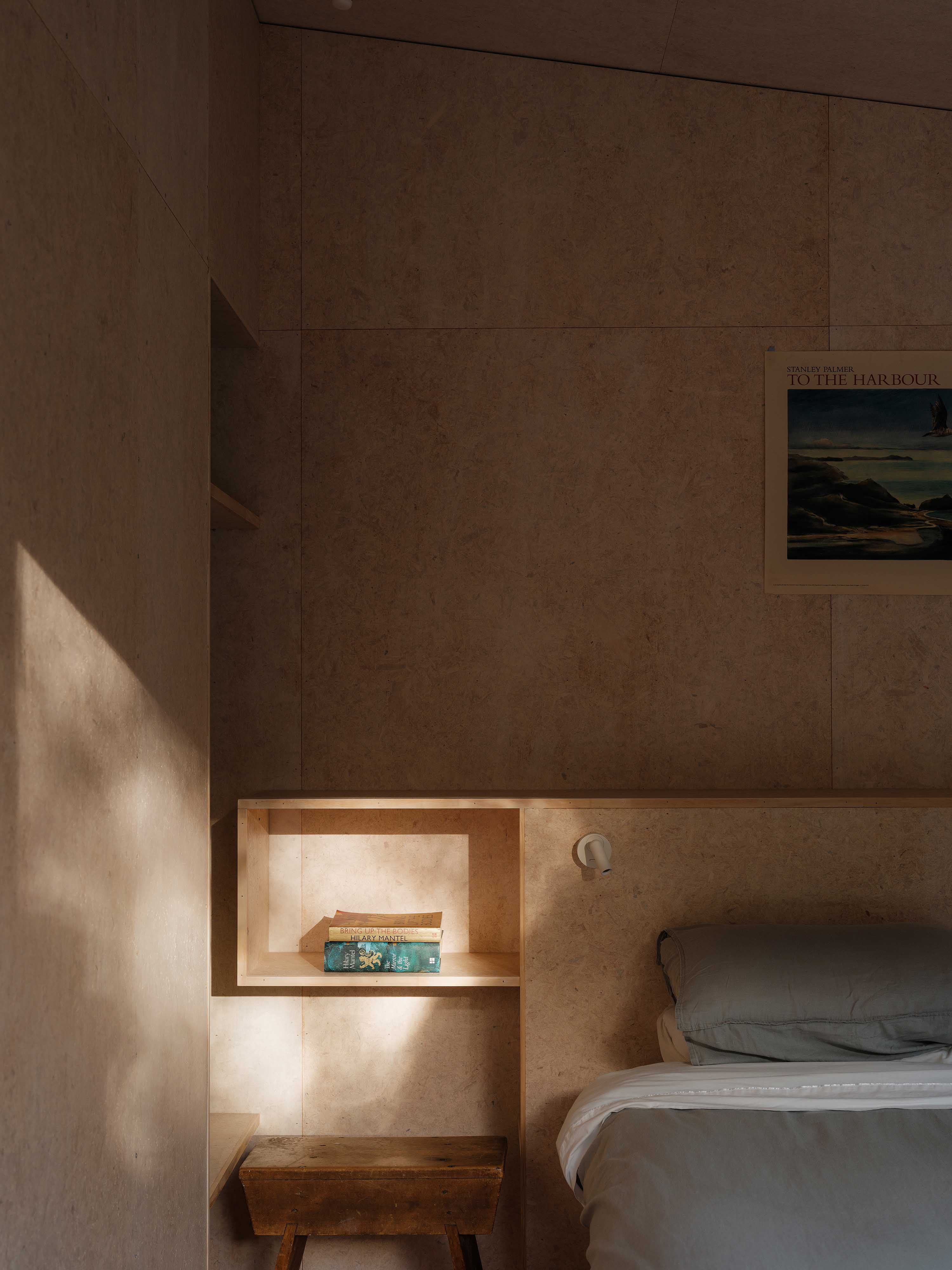
The one man in question is builder Matt Ralph, an “incredible craftsperson” and close friend. The pair had collaborated on many projects before, including renovations to the main house, and Giesen was keen to have Ralph back on board. The design was consciously shaped around his solo working style, with elements like the corrugated aluminium cladding and roof outsourced so Ralph could focus on the rest of the build. “He’s exceptionally skilled and has high standards and great ideas – just look at the built-in furniture,” says Giesen. Formed from the same whitewashed Strandboard that makes up the majority of the home, Ralph capped every edge with pine, unwilling to leave the wood’s Weet-Bix-like interior exposed. The time and precision required were considerable, but the payoff is evident.
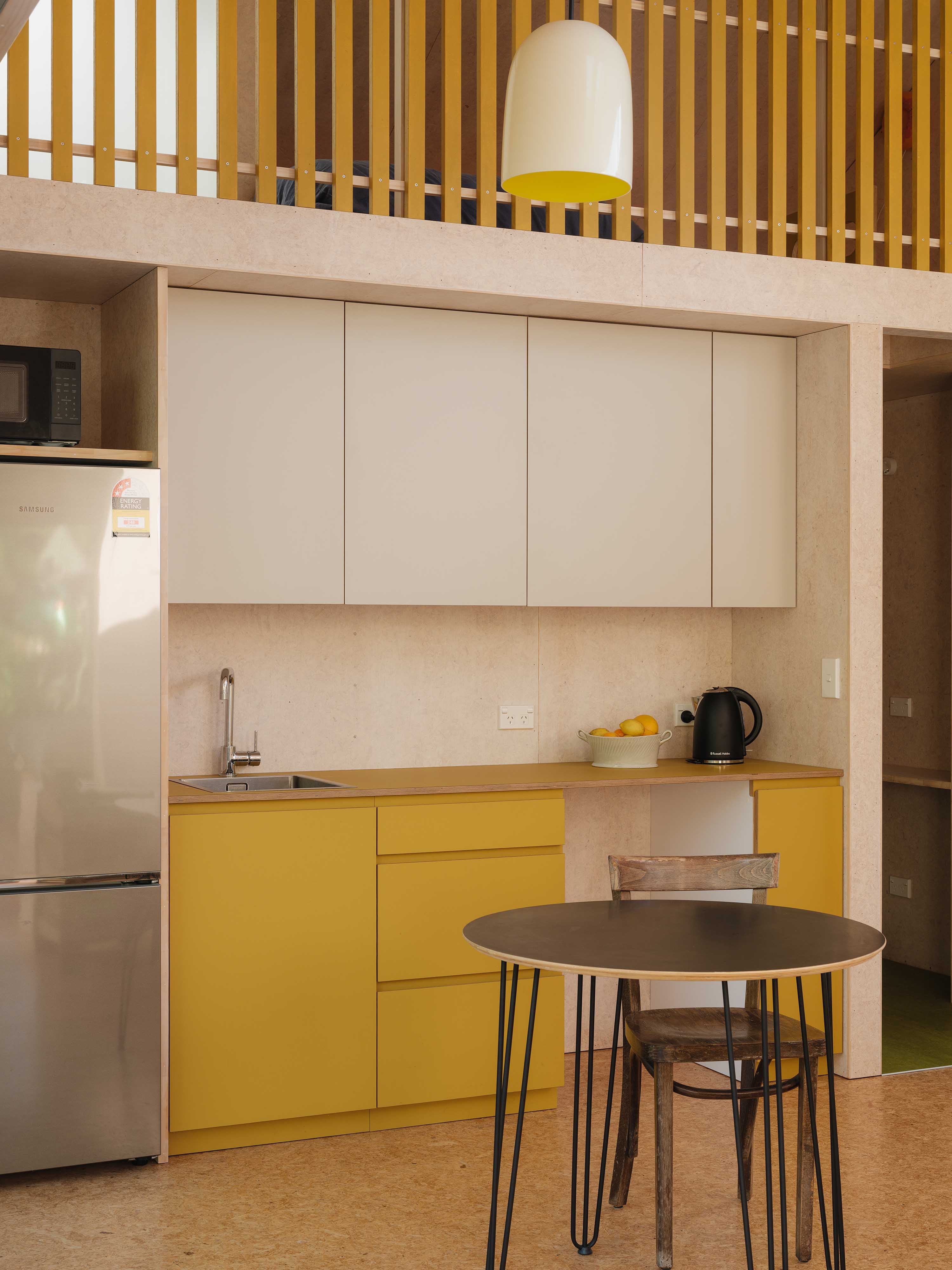
“The whole thing was an exercise in material minimalism,” says Giesen. “I like the idea of taking a really boring, basic material like Strandboard and using it in lots of different ways – floor, lining, furniture, everything.” There is a caveat to that kind of restraint, however, because it’s only successful if the craftsmanship is near-flawless, as it is here. Accents of green Marmoleum and a punchy yellow kitchen made from laminate-topped ply offset the natural flooring. The controlled material palette kept the project in tune with the budget and underlying principle of simplicity. “The most expensive thing in the whole place is probably the glass pendant light in the kitchen,” Giesen laughs.
The apartment faces east, turning its back on a shared parking area, which made the placement of glazing critical for light and privacy. Two central skylights deliver all-day sun, while a high kitchen window draws afternoon light inside. The bedroom’s large north-facing window is fitted with opening glass shutters, and sliding doors connect the living space to a deck overlooking the long-cultivated garden.
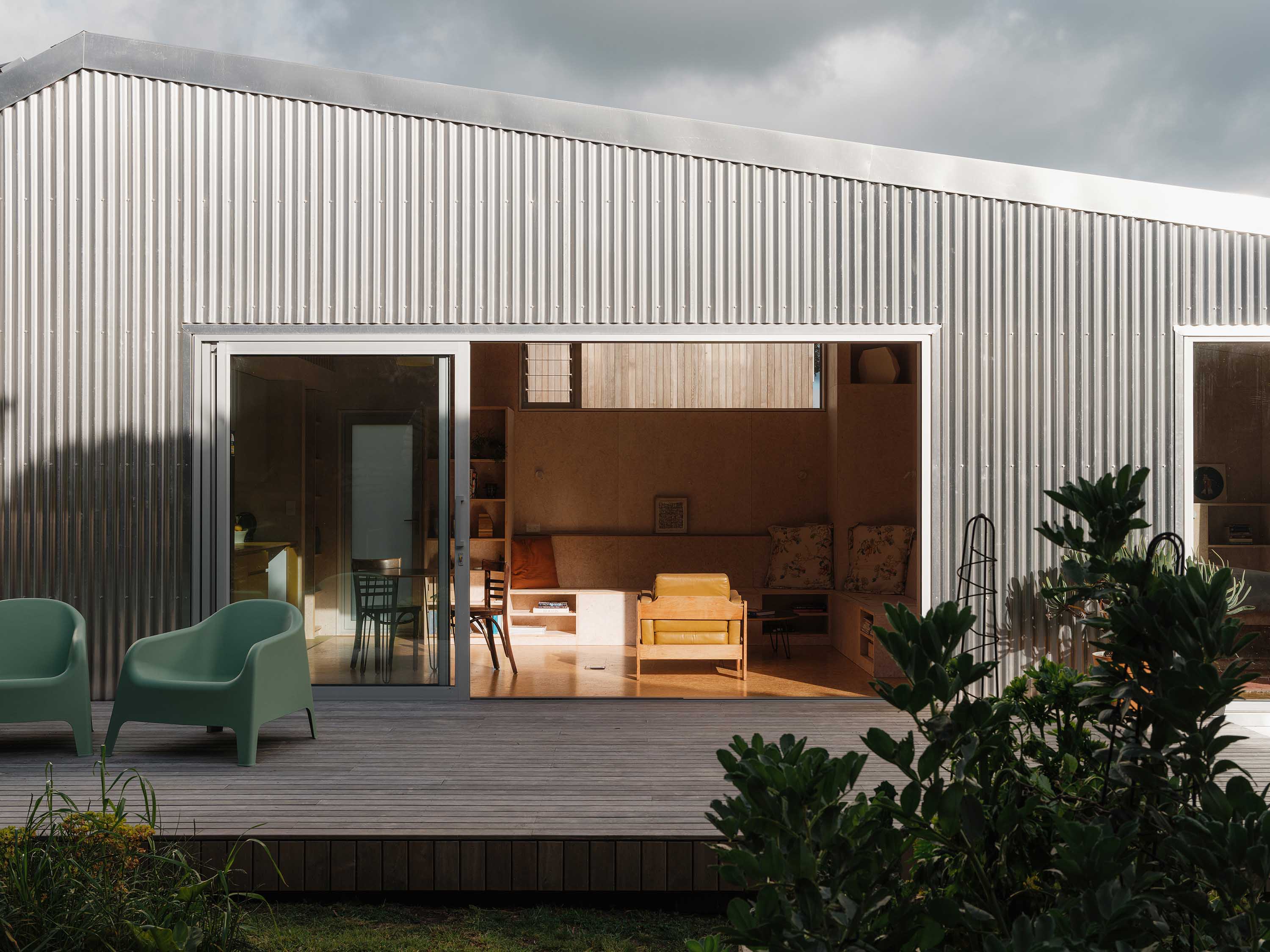
Beneath that carefully tended planting lies the septic and stormwater systems. In Paekākāriki, homes rely on tanks, so despite the building’s modest scale, space had to be found for an effluent field, septic tank, and new soak pit. “It was a pretty compact site to deal with all of that,” says Giesen. “It took some problem solving and meant ripping apart part of the garden, but we got there.” The upside? The main home’s outdated systems were upgraded at the same time. Take the win.
Alongside the pragmatic moves, there’s plenty of room for play. “In our home, the kids’ bedrooms feed off the living area, so this gives them a little bit more space to hang out, without us,” says Giesen. The mezzanine draws on memories of his childhood home, designed by John Scott, which featured a sneaky storage space running between his and his sister’s bedrooms. “I loved being nestled up there and hanging out with my sister,” he recalls. That sense of quiet, nostalgic mischief is reinterpreted here in the slatted mezzanine accessed via a sunny yellow ladder.
In the end, the Giesens never settled on a sole, fixed function for the apartment. Instead, it morphs to purpose, its deliberate disconnection from the main house lending it both autonomy and flexibility. The natural contours of the land provide privacy and shelter, while independent access and mature planting reinforce the separation. It’s a home office, a teenage escape pod, a guest house for friends and family, and a hotel suite for others. “We wanted the potential for someone to live in the apartment full-time, so it had to be fully autonomous,” says Giesen. “In the classic ‘granny flat’ scenario, our parents seem like obvious future tenants.”
For now, no one’s taking up permanent residence – the family is too busy sharing it amongst themselves and their visitors. “We can work until midday on Friday and then clear out, and the Airbnb guests check in an hour later,” says Giesen. “There’s something quite fun about having your own wee hotel. In architecture, it’s usually just the owners and their friends who experience a space. Here, I get to share it with so many others – and I’m really enjoying that.
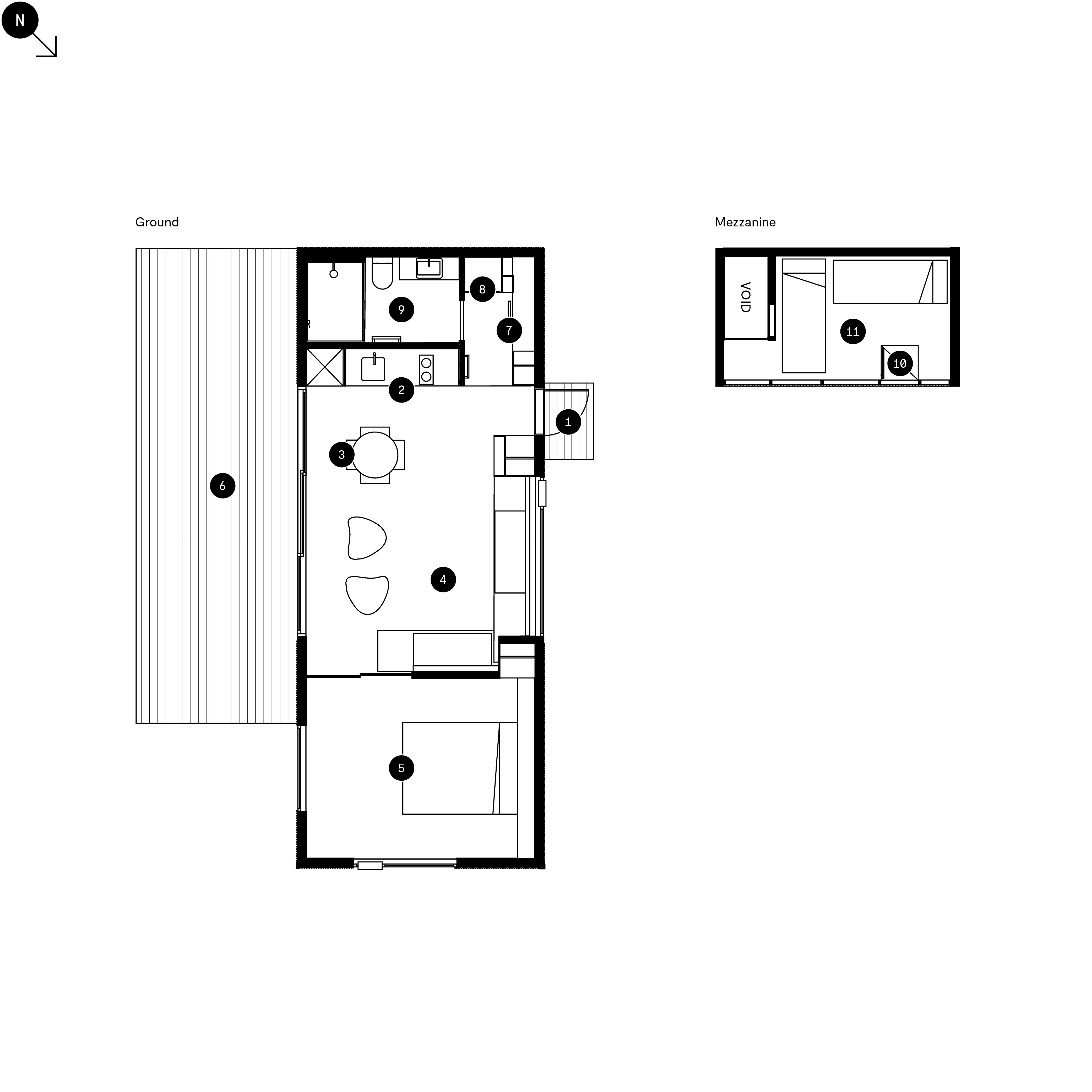
1. Entry
2. Kitchen
3. Dining
4. Living
5. Bedroom
6. Deck
7. Desk
8. Laundry
9. Bathroom
10. Ladder
11. Bunkroom
Related Stories: