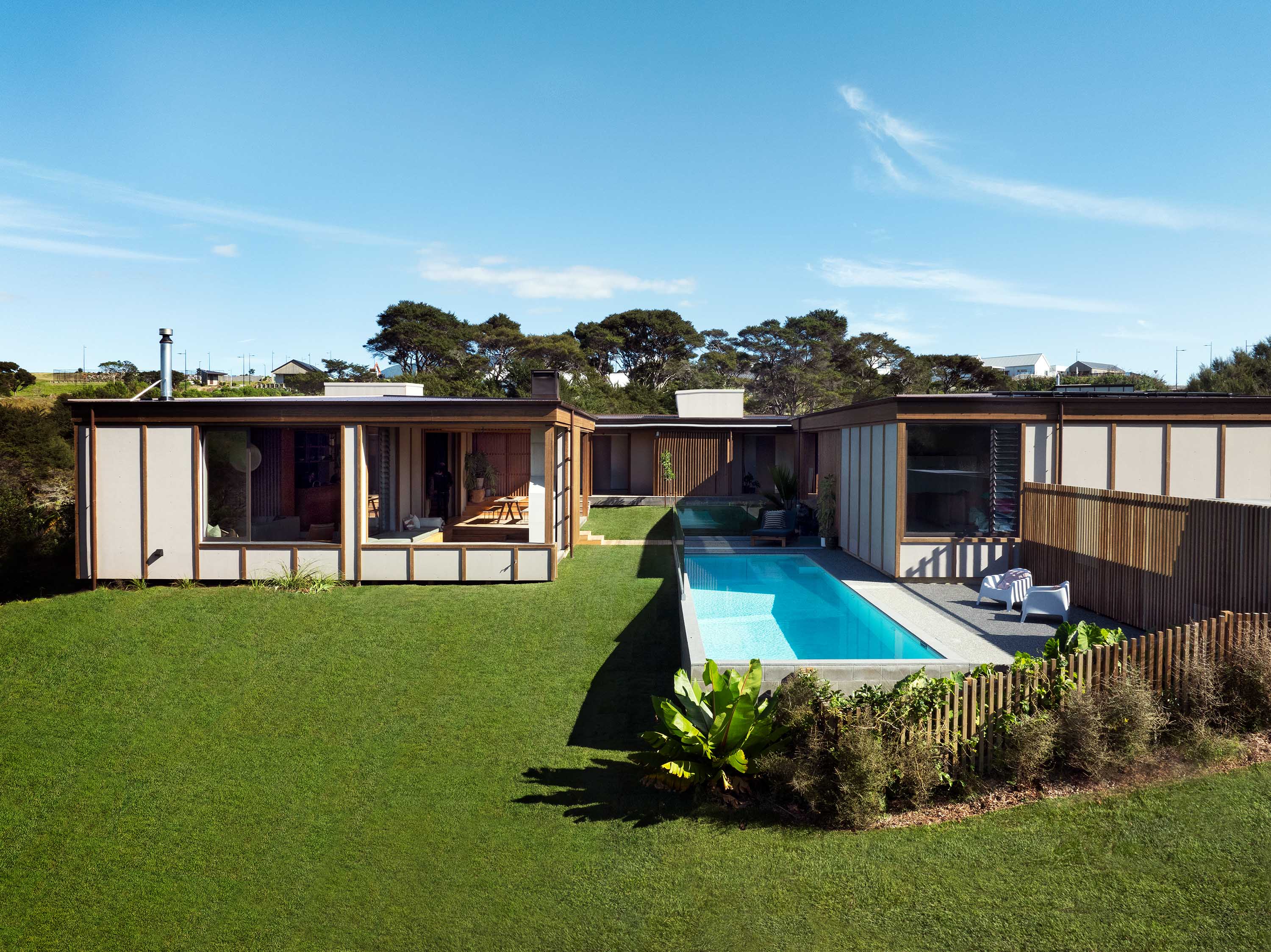
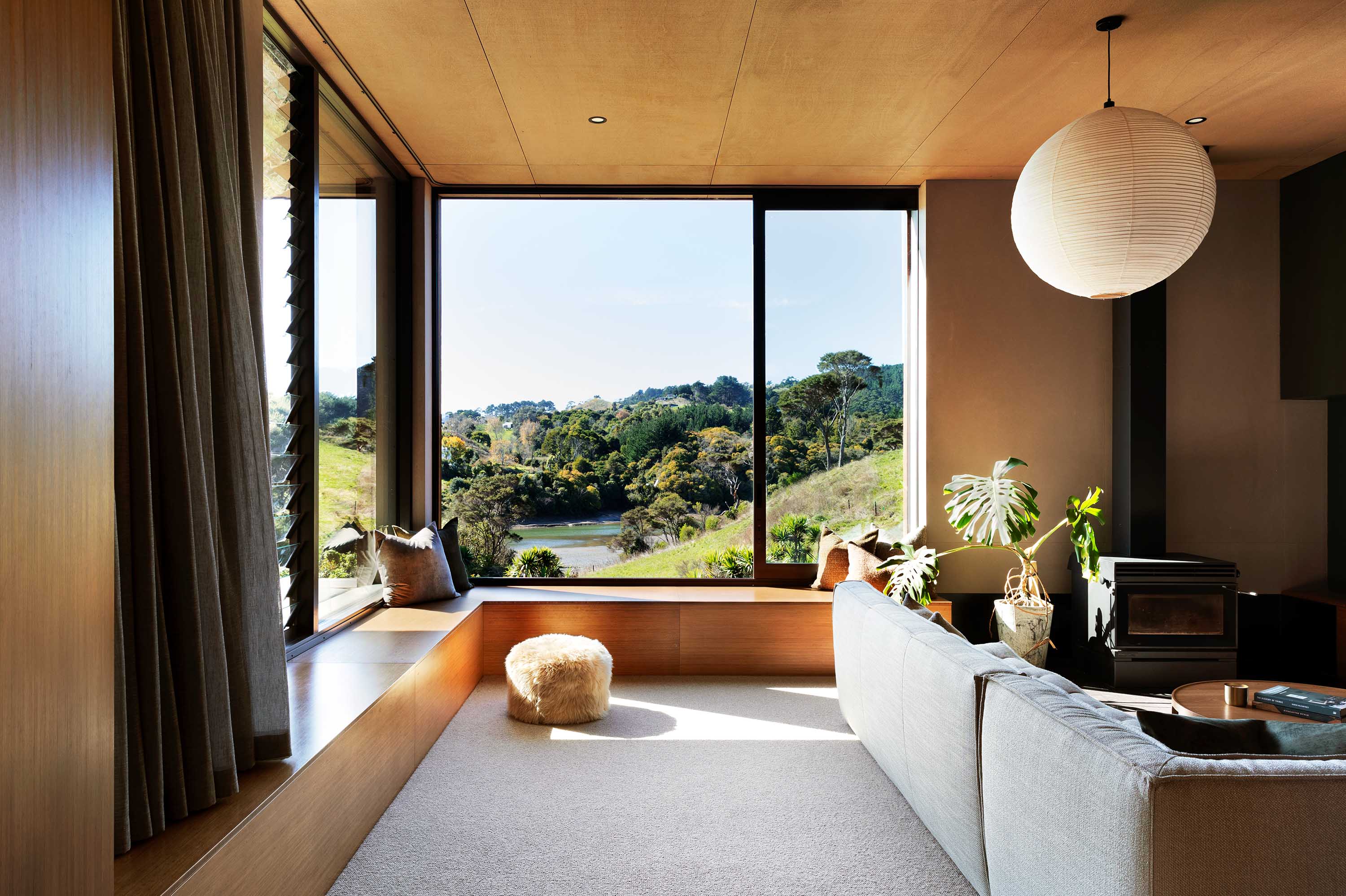
To listen to a podcast by Charlotte Ryan inspired by this house, click here. This layered family home sits across the Rangitahi Bridge in the “new bit” of Whāingaroa Raglan. Although the site is technically part of a larger development, it doesn’t scream “subdivision”. It’s sort of out of the way, off on its own, stepping quietly down the land towards the water. There are views across the inlet to the bush, farmland and the Tarapaatiki Paa on the opposite bank. It’s peaceful and grounded – the kind of setting that brings a sense of calm to the daily whirl of a family of six.
“It’s a lovely little basin that you drop down into, and it feels like you’re a world away,” explains Red Architecture’s Tane Cox. “The flipside to that is you run the risk of it feeling like you’re dropping into – for a lack of a better word – a bit of a hole. Maybe I’m pretty good at being optimistic and romanticising things, because although I knew it was a challenge, I think that’s what also made this spot special. To me, it was just this lovely feeling, this feeling like you’re being held by the valley.”
Cox had collaborated with owners Hayley and Hayden Vink on numerous builds before. The couple run Hay Property, a design-led building group that focusses on conscious coastal projects in Raglan. Beyond working on several commercial jobs with them, the architect had also designed the Vinks’ previous home. “So we trust each other, we know where each other’s strengths lie, and everyone knows their role,” says Cox. “On this one, they had some really good ideas of how they wanted to live.”
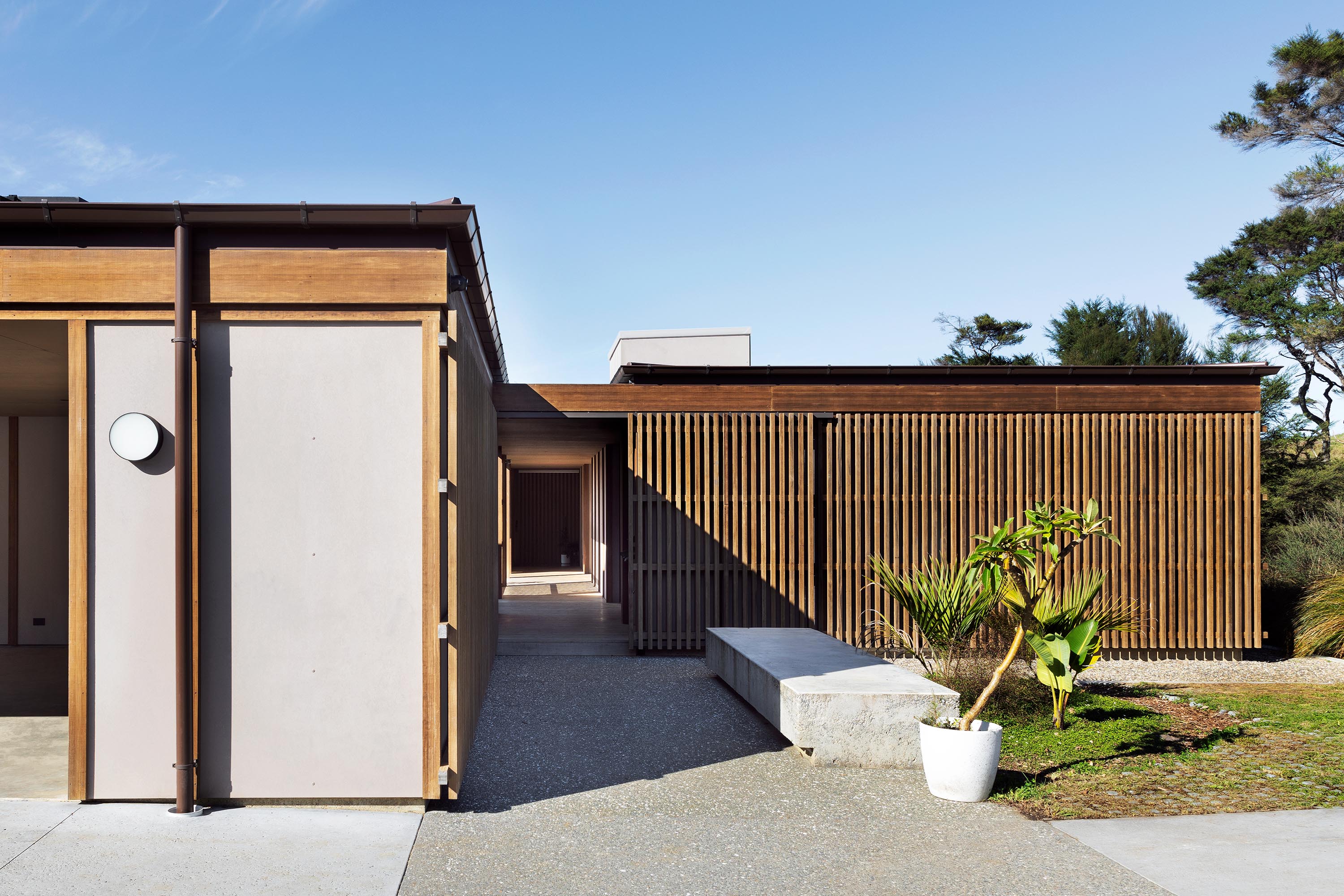
Their brief for the house came in seven points. It was to be: intimate and welcoming; honest; timeless and natural; with a strong sense of shelter and privacy; a forced interaction with the outside (half house, half garden); and it would blend seamlessly into the landscape and bush. The final objective was particularly sweet: to be designed for the best summer’s day. The architect’s response is a home that prioritises inward focus and outward awareness. The low-lying structure is laid out in zones, and it all unfolds around a central courtyard and pool. A deep, covered deck projects from the home into this anchor space – a generous buffer between inside and out. Its transitional nature and slatted timber screens nod to engawa – the sheltered passageways that run along the outside of traditional Japanese homes – but its accentuated depth makes it more than a simple thoroughfare. It’s a place to hang out, play and pause.
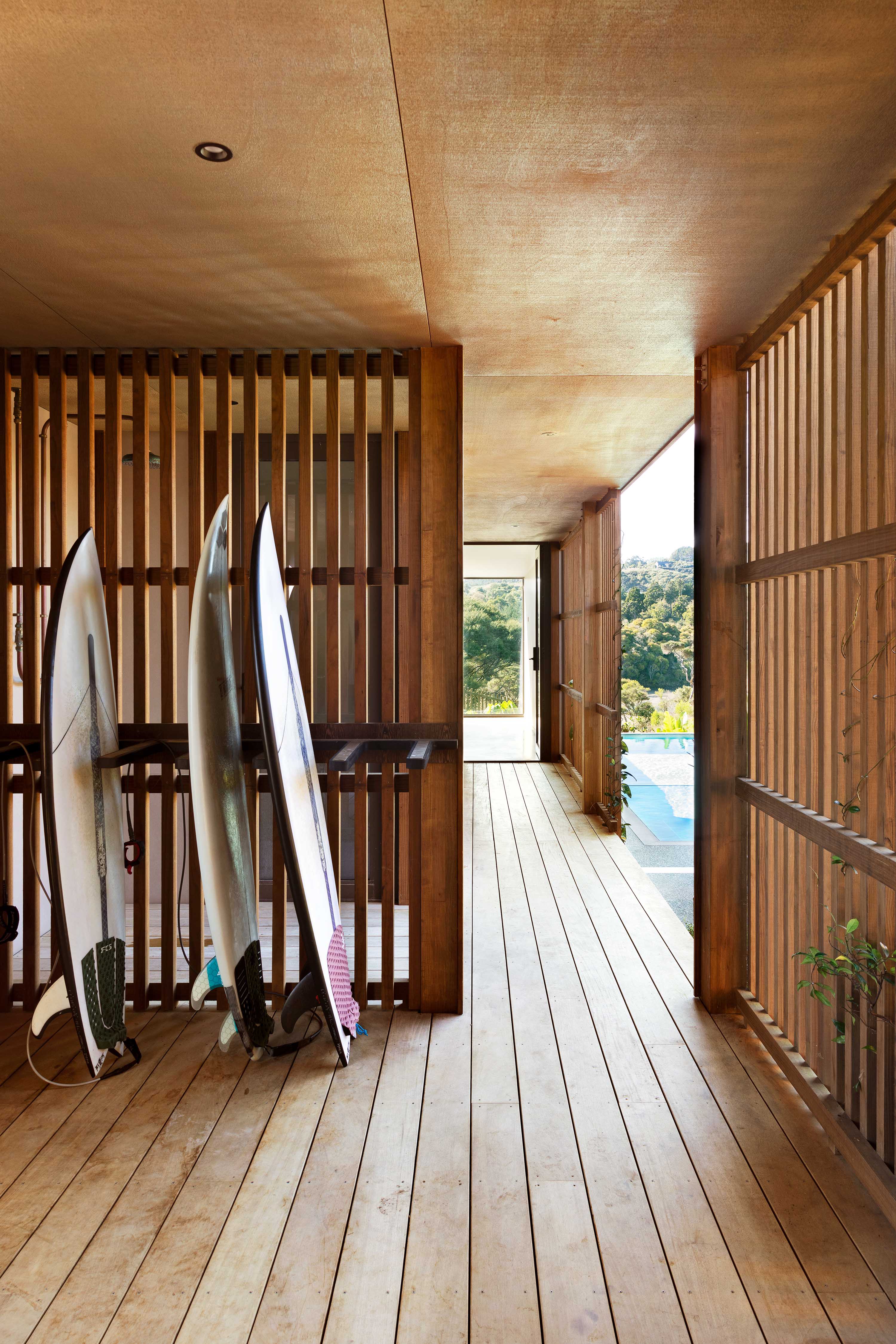
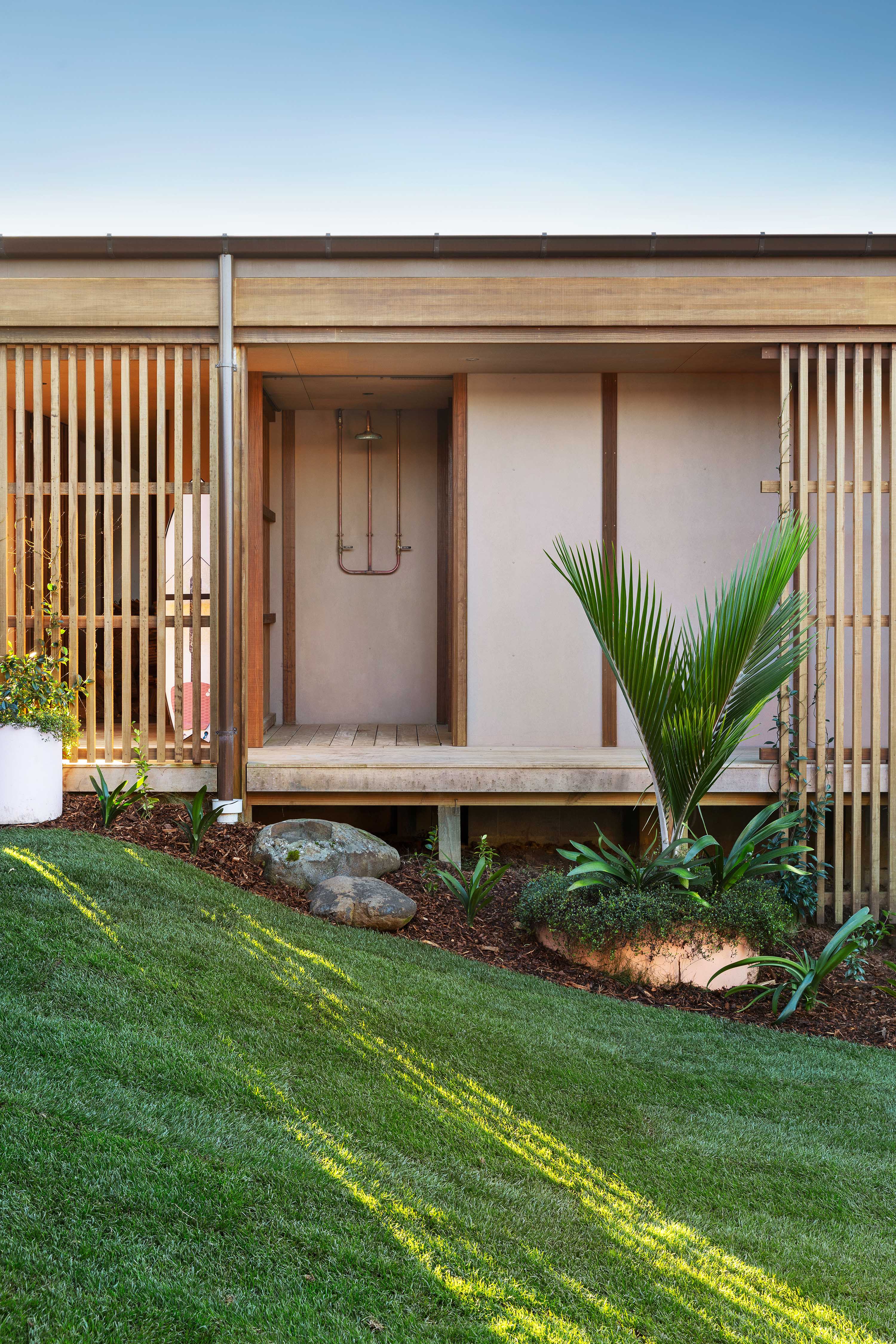
“The Japanese reference didn’t actually crop up until later in the piece,” says Cox. “We wanted a home that had a verandah running around it and introduced big covered areas, porches, courtyards and a connection to the outside. The idea of the engawa just ended up naturally fitting within that.” This breezy layout slots in with the family’s active lifestyle. The clients and their four daughters are keen surfers, spend a lot of time outdoors and are in that jam-packed chapter of their lives. The home embraces all of it. In place of a front door, a break in that covered verandah welcomes you into the inner courtyard. A surfboard rack, outdoor shower and WC sit just inside the threshold, a practical arrangement that’s in tune with the rituals of daily life here.
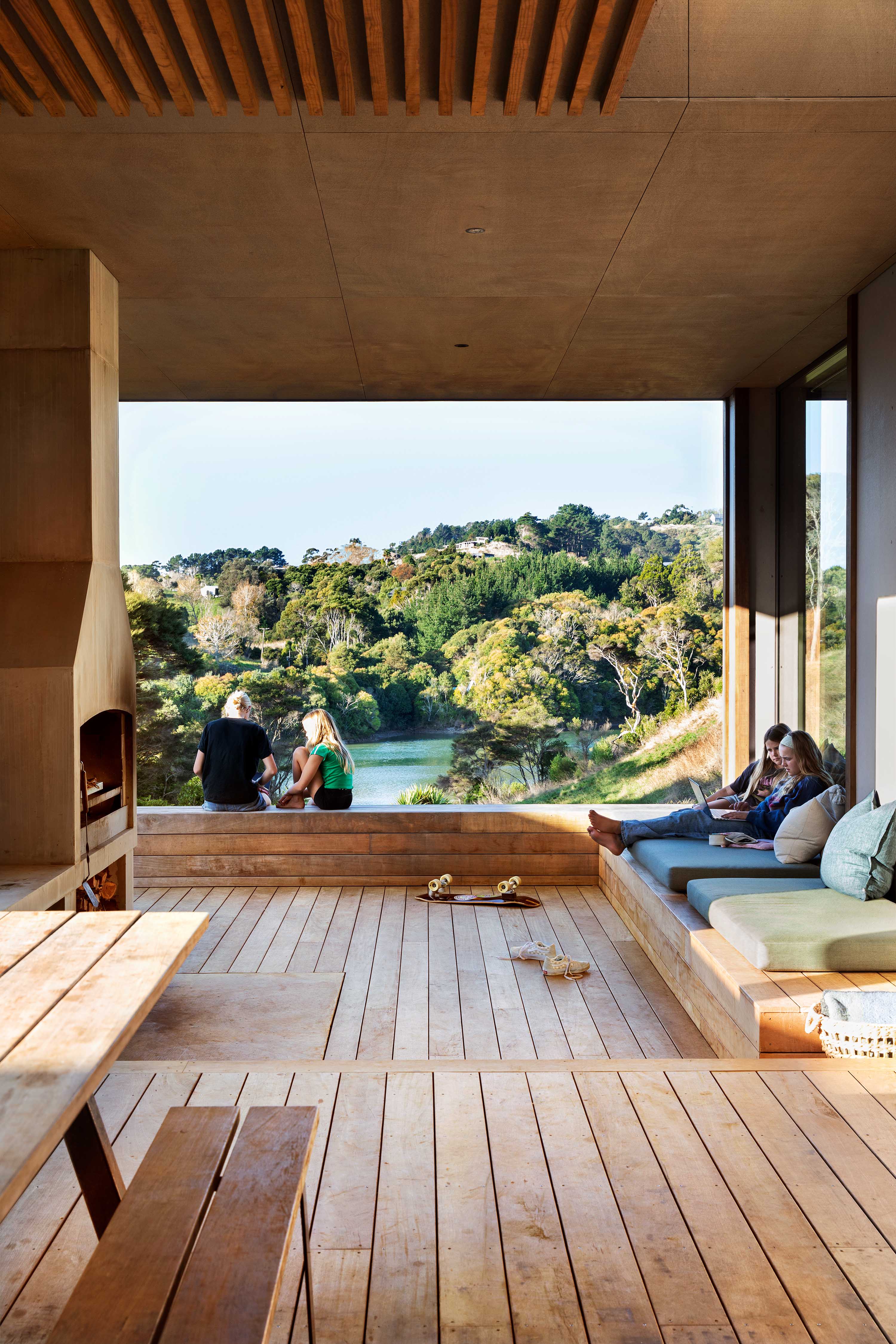
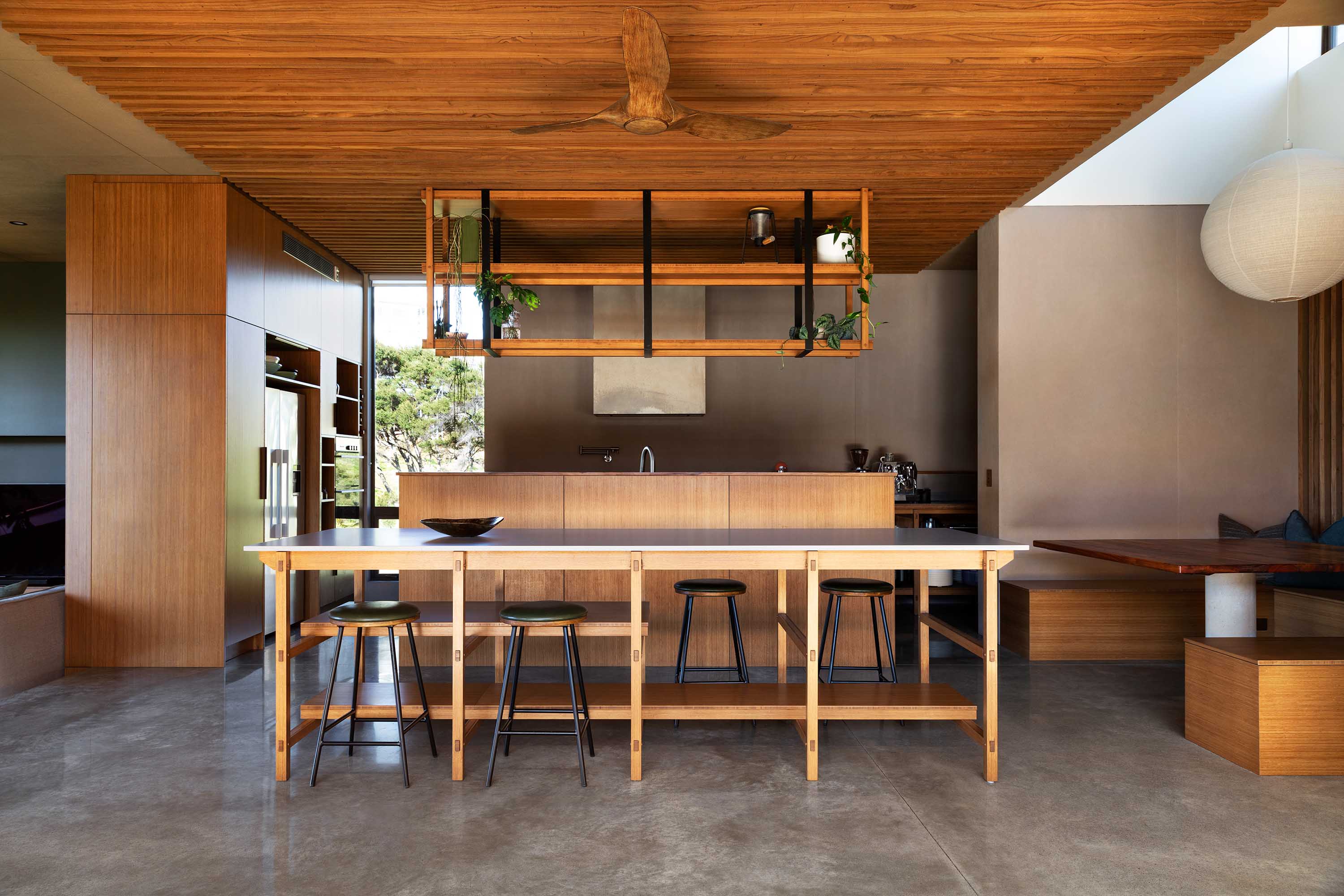
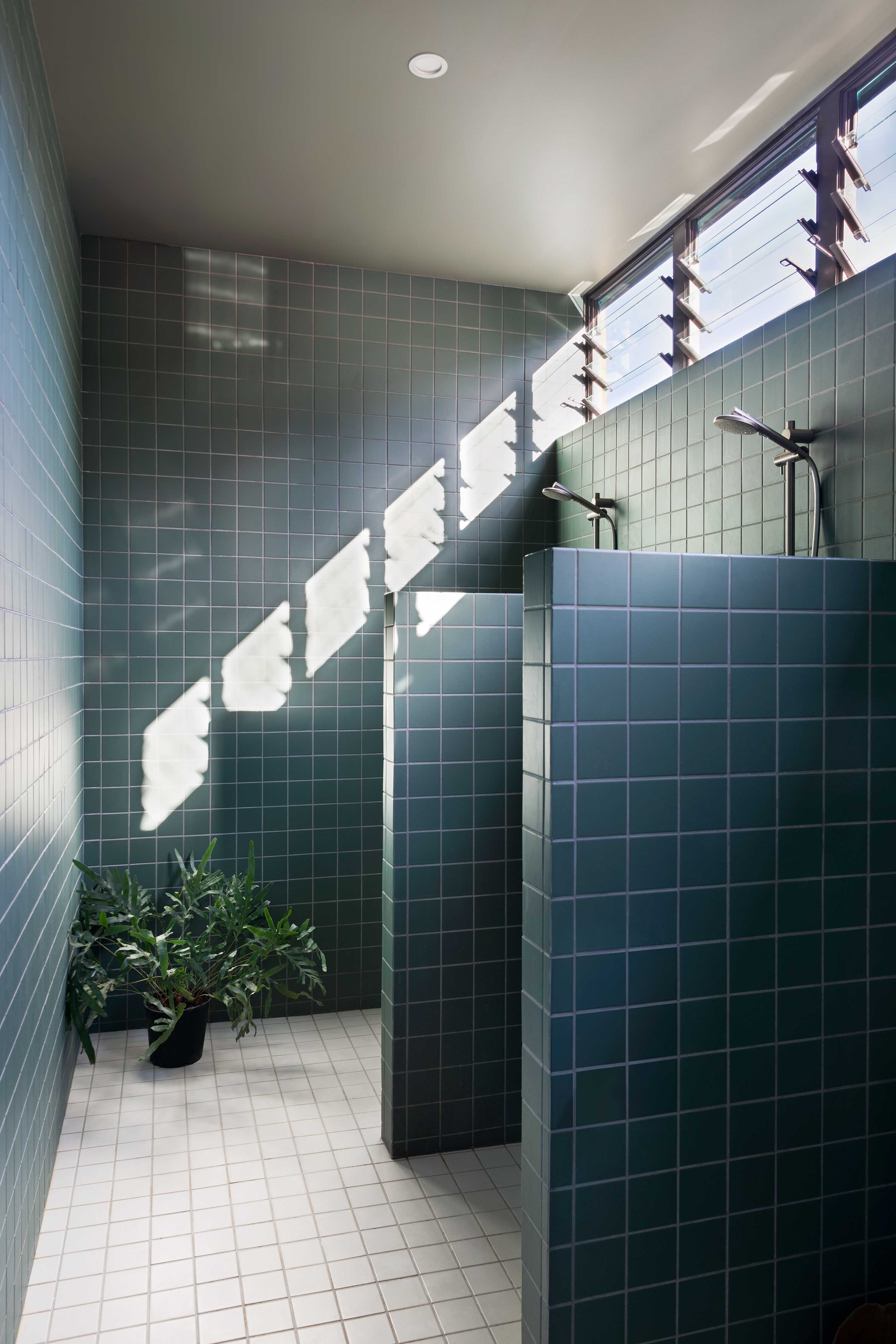
As you move through the home, these considered, tailor-made moments continue to surface. Sure, all good architecture should fit the life it holds, but this takes it a step further. Case in point: the primary bedroom’s double-bay shower. “It was a must-have for Hayden and Hayley,” Cox says. “Because they’re busy running a business and a family, they get ready at the same time, and that’s when they do a lot of their chatting and organising.” The home isn’t designed for resale value but for quality of life, and it’s all the richer for it.
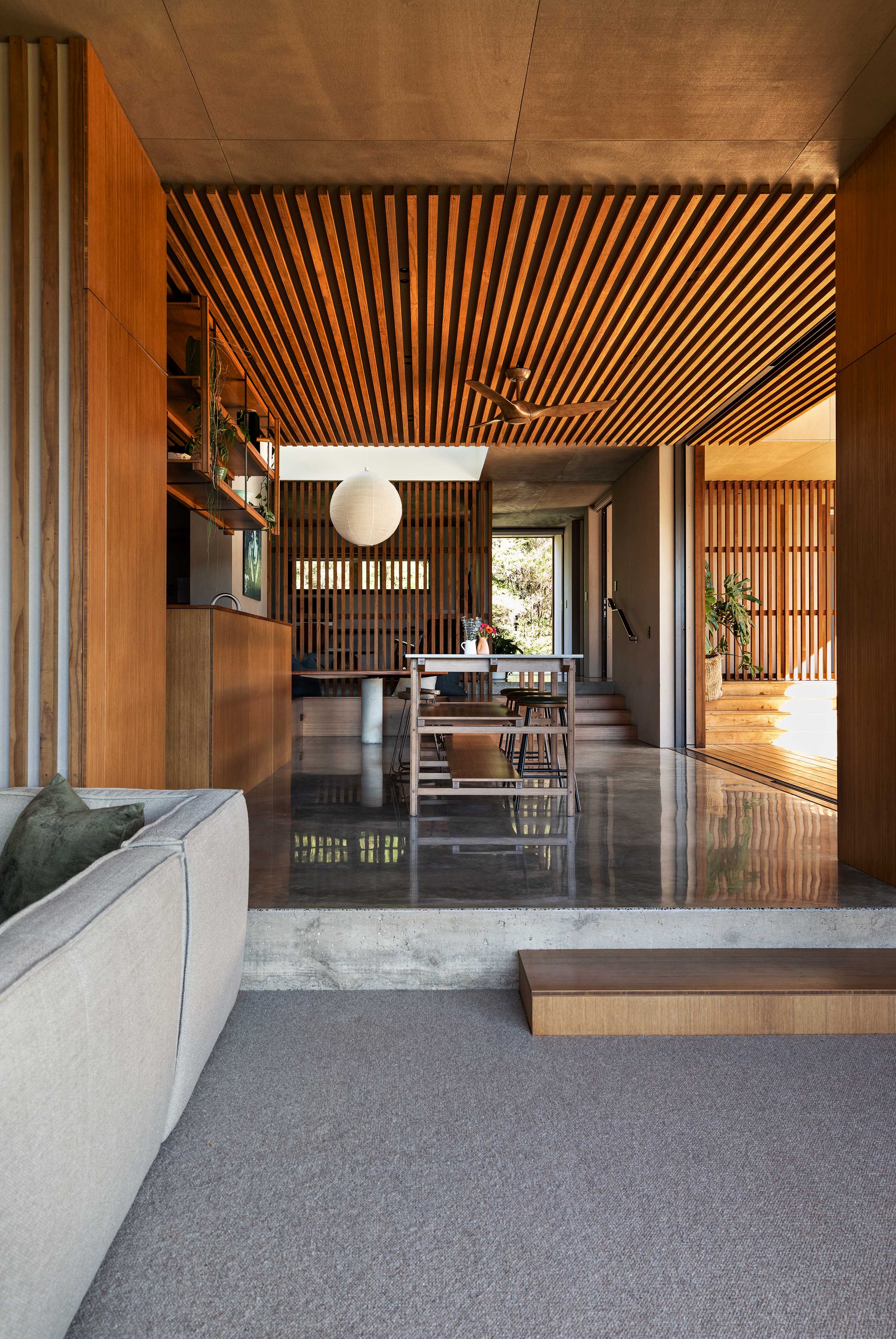
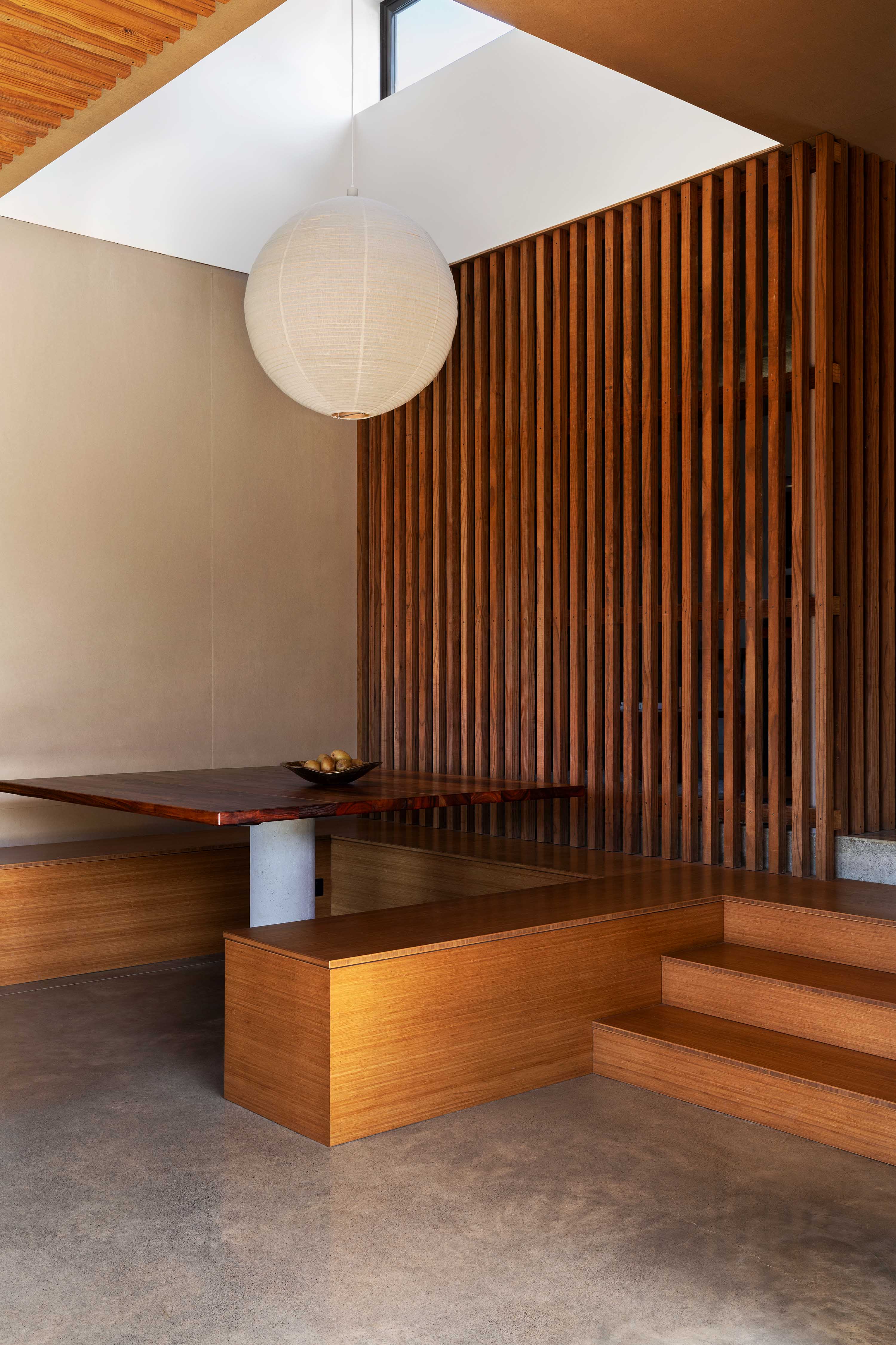
The design leans heavily on timber, pairing Abodo slatted screens and plywood ceilings with Vitex decking and polished concrete floors. There’s honesty in the palette: joints are articulated, textures expressed and raw tones are favoured over paint. The cladding puts a Japanese twist on the standard board-and-batten style, pairing creamy cement boards with vertical timber to align with Cox’s idea of a “robust yet relaxing” atmosphere. Oversized glazing frames deliberate views and openings to the bush, sky, water and courtyard, and allows natural light to trace its way through the house.
Cox has used the land’s gentle slope to his advantage, introducing subtle level shifts to define different zones. In the public wing, you step down into the kitchen and again to the covered deck and sunken lounge. The kitchen is another bespoke addition, crafted to fit with the family’s ins and outs. Things can get a little chaotic with four kids, so the work area is hidden from view. “The kitchen had to be cool, interesting, but not the hero of the space,” says Cox. His solution was to introduce a long, secondary island and an offset built-in dining nook. It’s smart, efficient and all comes together very casually, with each spot playing its part in the rhythm of the space. Cox praises local studio Motide for much of its success. “They took the concept and ran with it, doing the most amazing job.”
The home is unconventional and deeply personal – and it’s through this marriage that all of the best bits are born. With equal attention to the internal experience and the external connection, it strikes a natural balance between sanctuary and togetherness, one that will carry the family through the (teenage) years ahead. Screens slide, doors fold and thresholds blur, nailing that final point of the Vinks’ brief: a home that feels idyllic on a summer’s day. Yet it has to be said that it looks to be just as welcoming in any kind of weather.
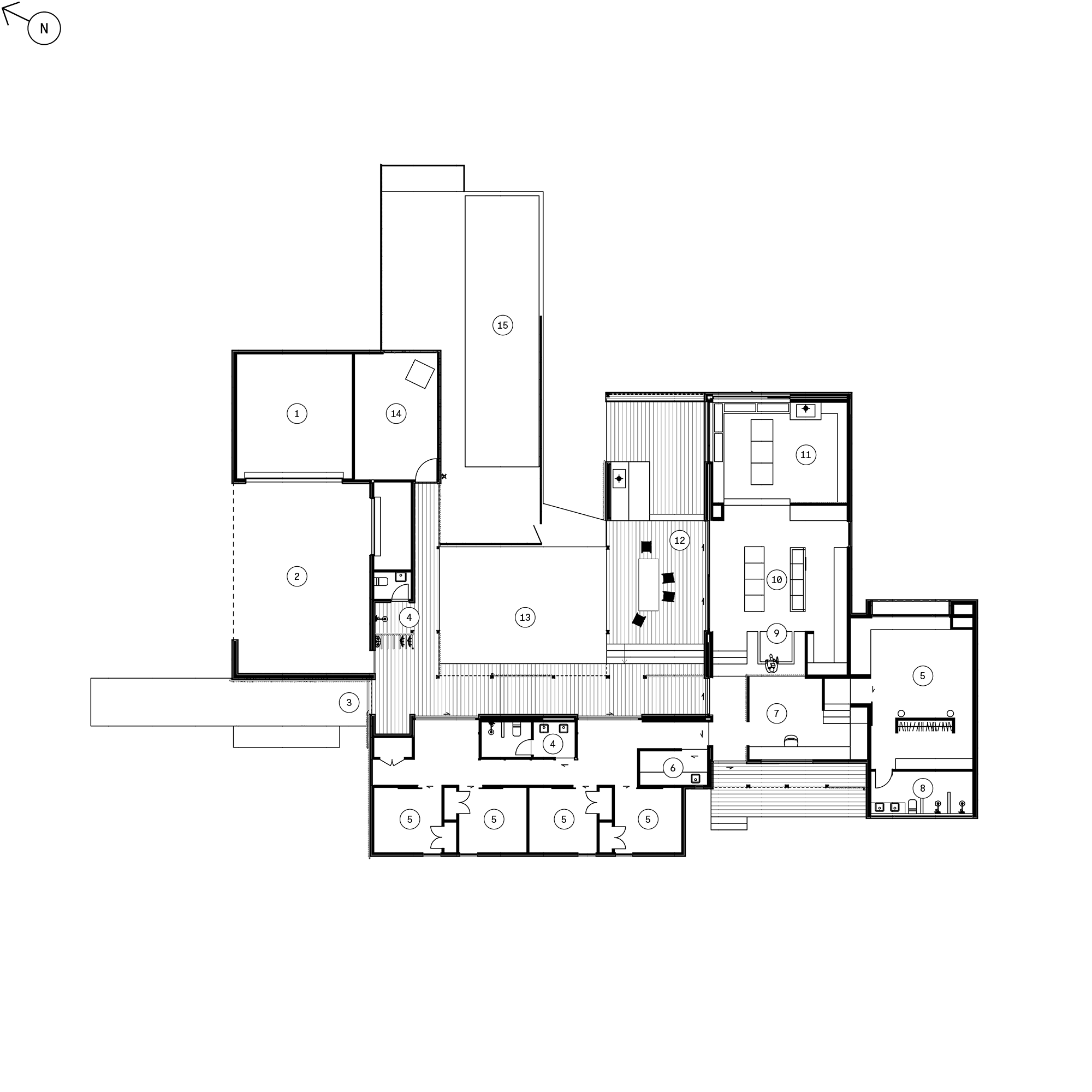
1. Garage
2. Carport
3. Entrance
4. Bathroom
5. Bedroom
6. Laundry
7. Study
8. Ensuite
9. Dining
10. Kitchen
11. Living
12. Outdoor Living
13. Courtyard
14. Guest
15. Pool
Related Stories: