“It’s pretty lovely, actually,” says architect Paul Clarke of the site on the Tāwharanui Peninsula where Studio2 Architects designed a holiday home for longtime clients Liz and John and their three daughters. “There’s all this protected bush and there’s this open paddock where the house goes. And when you get that kind of site, you kind of ask yourself, ‘What do I do?’”
It is indeed pretty lovely, and the answer to that question is: whatever you do, do it slowly. Liz and John bought the land north of Tāmaki Makaurau Auckland back in 2012, before it had been properly developed. It’s beautiful, though quite different from the beachside developments that have defined the coast here. Part of a former farm that runs down to an estuary, the land had been broken up into large, undulating sections with soft, slightly blurry boundaries. It had access to shared walking paths through protected bush, and a shared boat ramp. It still feels like a farm, rather than a private community: there’s no big gate, and there are gravel driveways.
More than a decade on, where before there had been 70 hectares of pasture and 30 hectares of bush, there are now 70 hectares of protected bush and 30 hectares of sheltered grasslands. Liz and John were in no rush to build. In the meantime, while their kids were young, they had access to a family place nearby. “So we had plenty of opportunity to think about what we wanted to do,” Liz recalls. “We’d bring the dogs up here and let them run around in the long grass, and we’d fossick about. We weren’t in a hurry.” They planted more natives up the bank, and bided their time.
Eventually, they turned to Paul to design a house for the site. They weren’t interested in anything showy. Key to the whole thing was the Dutch concept of gezellig. “There’s no English equivalent,” says John, “but it’s warm, cosy, family focussed, heart and home. It’s just a nice place to be, really.” While the house was intended for kids, dogs and future grandkids, they didn’t want it to be too big. Three bedrooms and two bathrooms was more than enough for this family of five.
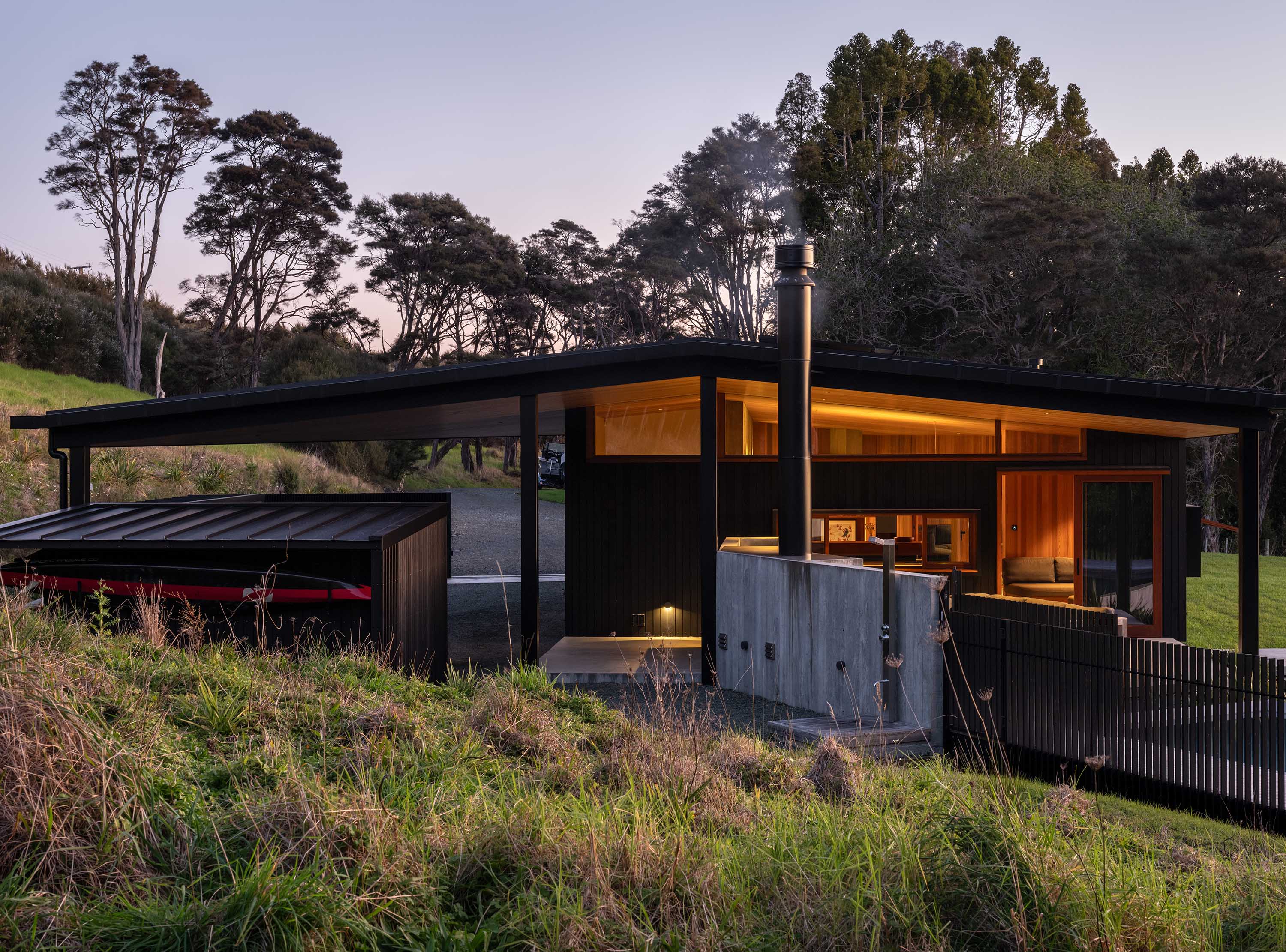
Paul’s first move was to settle the building platform into the section, which involved carving out a flat site and battening the hill down behind, rather than introducing a massive retaining wall. It meant more digging, but it nestled the house onto the site, which is now backed by a gentle slope planted out with natives. “You do have to take out more to make it feel right,” he says, “but then you scallop out the building platform and it sits there really naturally.”
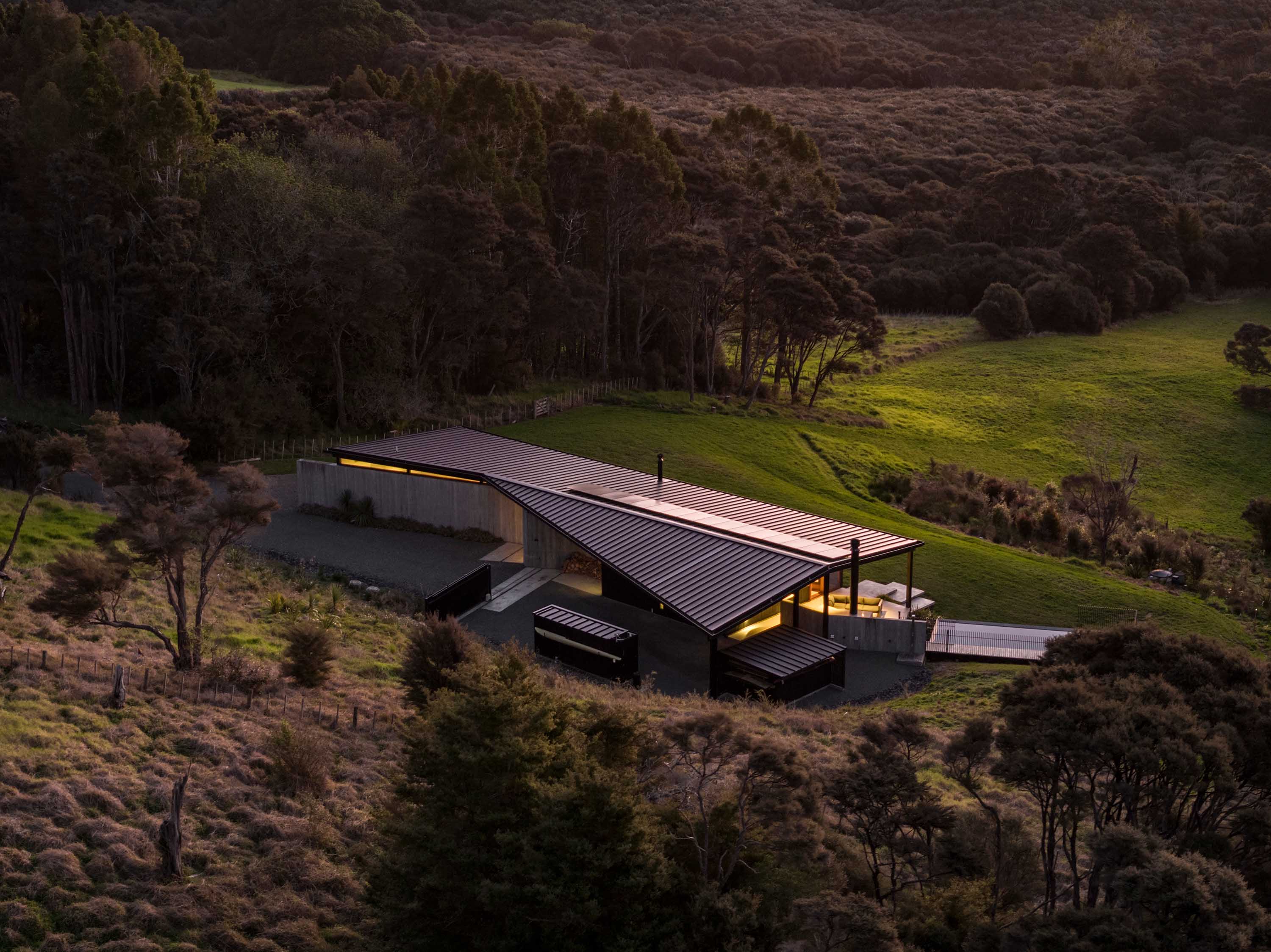
The guts of the design haven’t really changed from its first iteration. The house sits under a big roof, draped over two in-situ concrete walls that create a spine through the middle. On the face of it, the plan looks quite complicated, but it’s actually very simple. The ambiguity comes from the fact that the roof works separately to what’s going on underneath. “It was sort of like a blanket,” he says. “You look at the site and then extrude it up from the landform, and carve out a bit underneath.”
Think of the roof as three triangles joined by a ridge that runs diagonally across the plan, on top of the concrete walls. In one triangle are the bedrooms and a snug, with a building line that pushes in and out under the roofline to create a series of sheltered verandahs.Beneath the other triangles are the living spaces, covered outdoor spaces and service areas, including a scullery, workshop and a big open carport with a simple gate rather than a garage door.
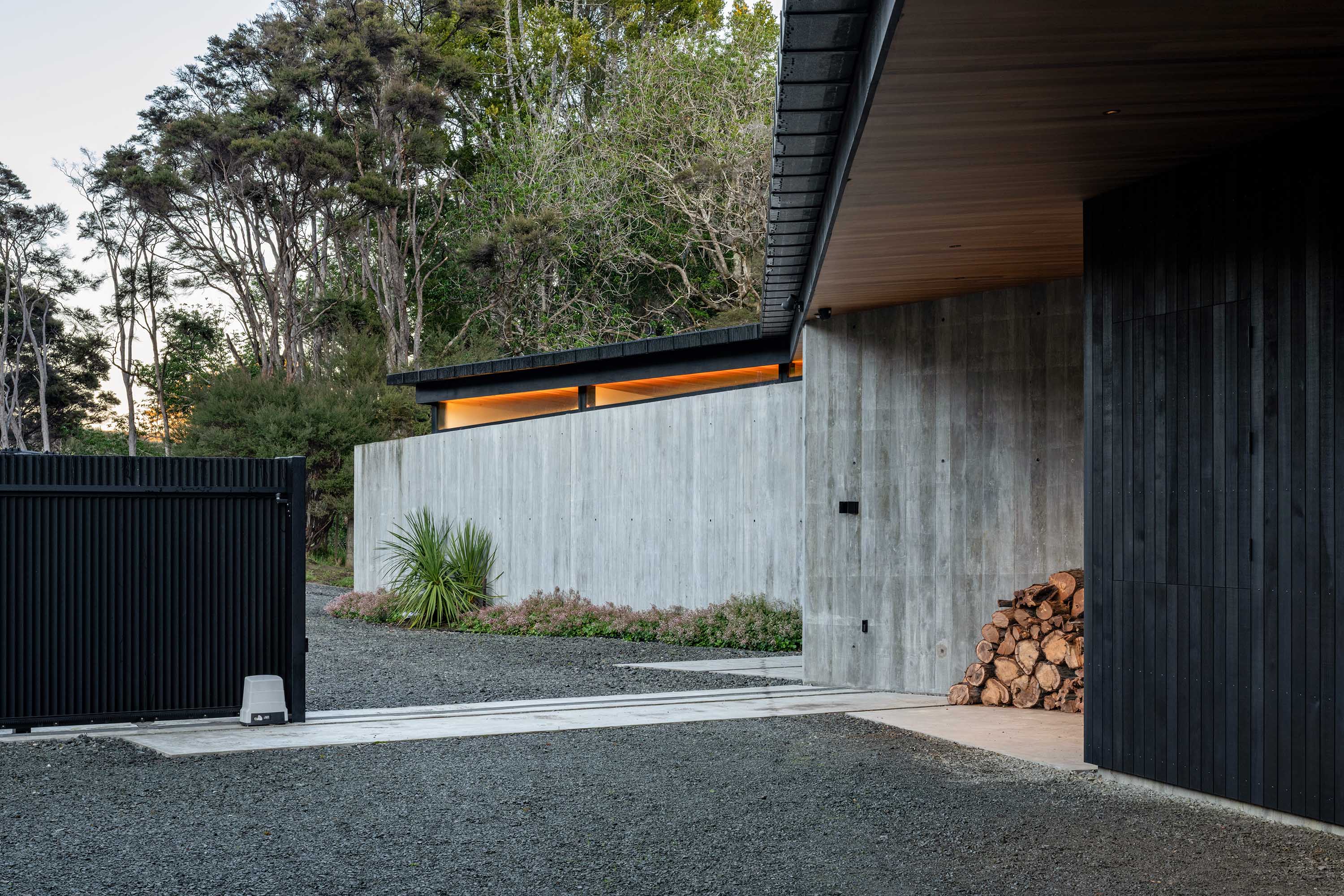
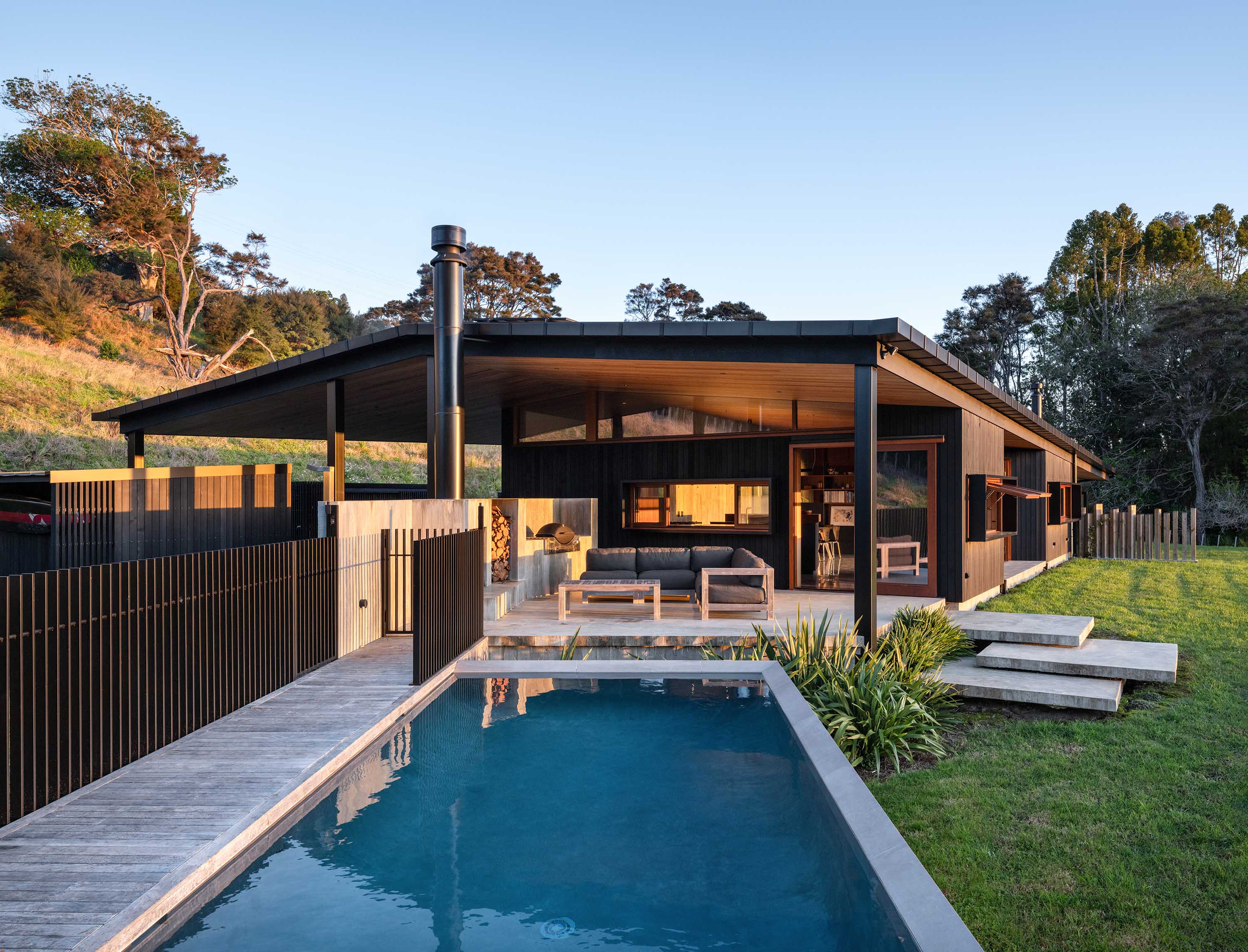
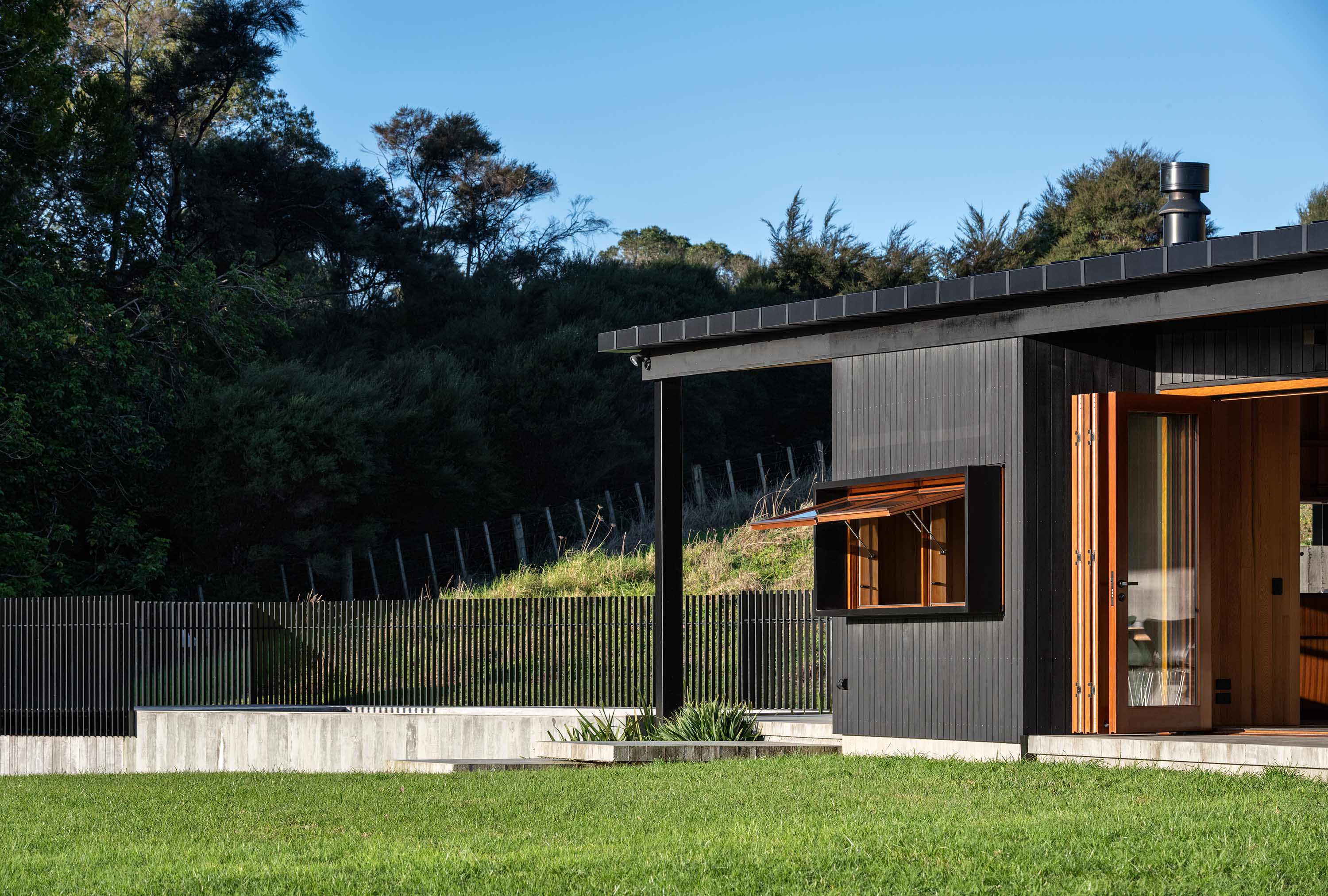
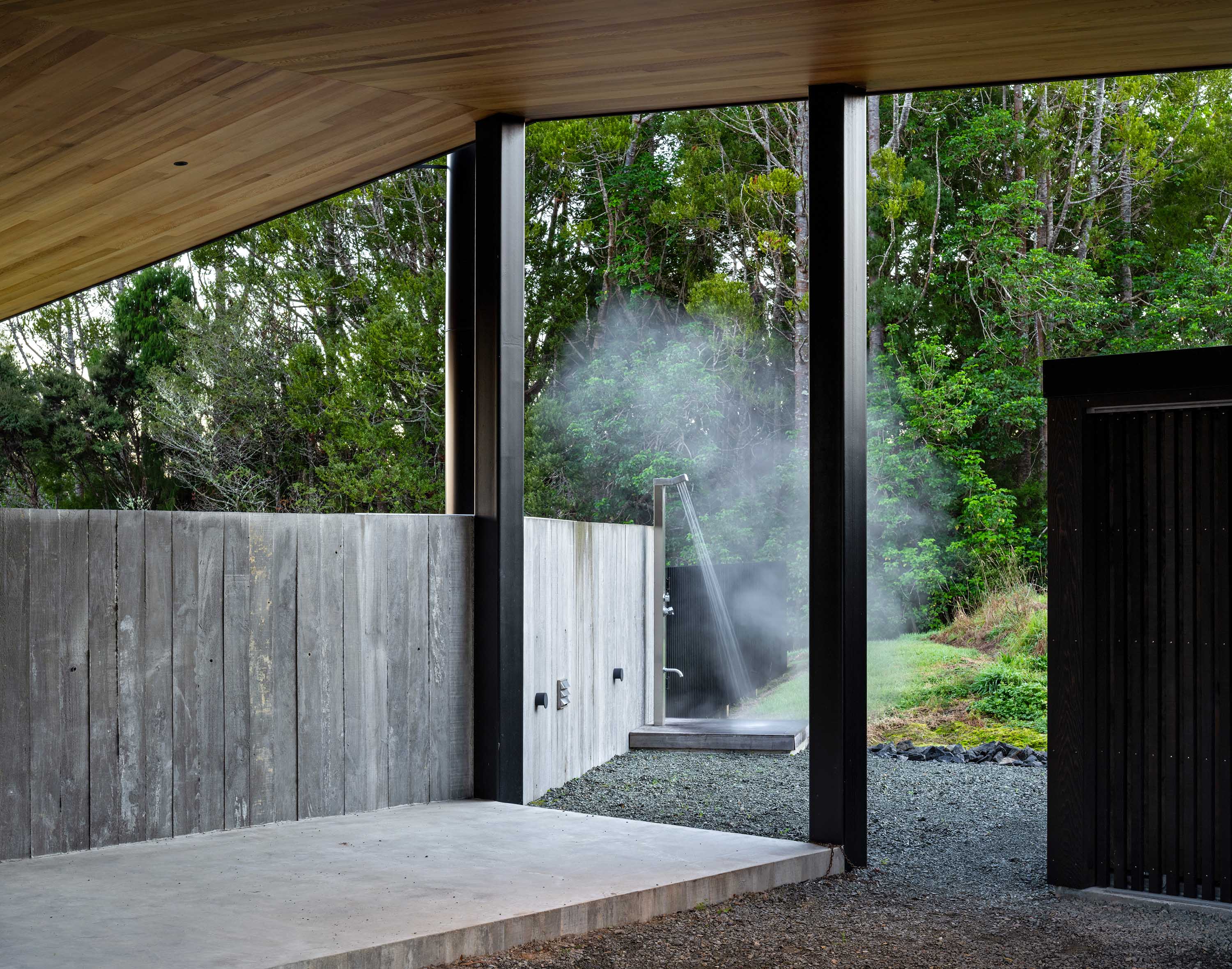
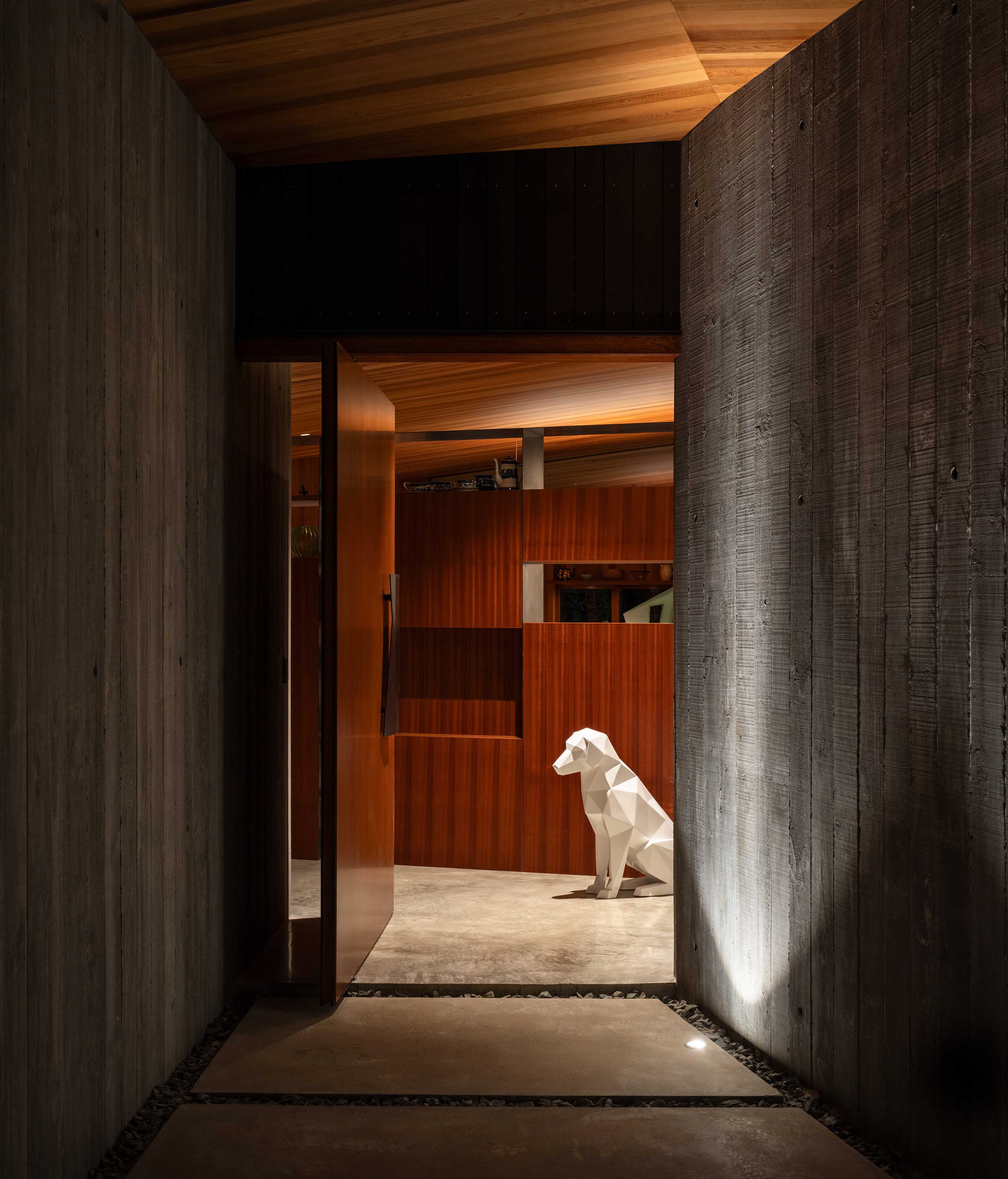
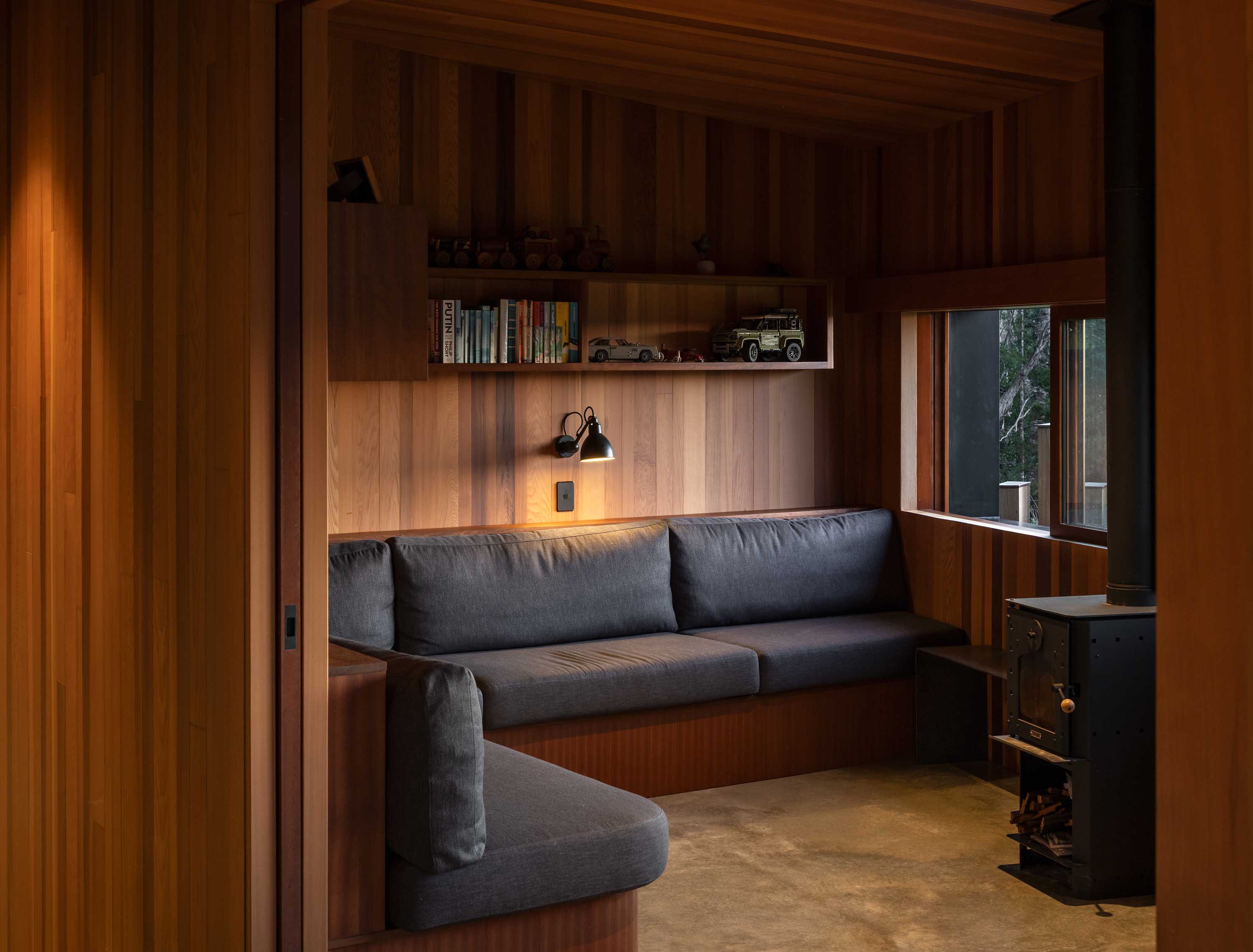
You approach the house down a gravel driveway. As you arrive, the first wall comes into your path, pulling you up to a pivot door that takes you directly into the living spaces. Bedrooms are on the other side of the wall, down a couple of steps, and distinct from the public spaces that gather around the kitchen and run out to the covered outdoor living area and the pool. There’s a snug to one side with a sliding door and a woodburner. “It gives you a lovely divide between the public and the private realm,” says Paul. “You’ve got the house, and you’ve got the sleeping quarters.”
Early on, the house featured a similar – but larger – plan, and a butterfly roof. The idea was fundamentally the same, but for various reasons, including budget, Paul revised the design with the clients to make it simpler. They opted for that big sheltering “blanket”, reduced the height and size of the living spaces, and dropped a small work-from-home study, landing on a total of 175 square metres. All this played out over the course of a few years, as the family mulled their options. They finally pushed go in late 2020, just in time for the second Covid lockdown. “I think it actually became better through the refinements and the tightening up of the spaces,” he says. “I think it’s a way more successful building for that.”
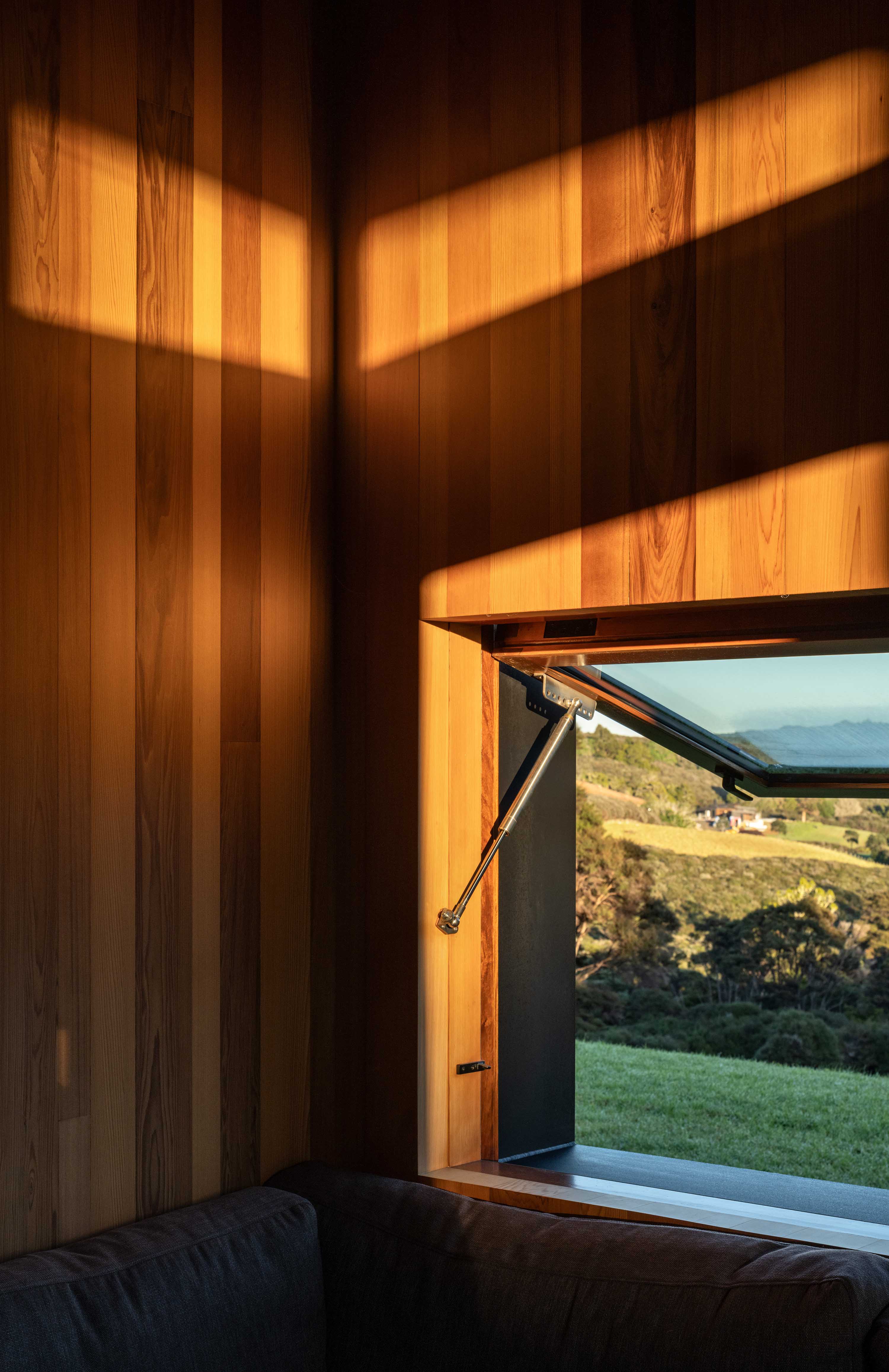
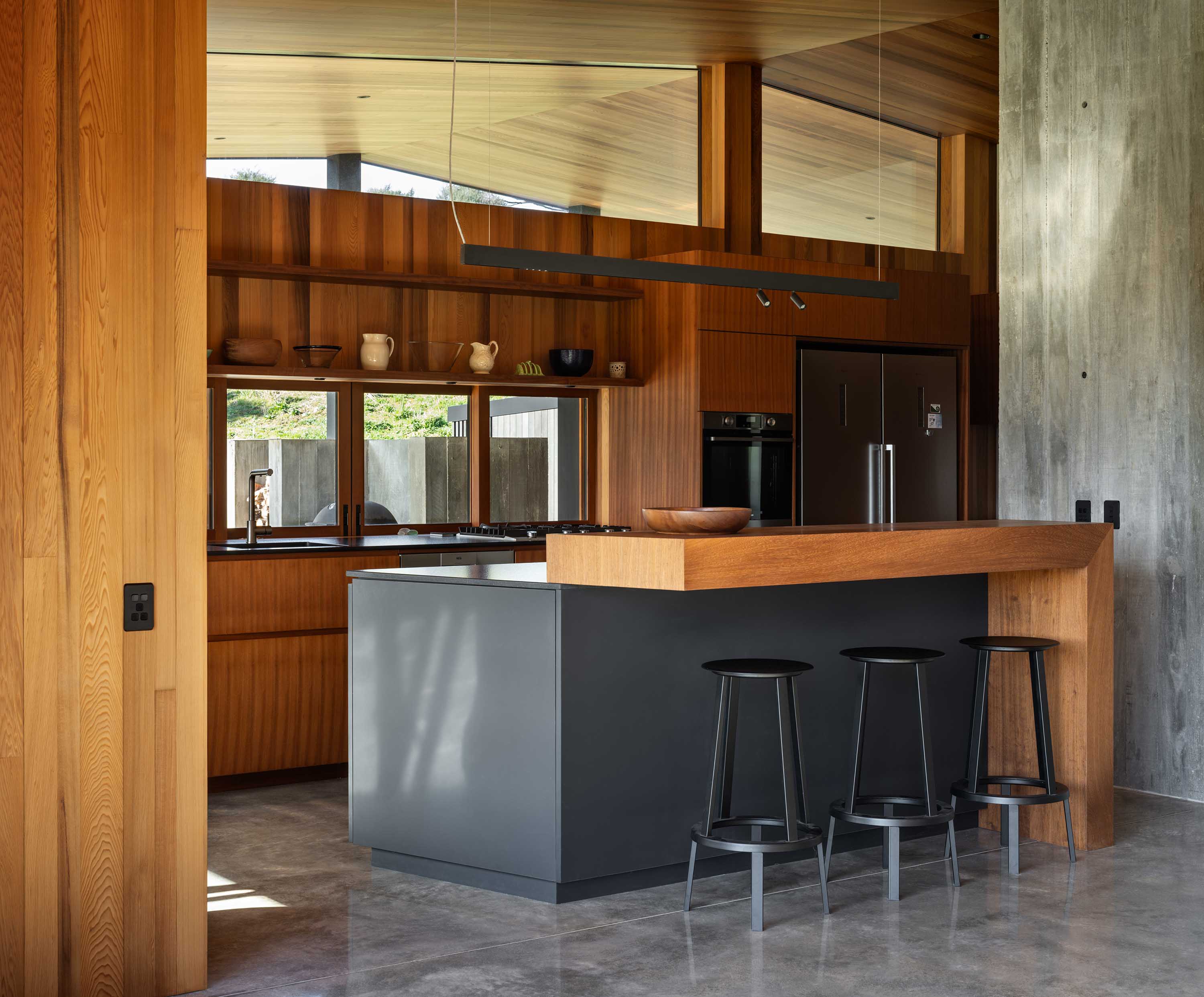
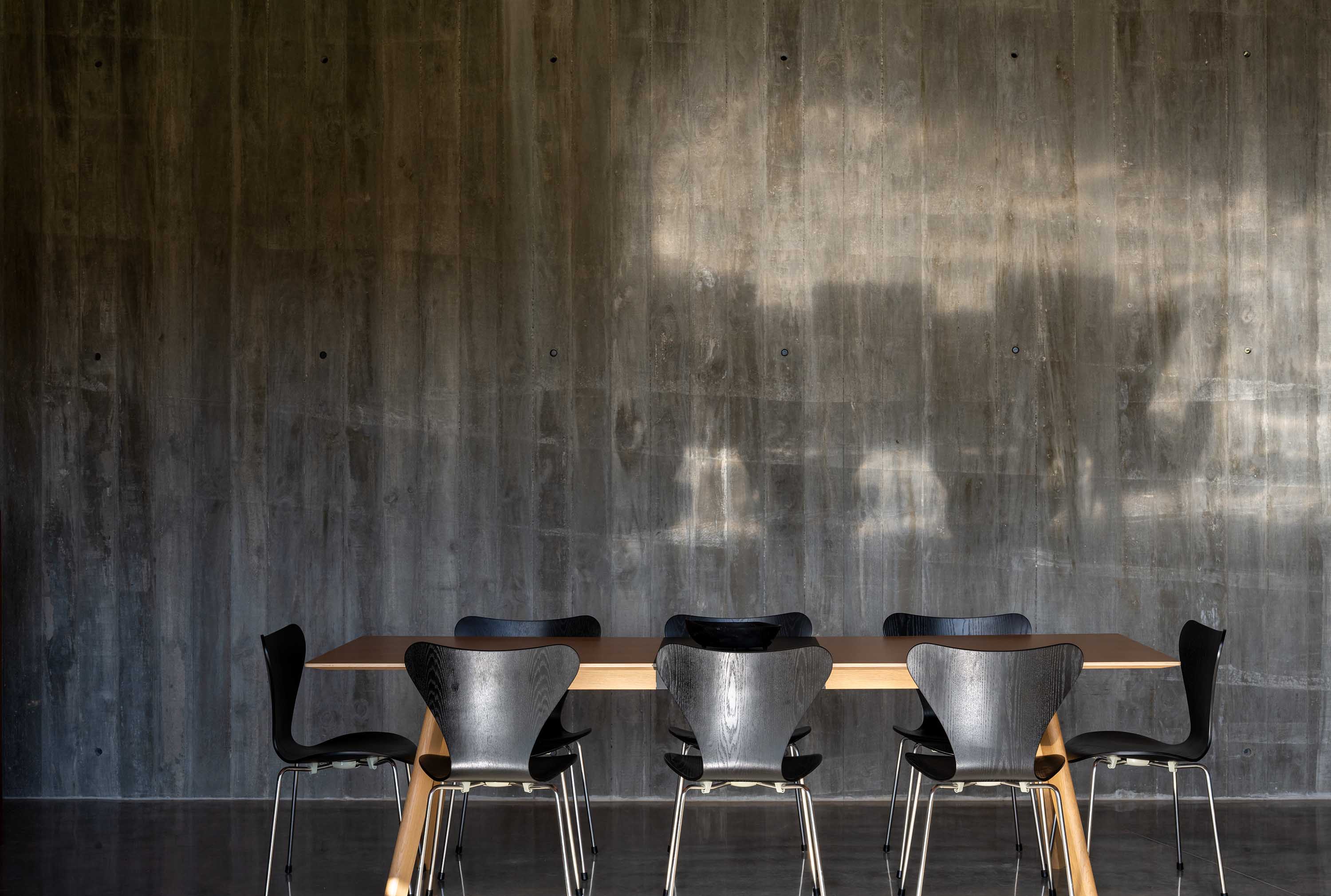
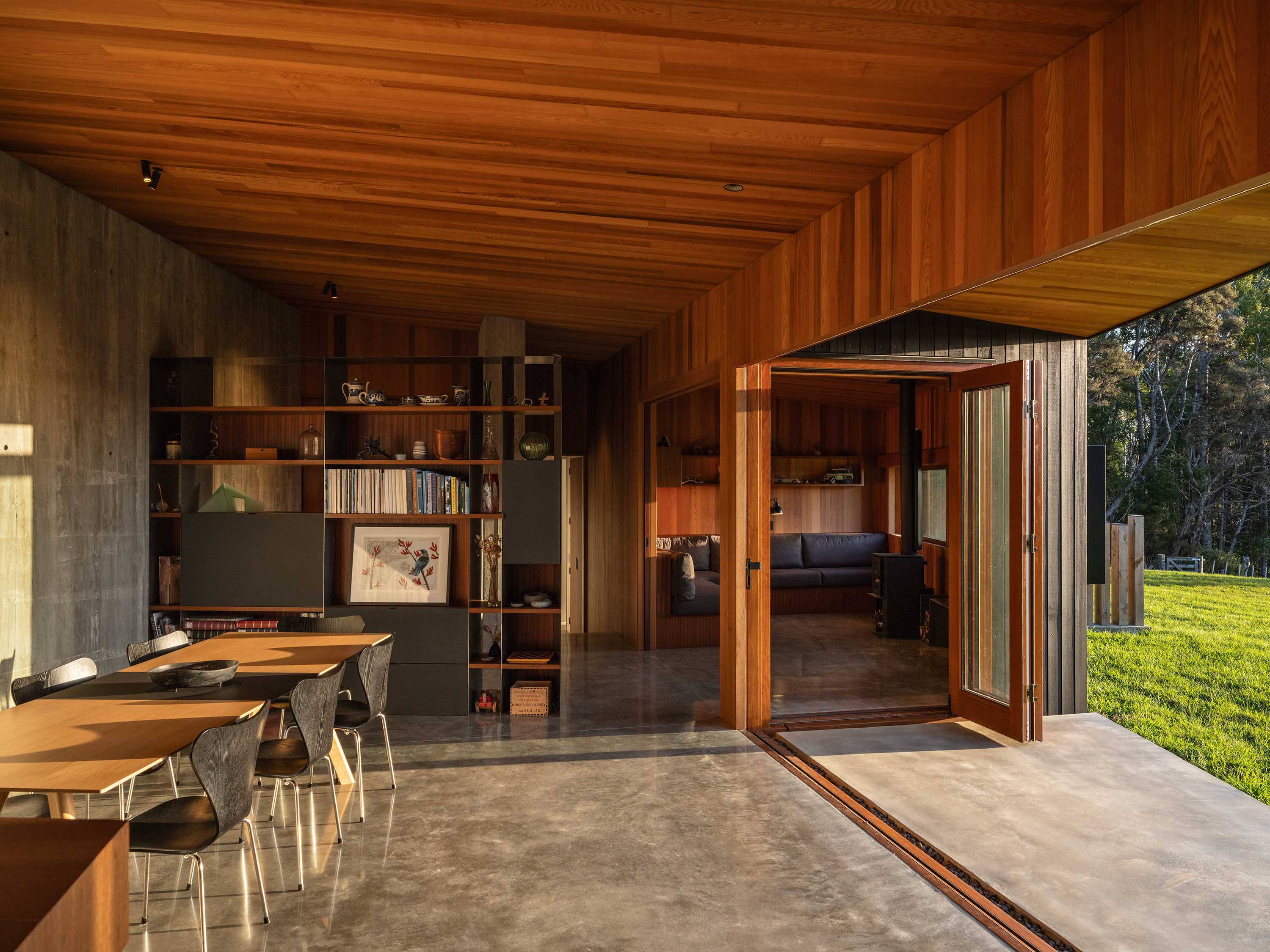
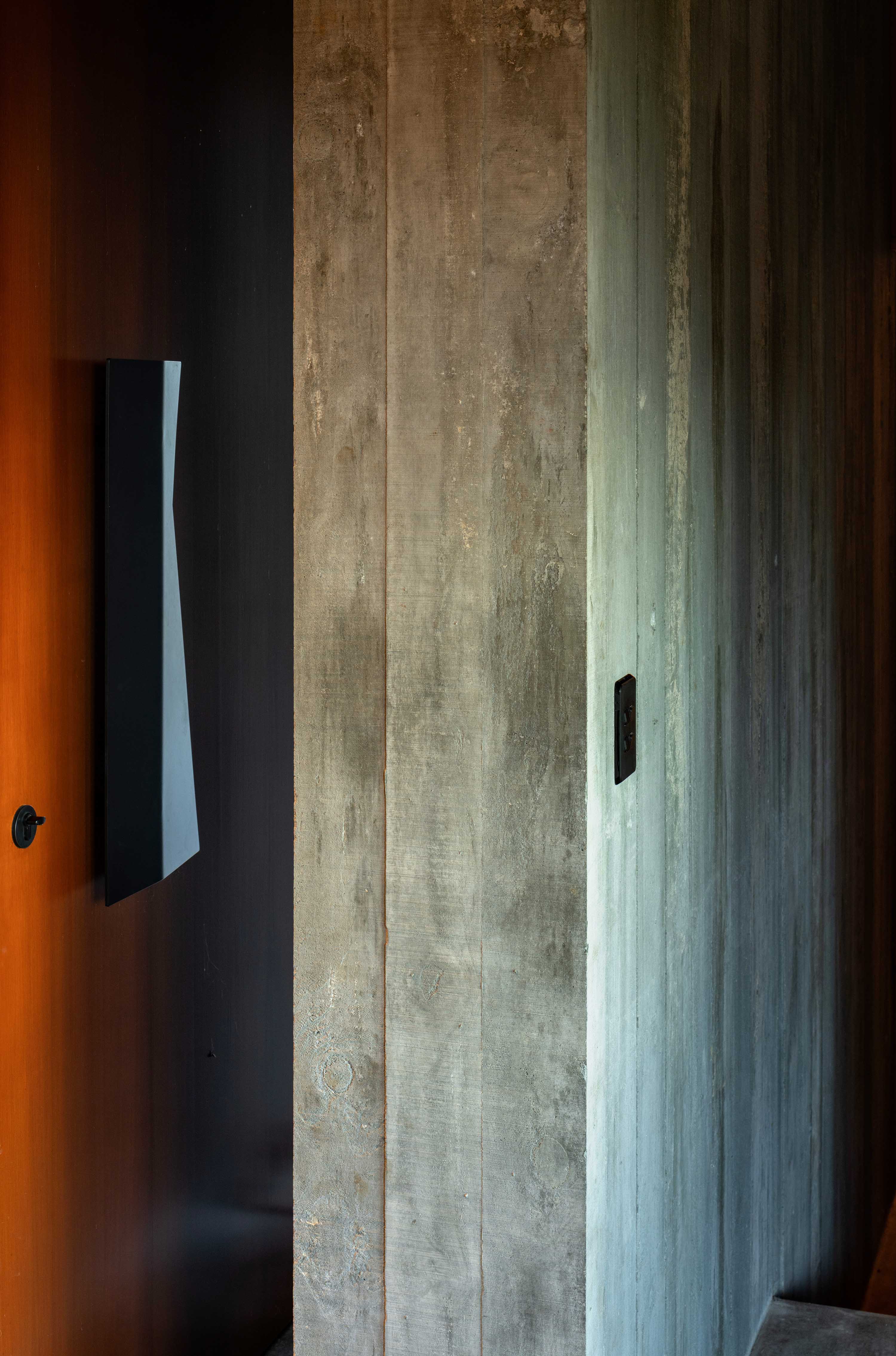
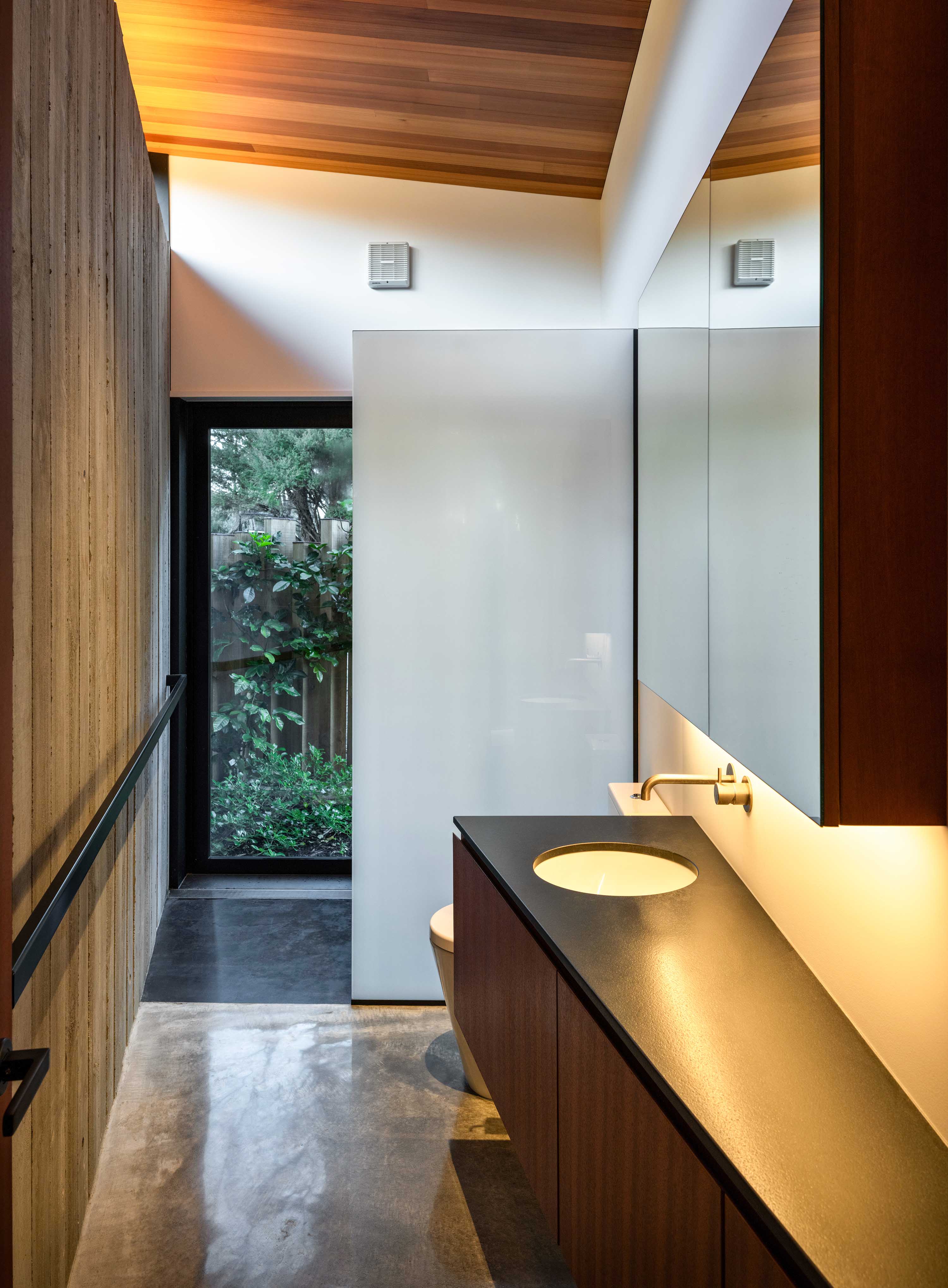
It also tied beautifully into the family’s request for gezellig. The living areas are generous – but they’re not overscaled. There’s very little plasterboard in these spaces: instead there’s that in-situ concrete, and cedar sarking – rich, warm materials. There’s a big set of timber sliding doors out to a sheltered verandah, and another set of doors between the kitchen and the covered outdoor space, complete with fireplace. Elsewhere, there are windows, rather than doors – in the snug, and above a little built-in nook beside the kitchen. It’s tucked in – safe. “The inside of the house has this richness to it,” says the architect. “I love the simplicity of the materials.”
It’s also exceptionally beautifully built – it was the last house by Steve Haycock, a well-known builder in the area. His crew included a talented cabinet maker who fitted all the cedar and built much of the furniture. There is a lot of cabinetry and custom joinery, designed to house books, games, art and other collections. John and Liz were intimately involved in devising these elements. “I didn’t know much about that idea before,” says Paul of the gezellig concept, “but there’s some interesting stuff in there that you take into creating a house that is dog friendly, child friendly, teenage friendly, adult friendly. There’s a lot of care and a bit of fun.”
For the clients, it has become a peaceful kind of retreat, and a new experience for a family used to a more bachy kind of coastal living. There are tūī and kererū in the surrounding bush, which swoop by at eye level thanks to the elevation. There are kookaburras that come over from Kawau Island where they were released by Governor Grey in the 1860s. In the evening, the sun goes down and the lights come up, attracting the insects, and then the ruru emerge. “The nice thing is there’s enough space for us all to be here and it’s very, very quiet,” says Liz. “The peace of it is just amazing.”
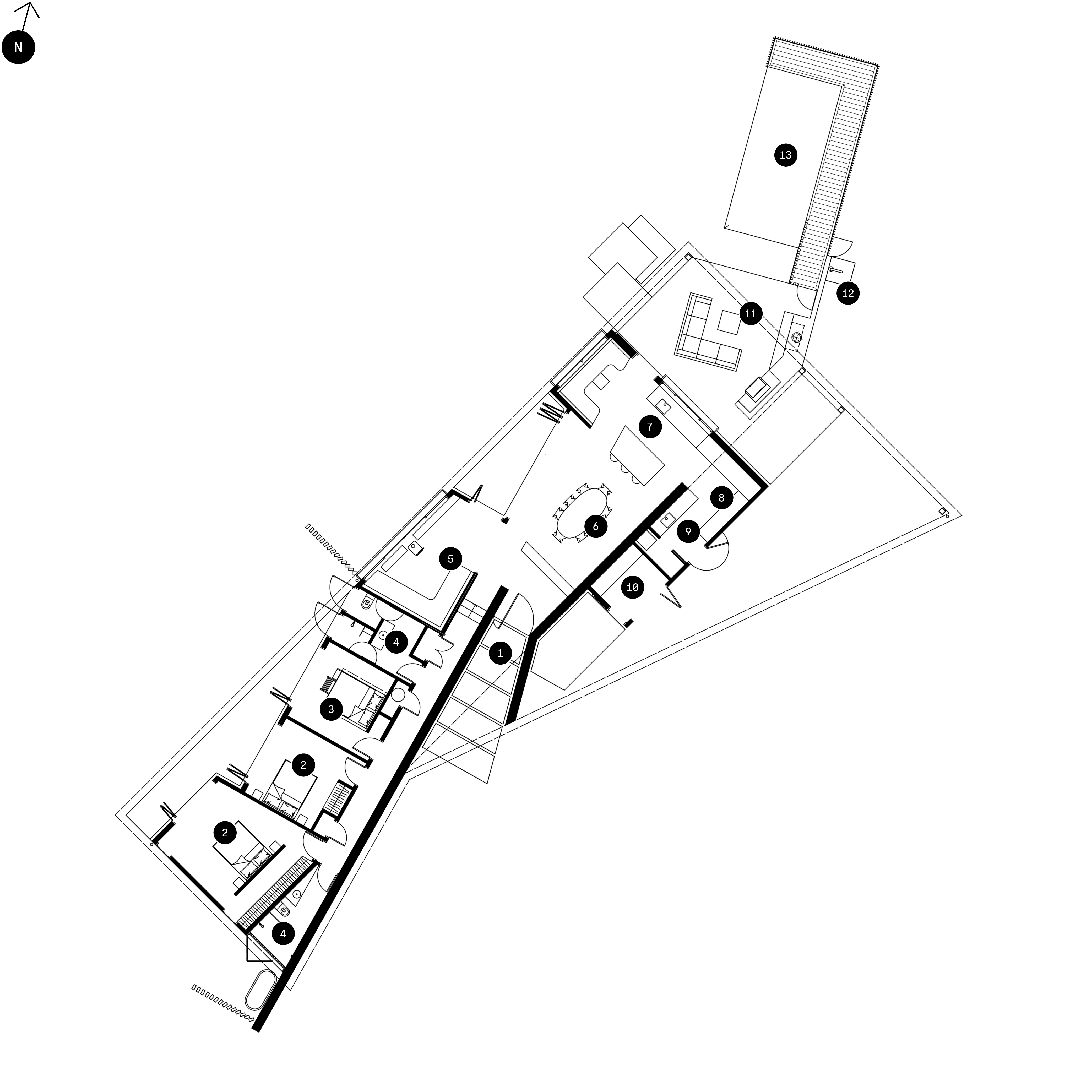
1. Entry
2. Bedroom
3. Bunkroom
4. Bathroom
5. Living
6. Dining
7. Kitchen
8. Chill Space
9. Scullery/Laundry
10. Workshop
11. Outdoor Living
12. Shower
13. Pool
Related Stories: