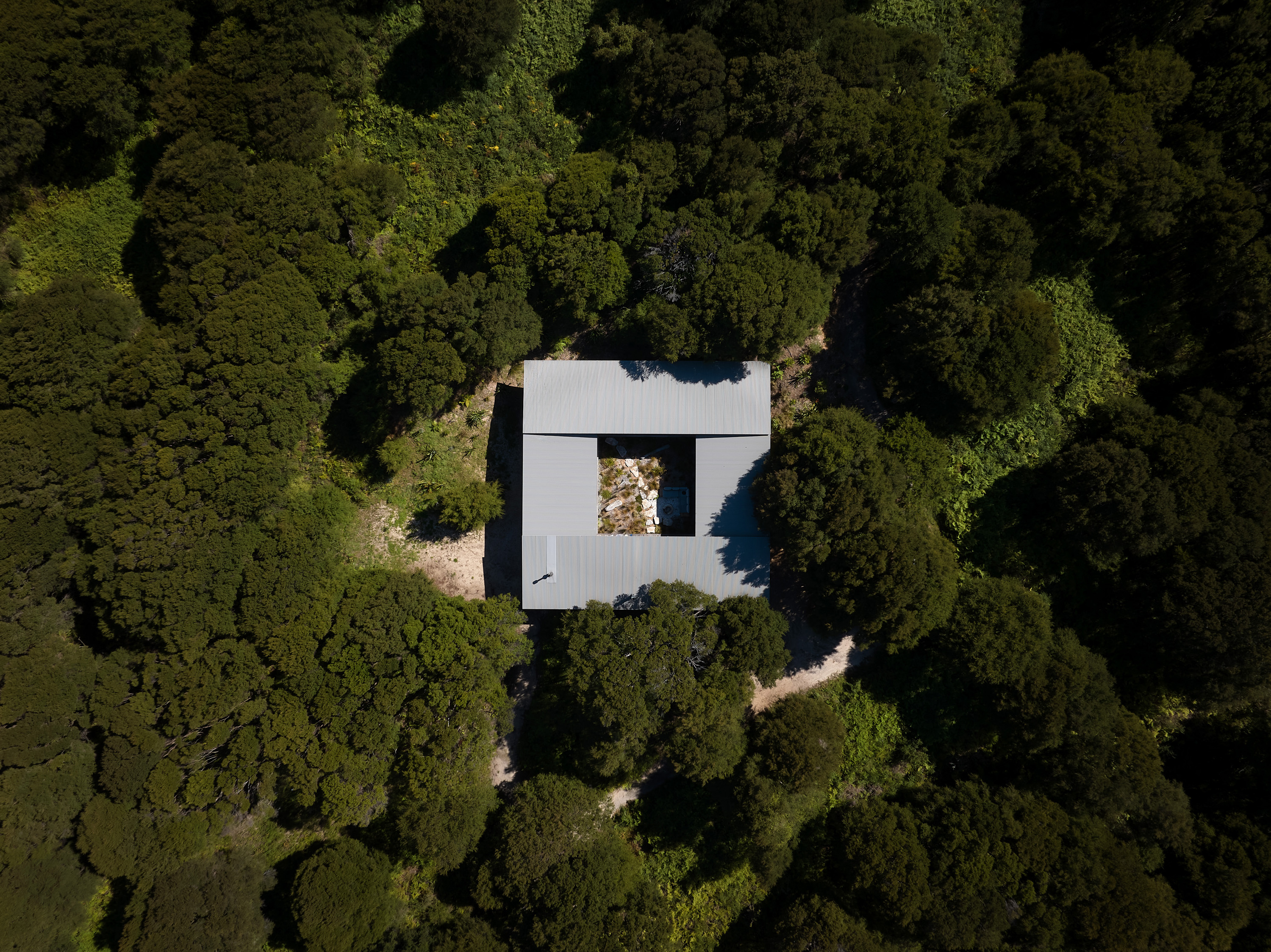
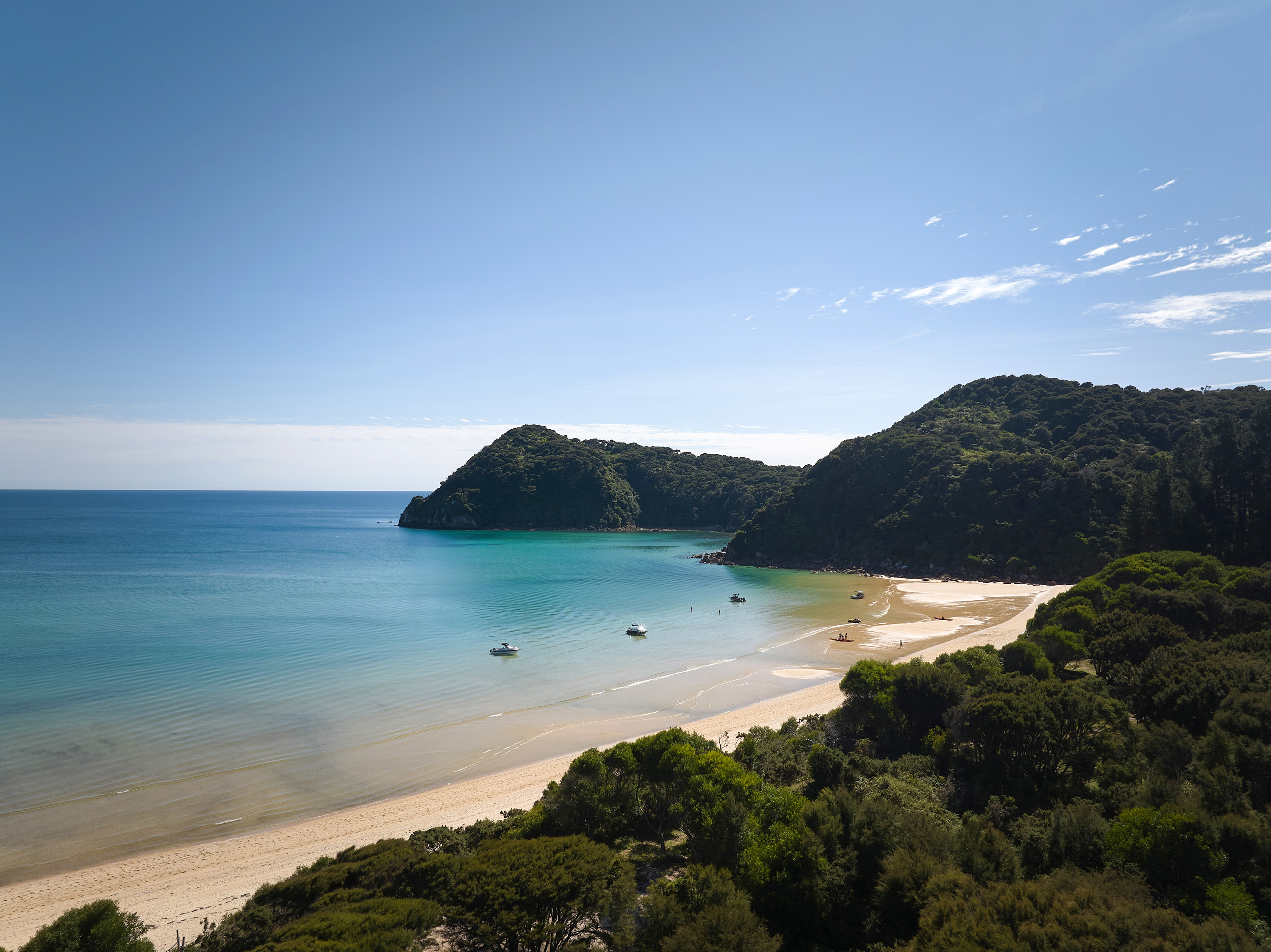
There are three ways to get to Awaroa Bay: by water, by air or on foot. There’s no road in, and even the workaround – driving to the far side of an inlet and hauling gear over on a boat or barge – hinges on the tide. Isolation is part of the bay’s great seduction, but it also makes building here a proper performance.
Erin Baker and Scott Molina knew what they were up against well before they secured this bush block. They’d holidayed with their two children up the coast at Tōtaranui for decades. Both Ironman World Champions, their days unfolded across the water, beach and Abel Tasman track. They wanted a bach that could keep up, so they reached out to Te Whanganui-a-Tara Wellington practice Patchwork Architecture, where their daughter’s partner Rory Wilson-Cartwright was working.
“What was interesting,” says Patchwork director Sally Ogle, “is that because the site is so difficult to access, this wasn’t going to be the kind of bach where owners retire one day. It’s very much a holiday escape. So that set us down a specific path.” As did local planning constraints. Although the property runs up to the sand, the building platform sits 250 metres back in the forest – partly to screen it from view, and partly to respect the site’s heritage. Māori had occupied this area for centuries before European settlement (Abel Tasman’s fraught first sighting of Aotearoa happened just down the coast), and the designers engaged with iwi as part of the resource consent process.
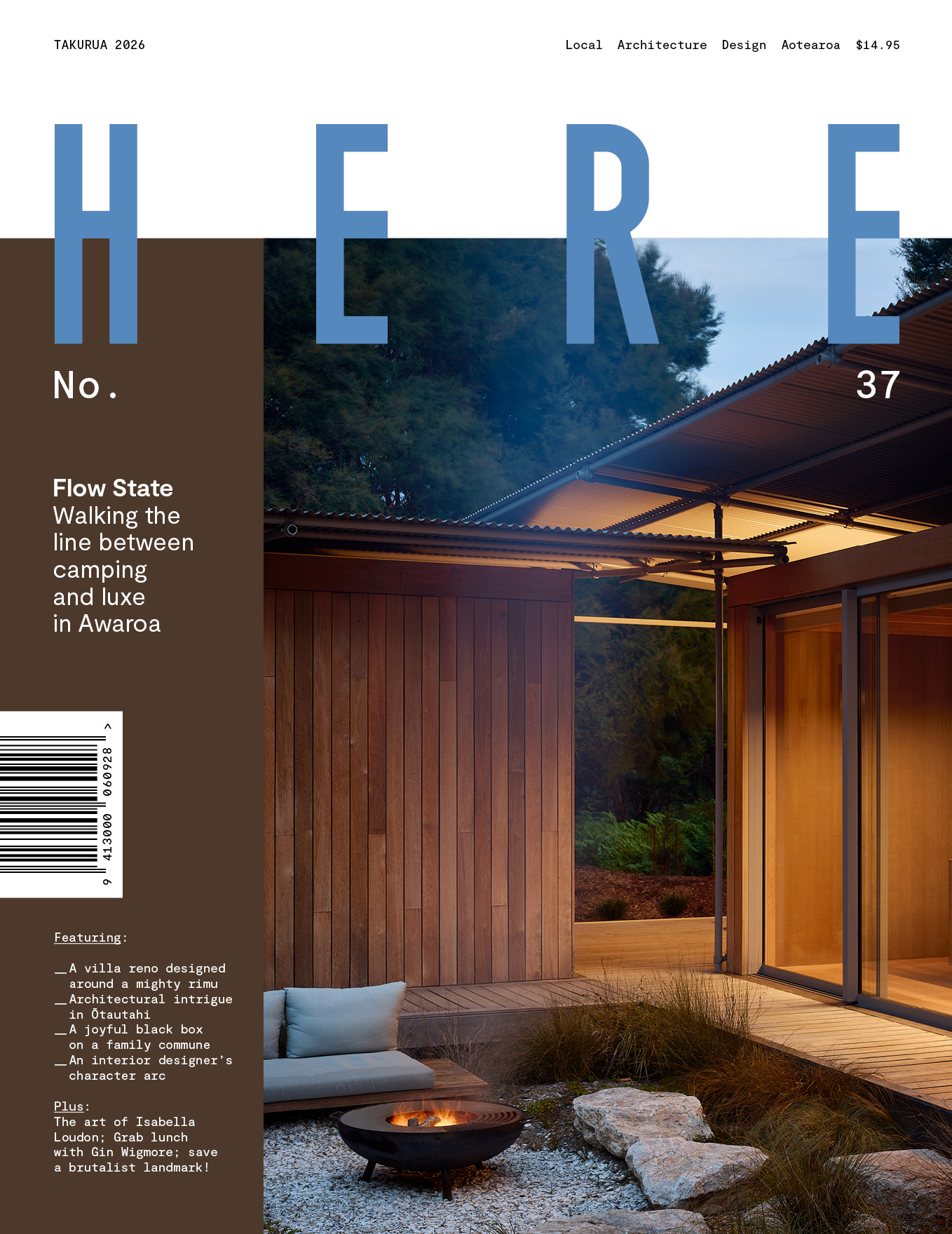
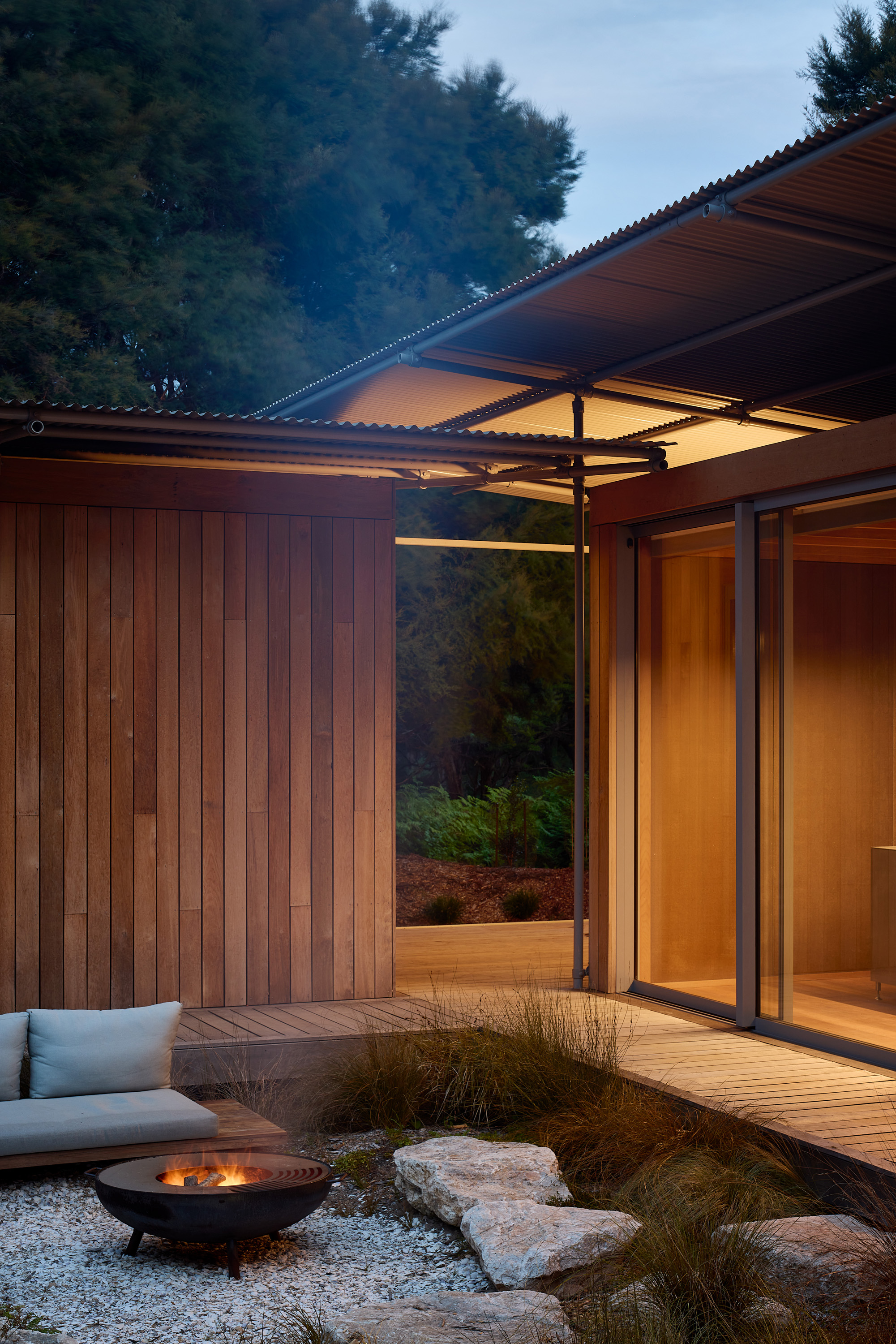
The bach was conceived as a clearing in the forest. While the dense kānuka is beautiful, it can feel oppressive, particularly in winter, so a central courtyard pulls sunlight deep into the plan. Beneath a square of raking rooftops, five pods orbit the outdoor room: kitchen-dining-living, a primary bedroom, a bathroom and laundry, a bunk room and bathroom, and a guest room, all linked by a wide covered boardwalk. The separation affords privacy, unique outlooks and the flexibility to shrink or expand with occupancy. Notions of camping are at play as the bach sends you outdoors for a glass of water, a shower or a late-night dash to the loo.
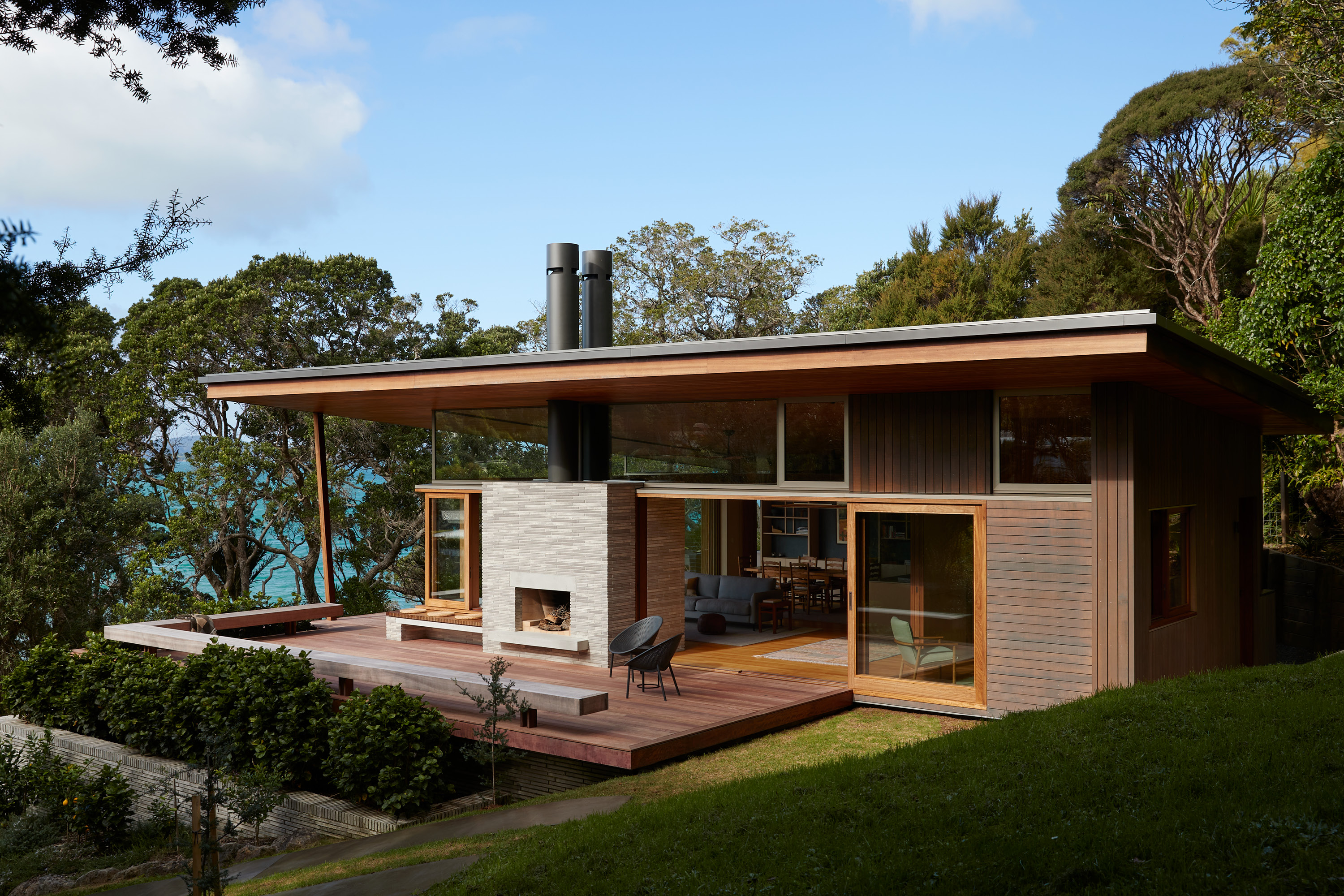
The design builds on ideas from Patchwork’s back catalogue, most notably their 2019 Hawk Ridge project. The rural retreat north of Tāmaki Makaurau Auckland pairs two cedar-clad boxes (one sleeping, one living) beneath a single sweeping roof, connected by an open-air kitchen and surrounded by deck. Both projects share a similar pragmatism, using simple forms, industrial materials and a layout that nudges everyday life outdoors. But where Hawk Ridge revels in its stripped-back simplicity, Awaroa features more space and more comforts – there’s a beautiful tension in the project between its elementary way of living and its refined material palette.
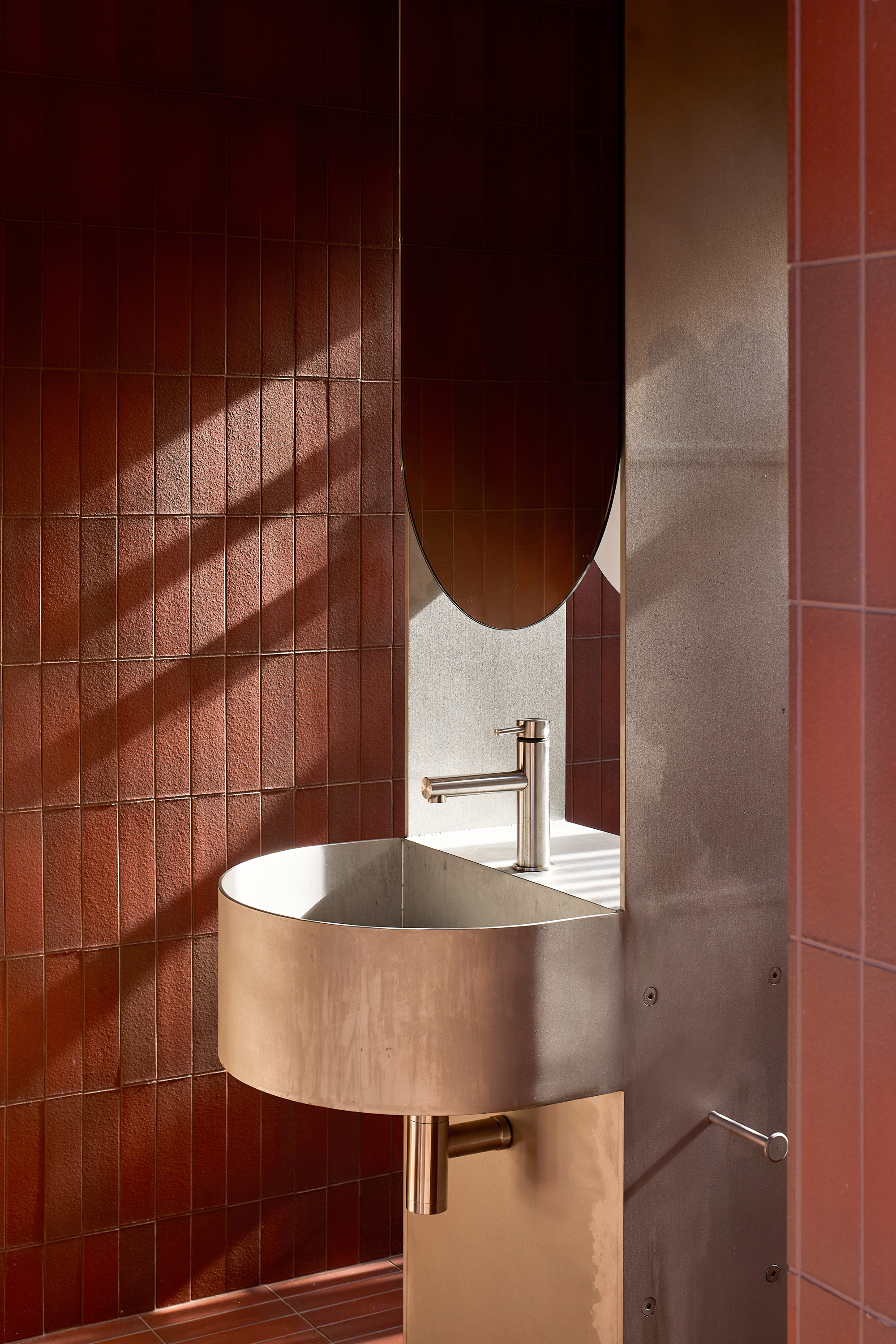
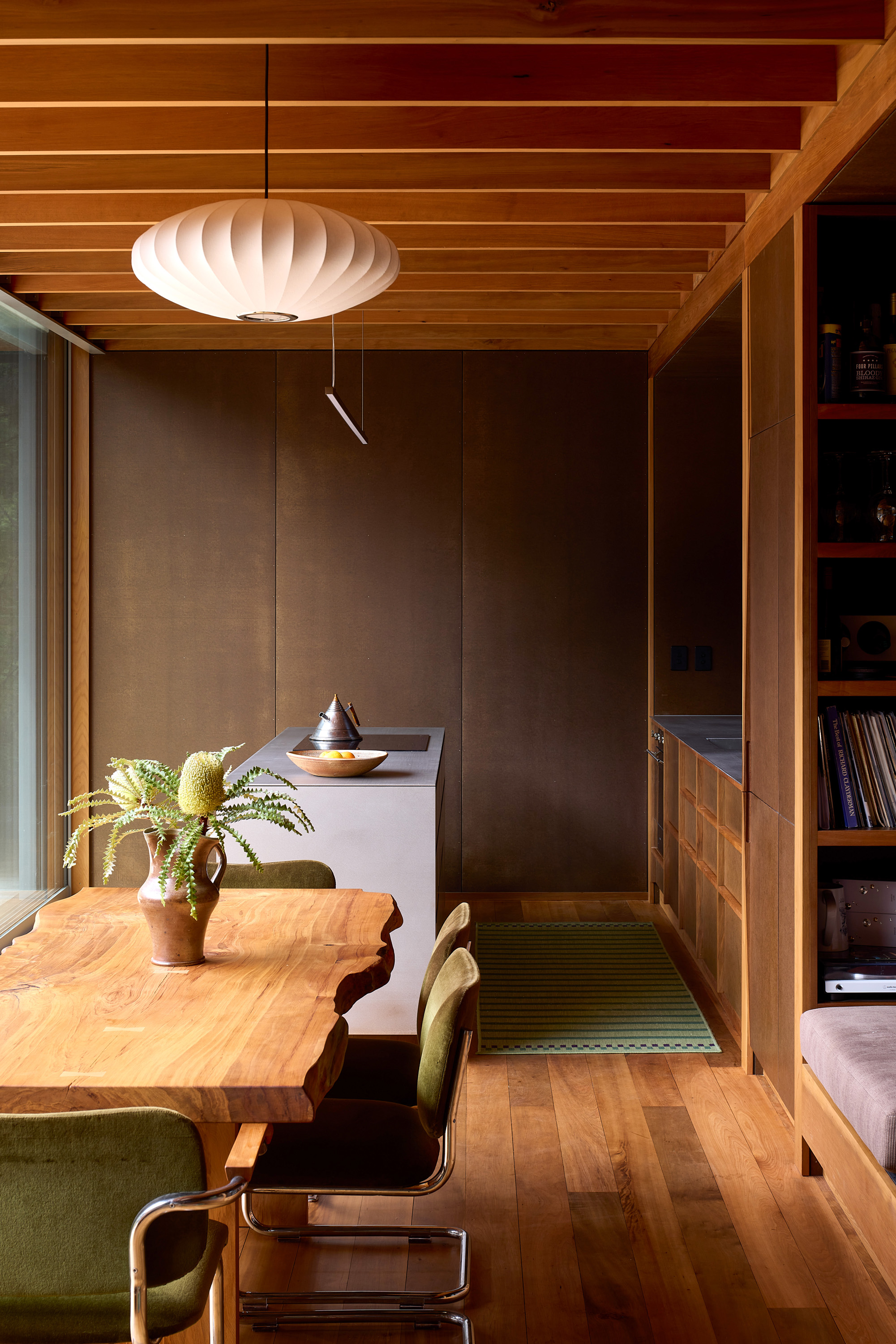
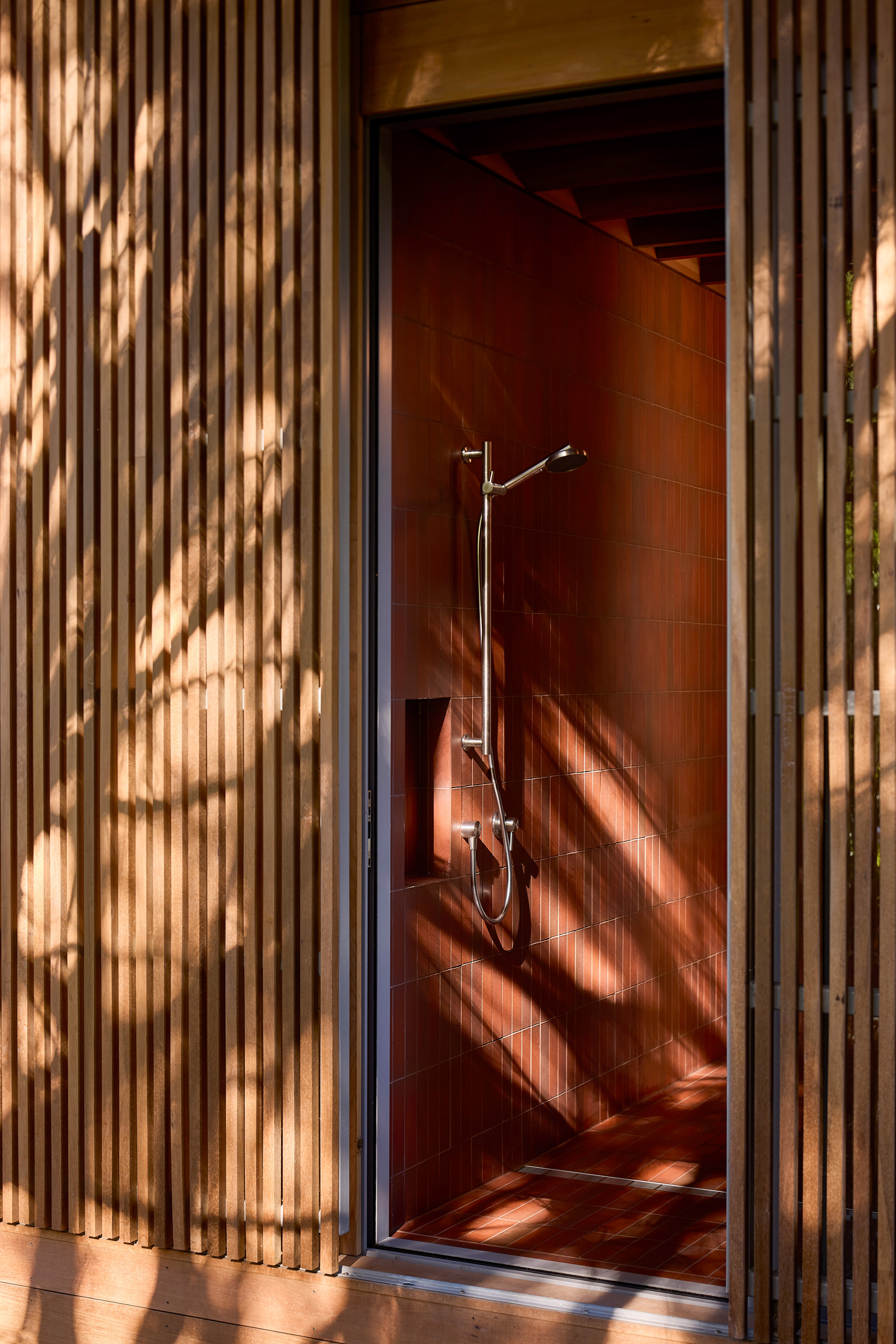
Public zones turn inwards to the courtyard, while private rooms open out to the bush through floor-to-ceiling glazing. In the bathrooms, robust stainless-steel units stand at the centre of rich, terracotta-tiled spaces as singular, solid objects. Inspired by Australian architect Sean Godsell, the all-in-ones combine basin, mirror, storage and lighting, with the toilet tucked behind. It’s campground utility meets hotel luxe, and the combination works wonders. “Plus, it’s pretty nice that you can sit on the loo and look out to the bush,” notes Patchwork director Ben Mitchell-Anyon.
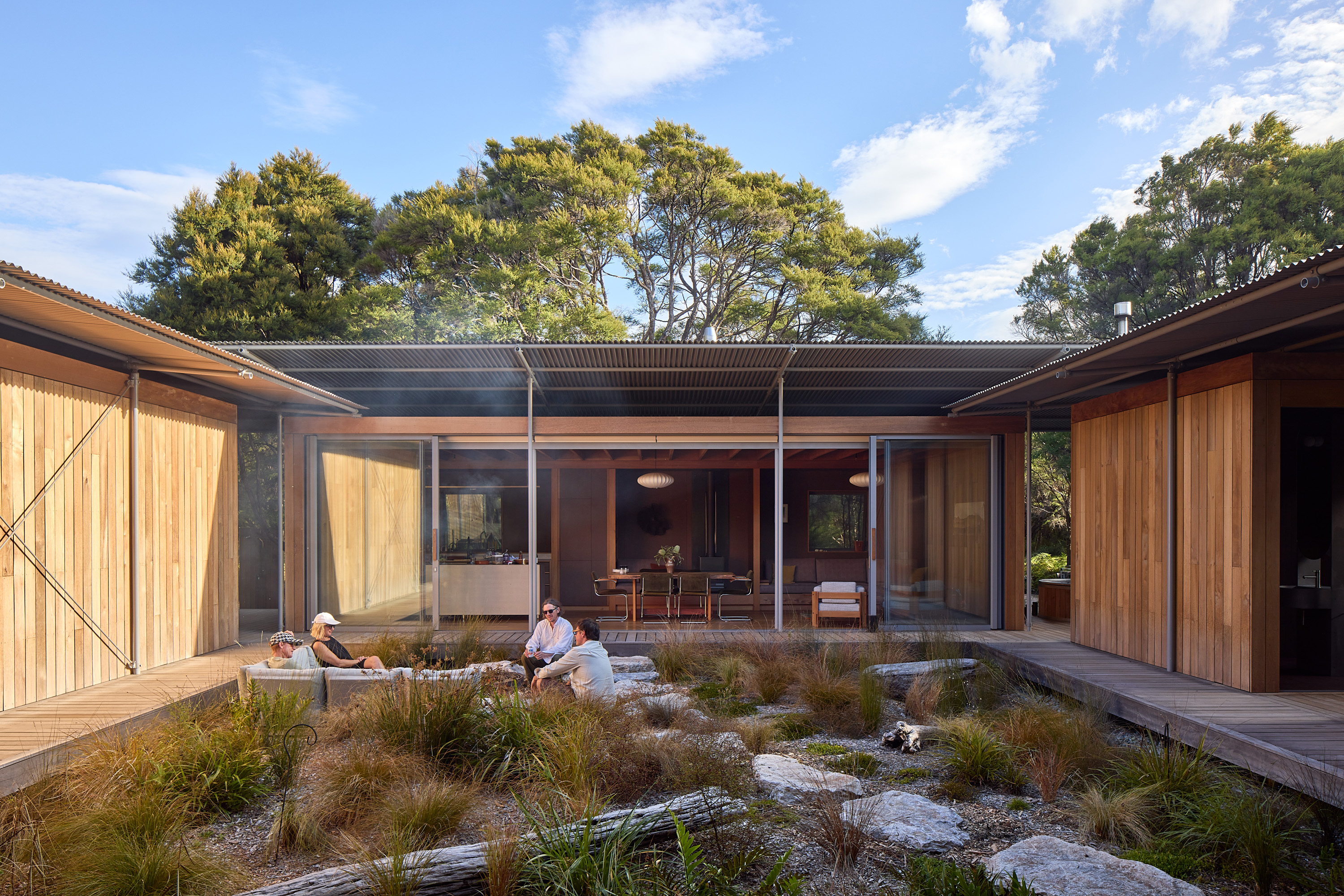
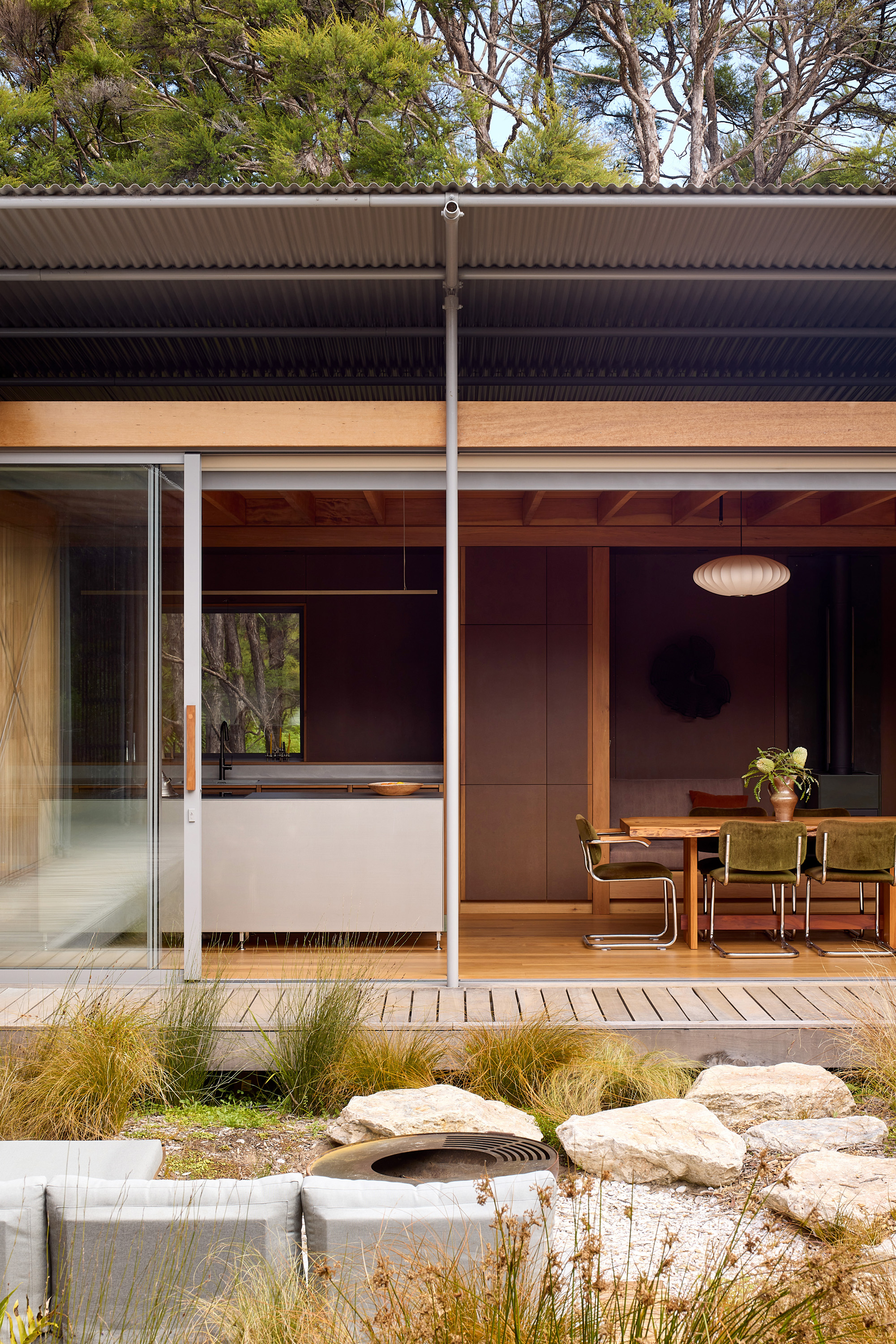
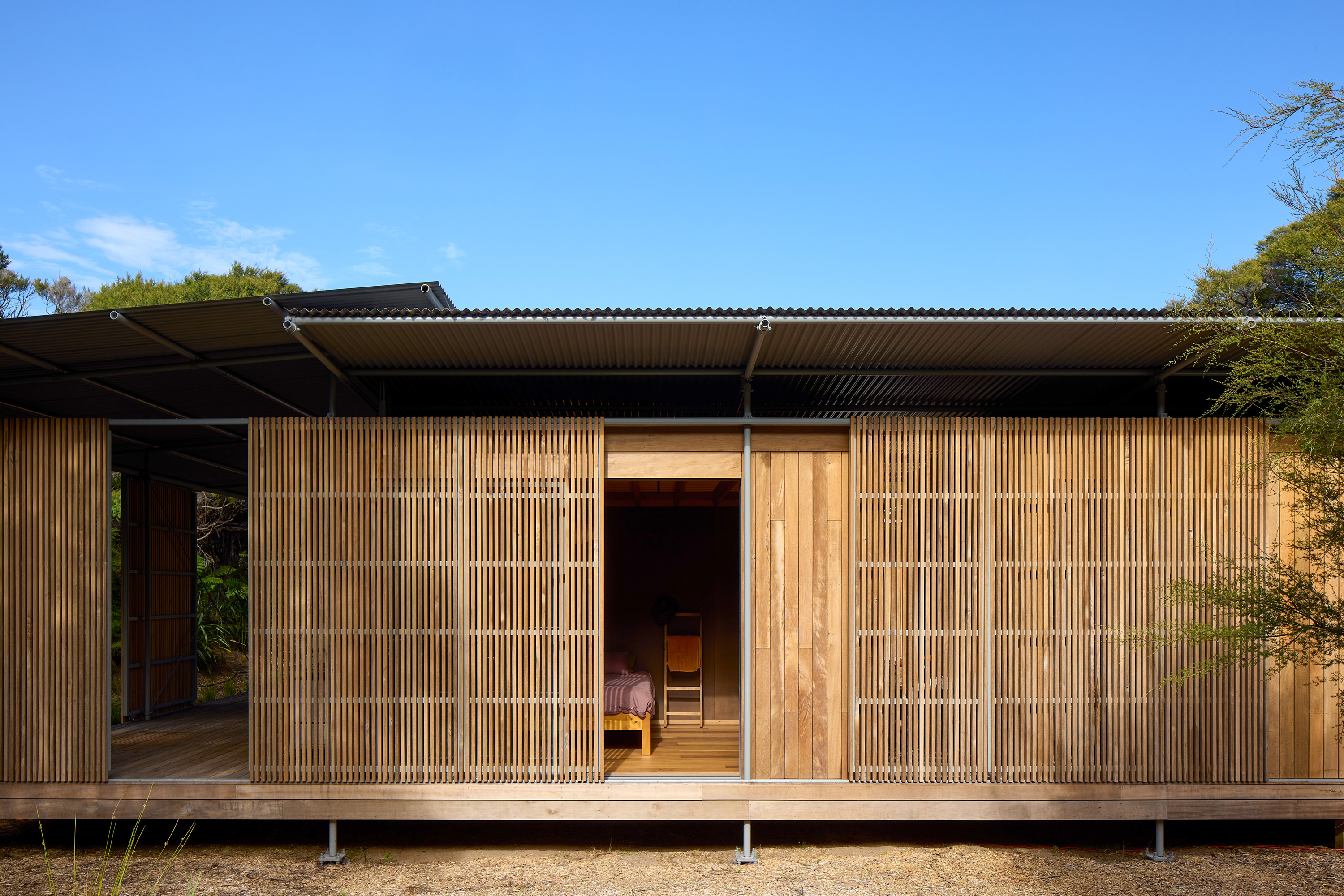
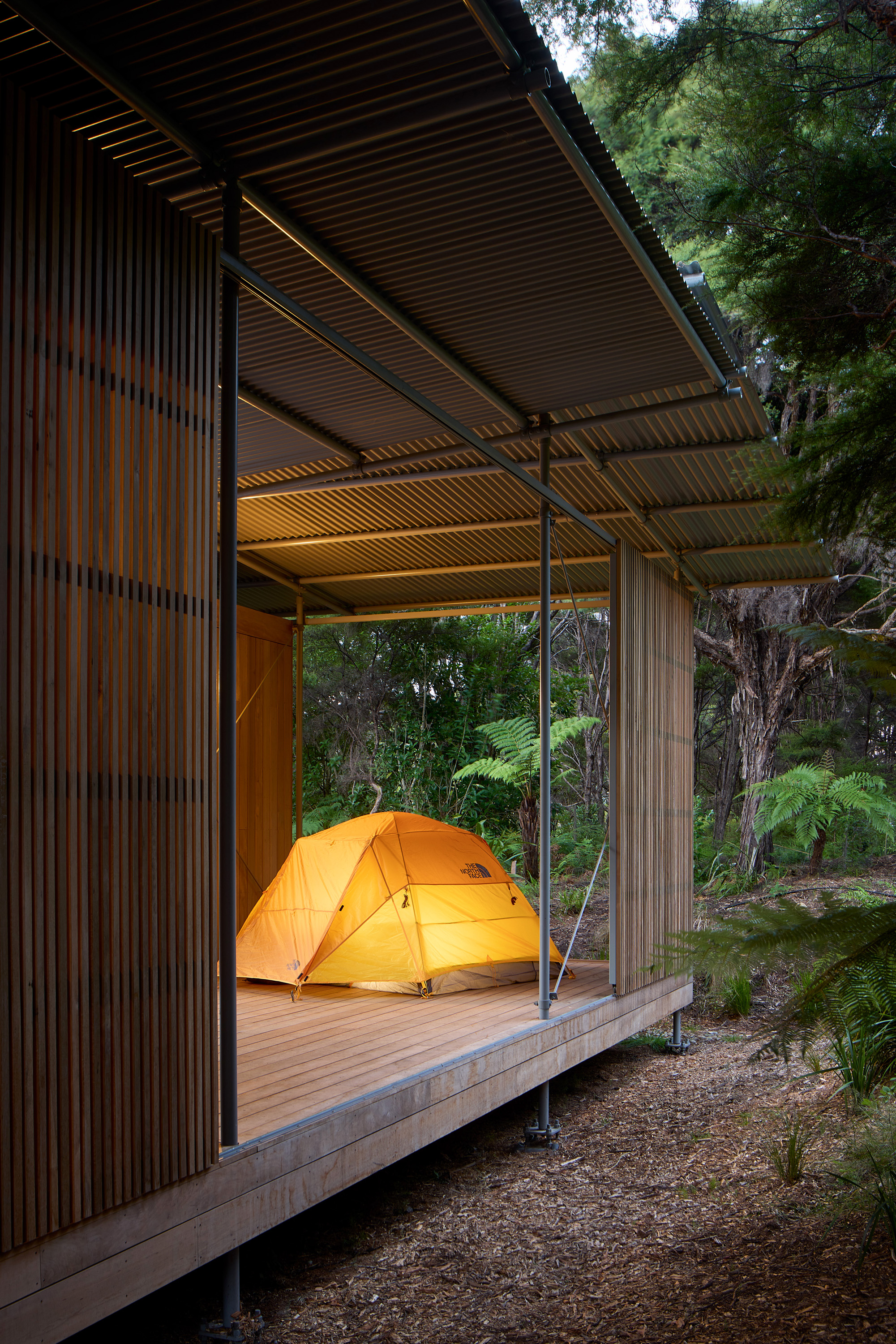
Within the tightly controlled material palette, Waikanae-sourced tōtara forms the structure, flooring, interiors and cladding. The repetition gives the architecture coherence, allows the buildings to recede into the surrounding bush, and also minimised waste, with offcuts repurposed as firewood rather than being hauled out of the bay. Instead of curtains, sliding timber screens control privacy, light and ventilation, so the bach isn’t static but shifts throughout the day, adapting to wind and sun. “You can also draw them across the open deck to form small outdoor rooms, or make a protected spot to pitch a tent,” says Wilson-Cartwright. The bathrooms, accessed off the boardwalk, serve bedrooms and tents alike.
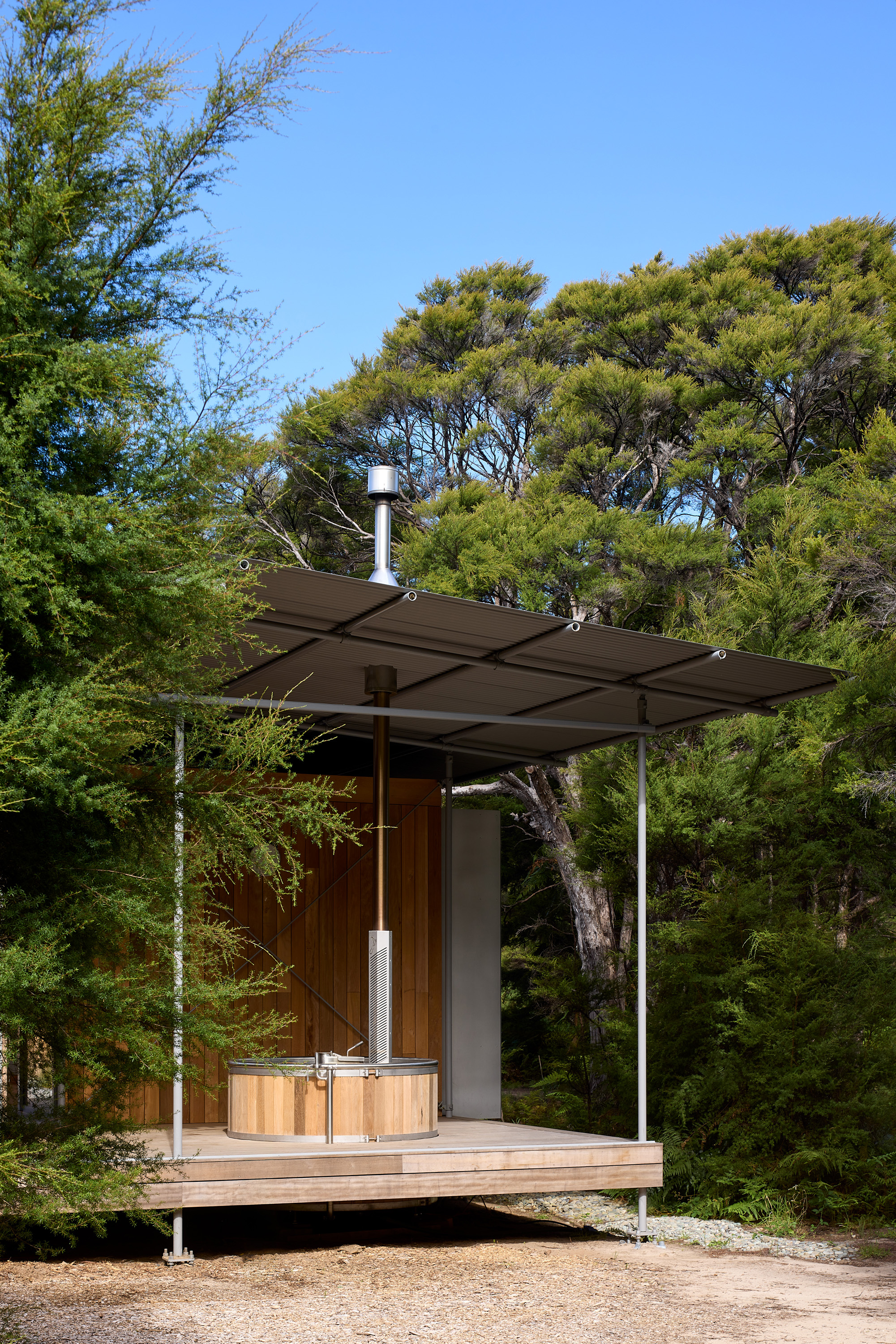
Concrete foundations were a non-starter, as they would have required a helicopter, a big chunk of the budget, and some delicate neighbour diplomacy. Instead, slim steel piles are driven directly into the ground, requiring no heavy machinery, digging or curing time. “It wasn’t just about touching the ground lightly, sustainability, cost and practicality,” says Ogle. “It also had to be super durable, because if something goes wrong here, nothing is an easy fix.” Modelled on steel scaffolding poles, the system’s not hidden or gussied up, but an honest expression of the structure that lifts the roof clear of the bach so it appears to hover overhead.
Made up of four planes – two that fall outwards, two inwards – the roof was prefabricated offsite then assembled in place. It has a deeper, stronger corrugated-iron profile than standard and, like Hawk Ridge, there are no gutters, flashings or downpipes. Instead, the iron sheets are angled to direct runoff down into swales that circle the bach. Although the off-grid property runs on rainwater, a nearby utility shed collects and stores all it needs, allowing the architecture itself to remain uncluttered.
The secluded location shaped every design decision. Every logistical challenge generated a considered architectural response: a restrained material palette, simple construction methods and minimal subcontractors. Builder George Williams-Lovelock, of Lovelock Carpentry and Building, lived on site in a tiny home throughout construction, joined daily by a single offsider – and eventually, Wilson-Cartwright himself. Taking leave from Patchwork to work as a labourer on the project, he moved into the tiny home, learning to build in the roadless bay with no phone reception, just two other locals and a lodge/bar that opens only in summer.
While living on site, the young architect took a shine to the golden boulders embedded in the beach. Deciding something similar would look nice in the courtyard, the team sourced several tonnes of rock from a Ruwaka quarry. “It’s obviously a ridiculous thing to load rocks onto a barge and bring them into the middle of the bush,” says Ogle. But the extra effort paid off.
It requires meticulous planning to make an off-grid bach feel effortless, particularly when it ebbs and flows between two occupants and a full house. The pod layout lightens the load, prioritising flexibility, and the designers credit Baker and Molina for backing the unconventional approach. “It was brave. They really put their trust in us and ran with it,” says Wilson-Cartwright. Shaped by the challenges of its remote setting, the response turns constraint into opportunity. The result is a bach that repeatedly draws life outdoors, whether for a shower, a sunset or a cup of tea. In Awaroa Bay, that’s not an inconvenience, that’s the entire point.
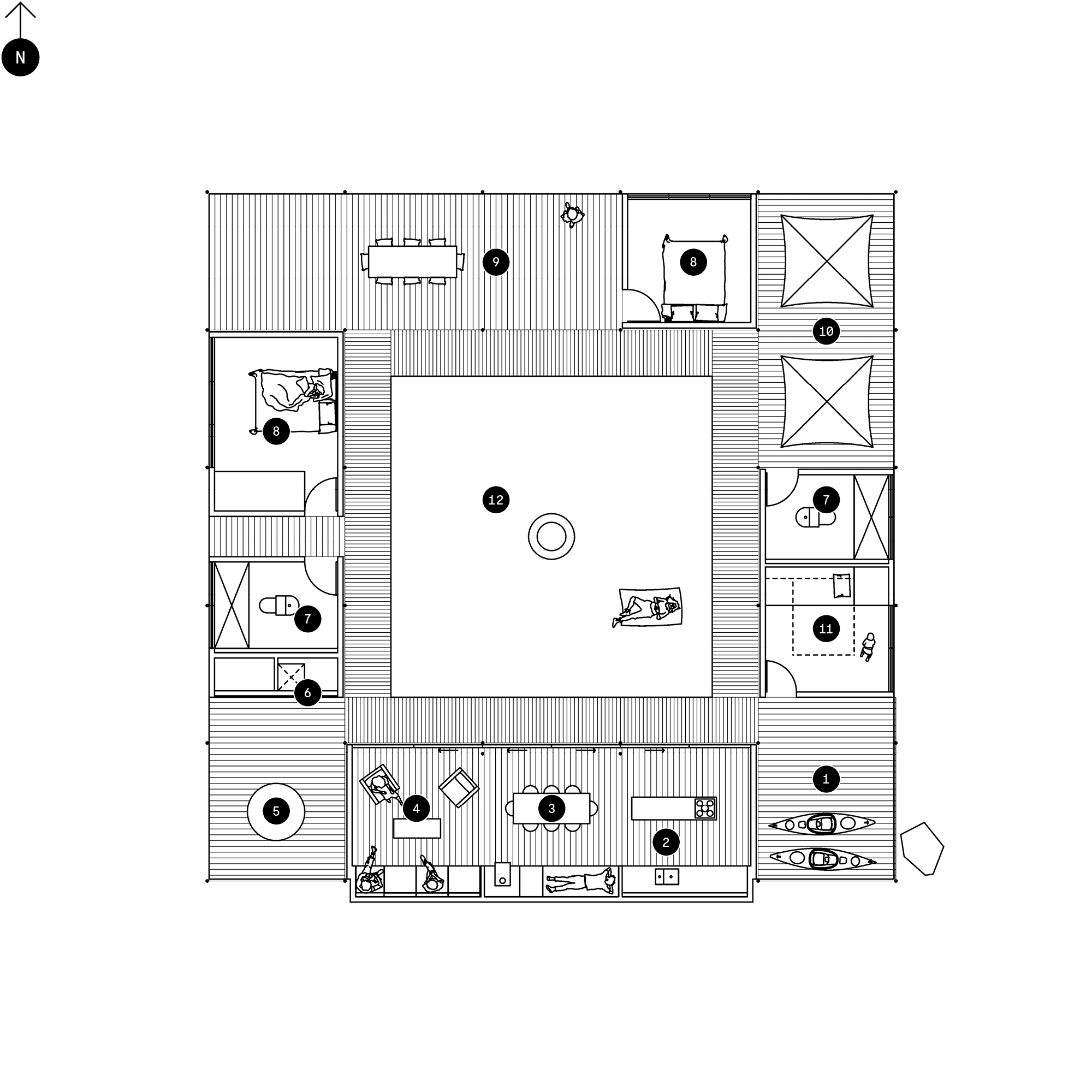
1. Entry
2. Kitchen
3. Dining
4. Living
5. Hot Tub
6. Laundry
7. Bathroom
8. Bedroom
9. Outdoor Dining
10. Tents
11. Bunkroom
12. Courtyard
Related Stories: