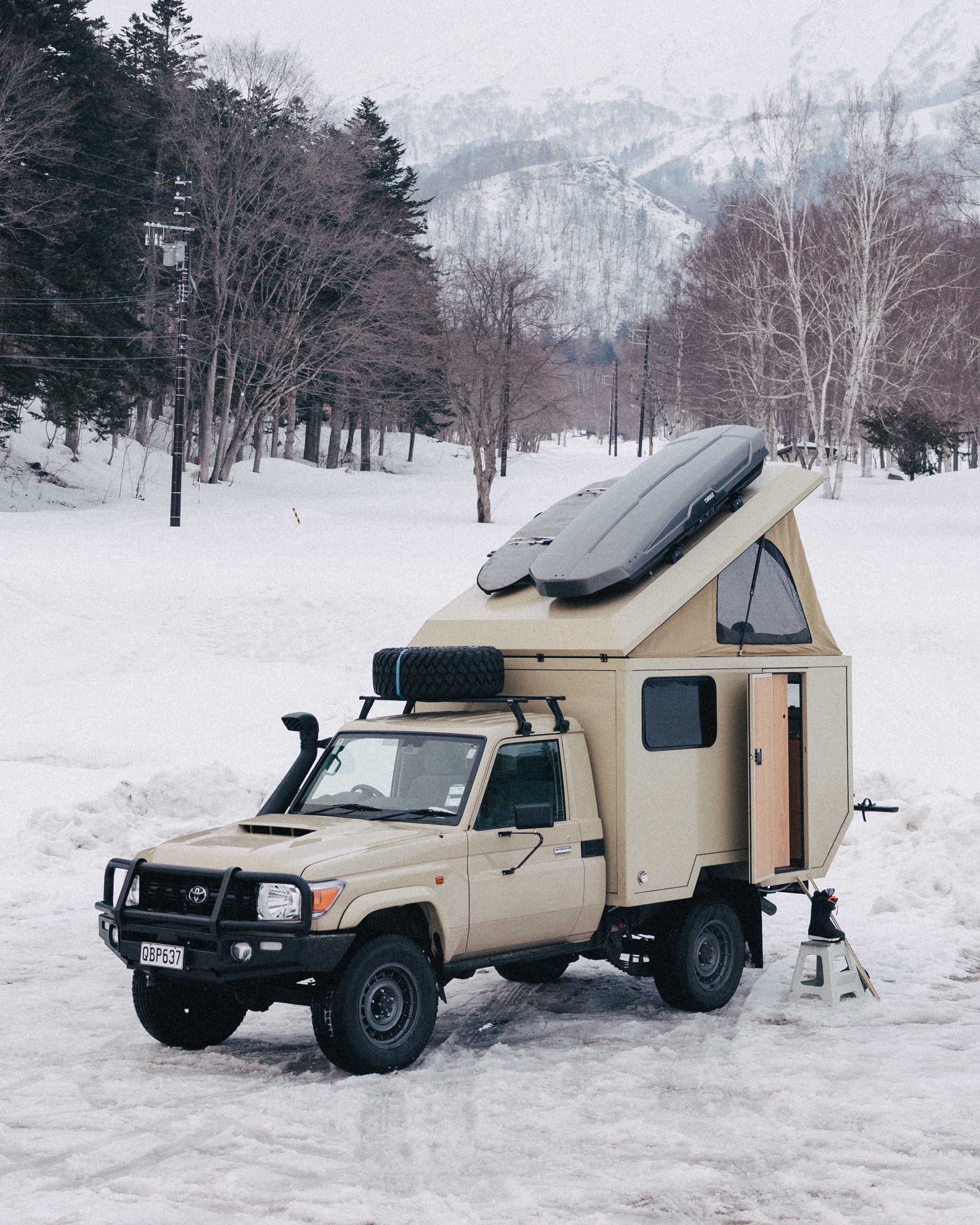
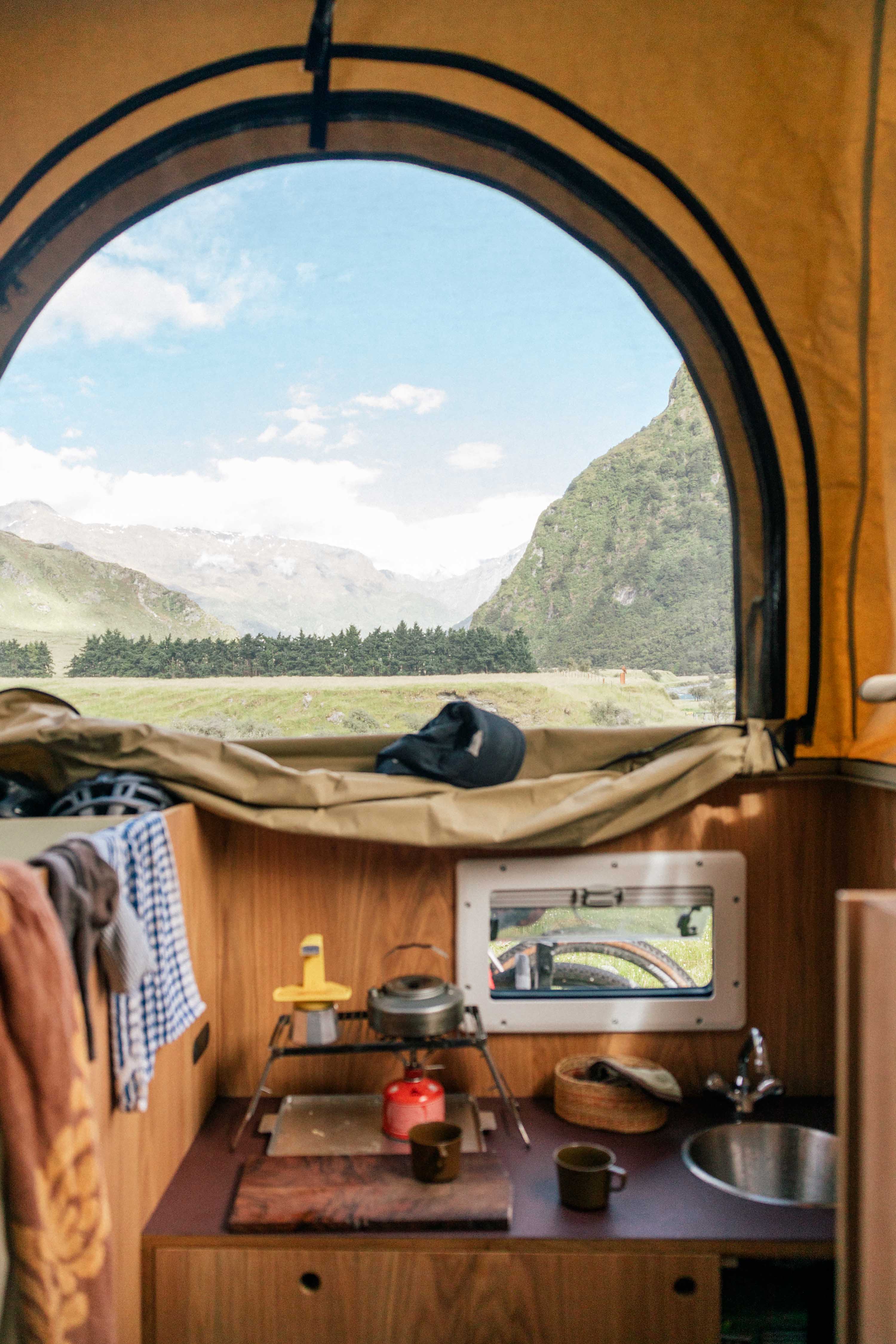
A good-looking camper is almost an oxymoron. Most are all function and no finesse – a mash-up of faux wood, laminate, and high-tech capabilities. Not this kitted-out 70 Series Toyota. The brainchild of photographer Joe Leeper and interior architect Ruby Morgan-Potts, this overlander is a rolling showcase of what’s possible when decent design and determination combine.
The beige beast is the latest in Leeper’s long line of car-to-camper conversions. From early days sleeping in the backseat, to a pop-top truck, this Land Cruiser is the most sophisticated iteration yet, built to comfortably house the couple for months on the road. “It’s the first one I’ve had a hand in designing,” says Morgan-Potts, whose background at Jessica Close Interiors shows in the precise planning. “The main drivers were to make it beautiful, durable and functional.”
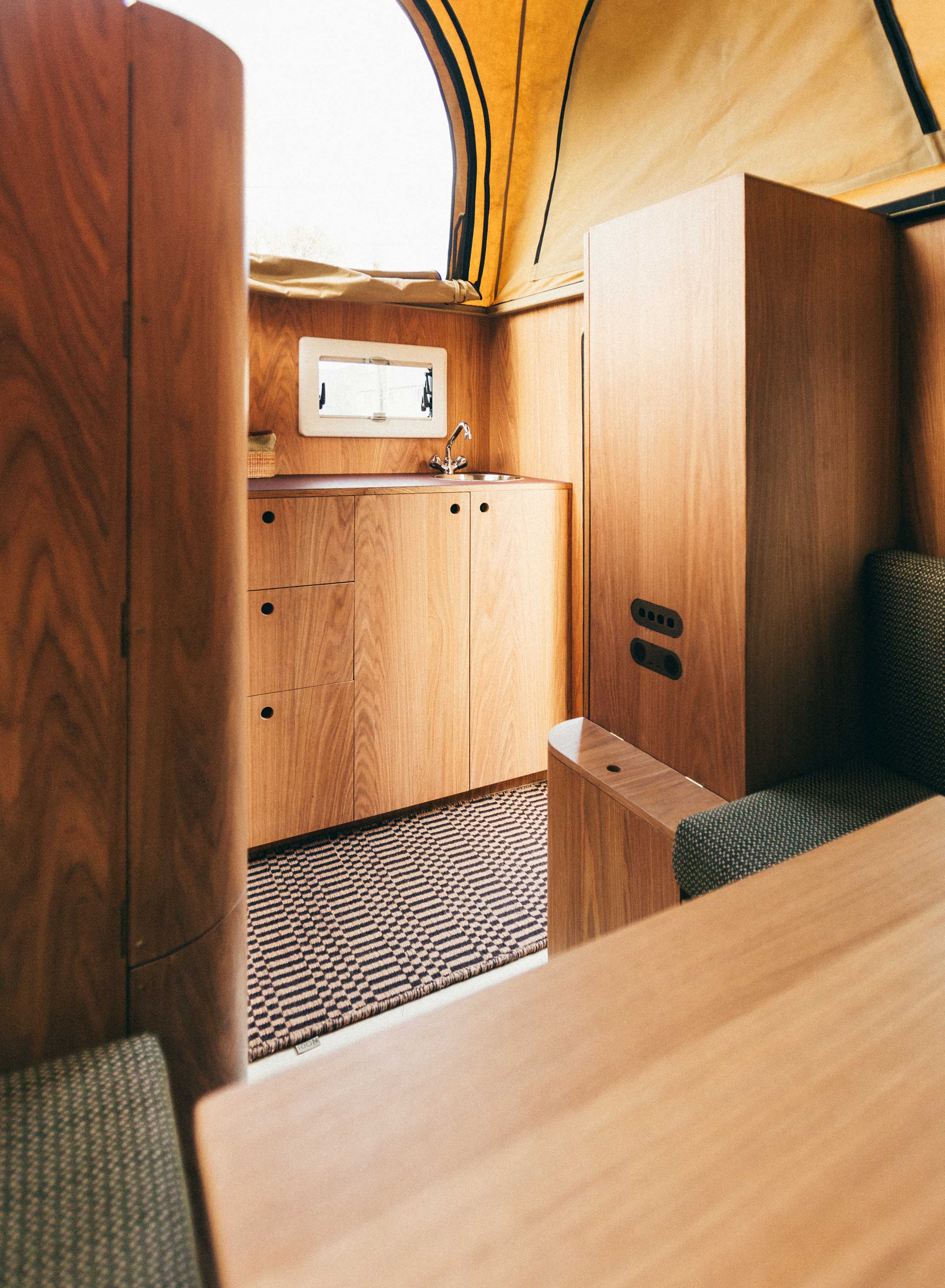
Balancing Danish-inspired minimalism with sensible spatial organisation, Morgan-Potts has squeezed a lot in. There’s a kitchen, a toilet, five generous storage areas, and a double-bed-slash-dining-table-slash-lounge. “In the old truck, you had to put the bed up before you could use the kitchen, so that needed to change,” says the interior architect. “Here, Joe can make us a cup of coffee, then we get straight back into bed with our books.” Bliss.
While the design fell largely in her camp, fabrication was on Leeper and his talented mates. Joyless off-the-shelf fittings were out of the question, so they called in Michael Gilling of Xylo Woodcraft for the joinery. Leeper (a trained surveyor) apprenticed on the job, slowly being handed more responsibility until he held the reins. The joinery is made from oak-veneer-topped plywood. Simple circular finger pulls fit with the minimalist aesthetic. Hidden internal latches lock drawers in place, muting the cupboard concerto that often accompanies a moving camper.
The couple’s approach has resulted in a detailed and personal experience. Morgan-Potts sewed the squabs from recycled ocean-plastic fabric, while Leeper stitched the pop-top tent, and even crafted wee wooden coffee-cup rests that slot into the same recess as the dining table. The tech (fridge, heater etc) and the switchboard are discreetly tucked away, powered by solar panels and batteries that charge while driving. Just 20 minutes on the road provides the truck with eight hours of hot water.
After a few short trips around Aotearoa last summer, the couple put the rig to the test with four months in Japan. From Hokkaido’s ski resorts to the mountains of Kyushu, the truck nailed its maiden voyage. “The only issue was that we had to take the bikes off the back before every ferry ride to avoid being classed as a lorry,” says Leeper. Easier said than done in a Japanese winter gale.
This summer, they’ll roam Aotearoa again and look to ship the truck further afield in the new year. Maybe to Europe, maybe South Korea. While Leeper’s already been approached by curious admirers hoping to commission a similar build (one man literally chased him down the street), he’s in no rush. “I’m open to it,” he says, “but the whole idea was for the truck to give us freedom. Now that we have that, I think we’ll just enjoy it for a while.”
Related Stories: