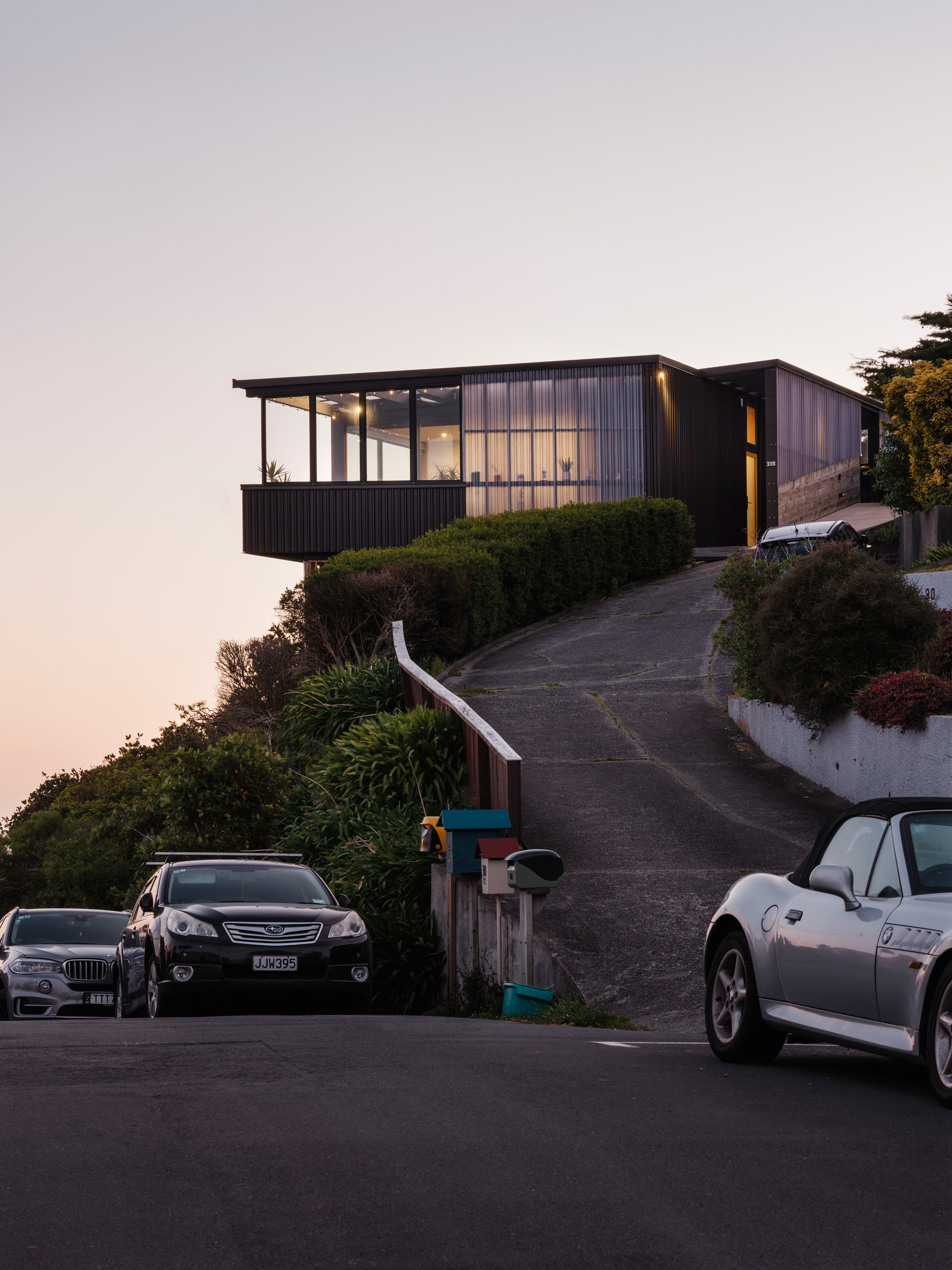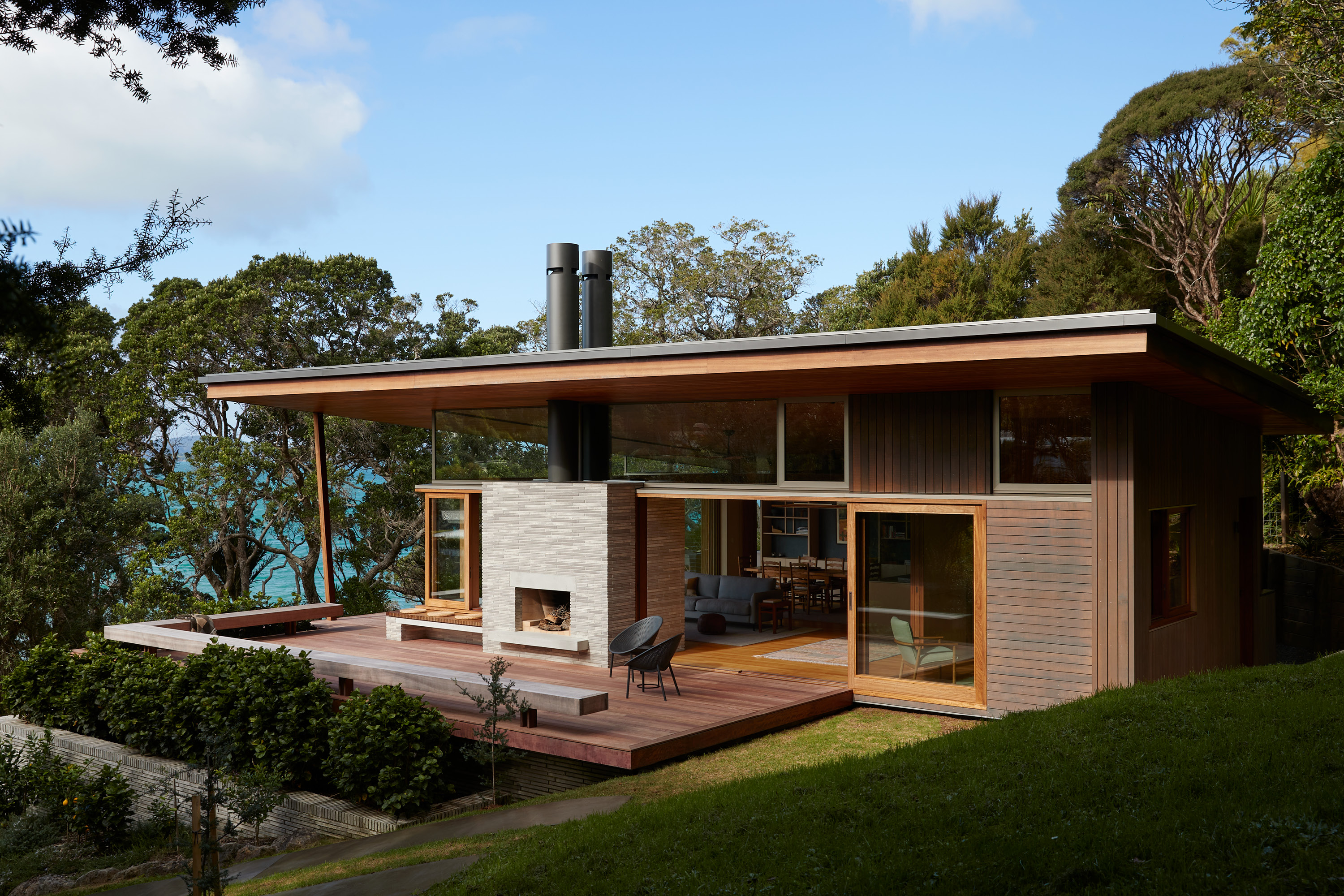
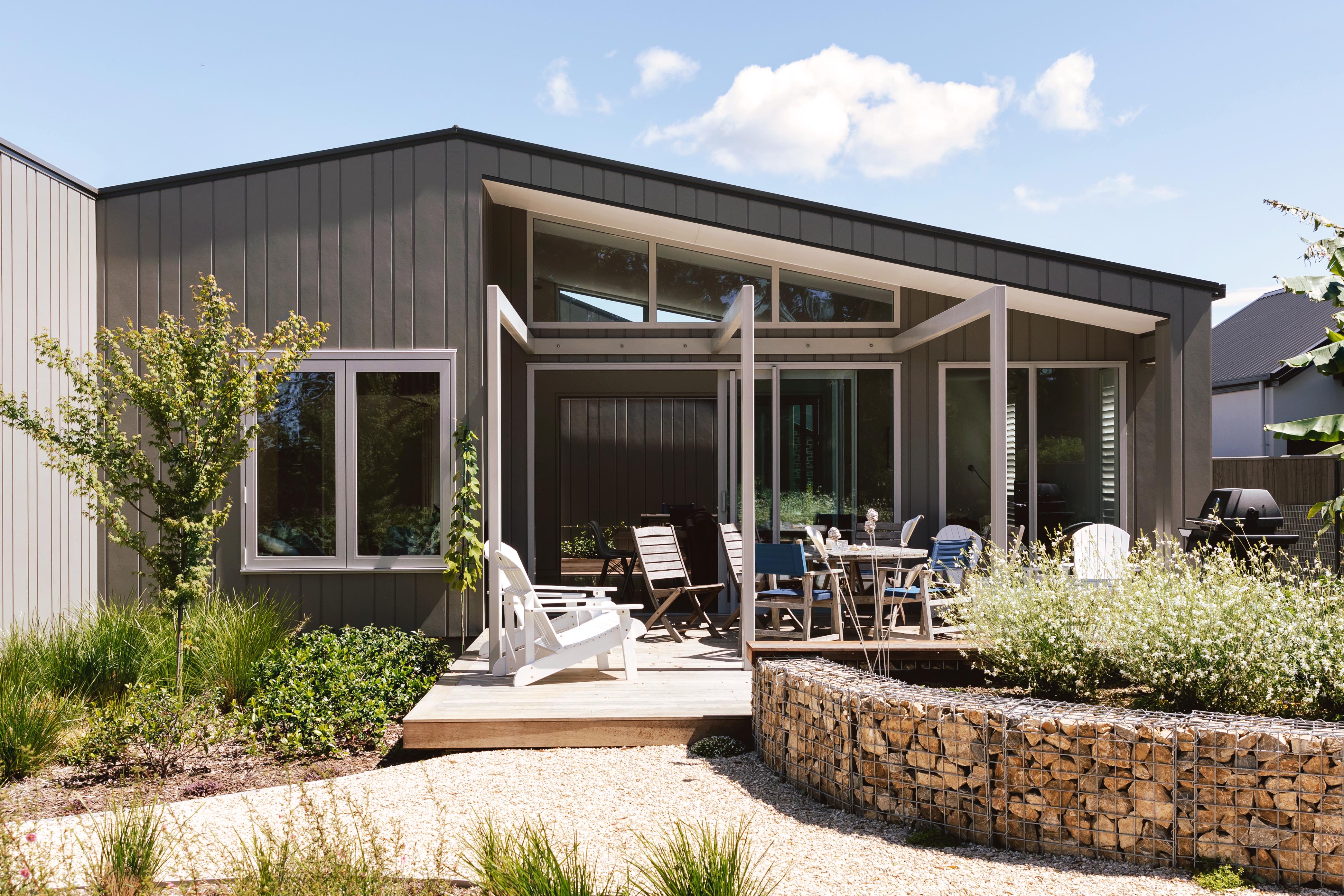
Stylish, energy efficient, and made for outdoor living in a famously balmy part of the country. Seeing the potential of the location, Tony Karsten, of Karsten Architecture Ltd in Whakatū Nelson, went for a passive solar design with a barn roof, a smart-simple layout and a thread of DNA from an Ernst Plischke beach house.
“The home,” says Karsten, “was to be low maintenance, energy efficient, and have easy outdoor living. Our response was a design based on solar passive principles, with a simple, yet clever layout which achieves a functional and beautiful home, enhancing the wellbeing of its occupants.”
The offset gable and lofty pitched ceiling amplify the sense of space. A clerestory of high mounted electric windows boosts ventilation and natural light, while a small mezzanine provides room for storage and a play area for children. The living space opens on two sides: to a sheltered west-facing courtyard and a north-eastern deck overlooking a public walkway and reserve.
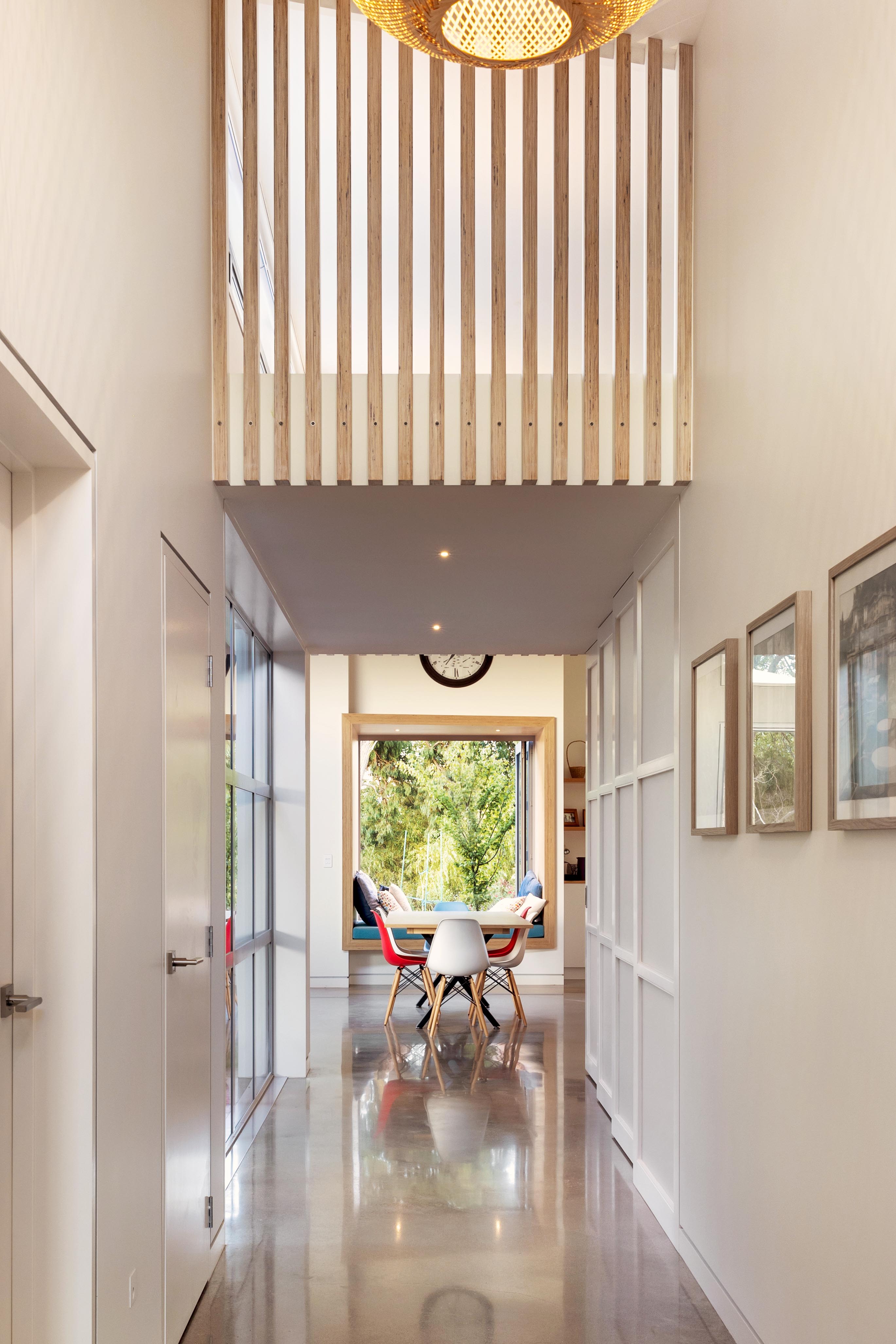
Laminated veneer lumber (LVL) battens form barriers at each end of the mezzanine, permitting natural light into the entrance hallway. Their sides are painted white to achieve a refined aesthetic. Picture frames constructed from LVL further enhance the design’s cohesion.
The fully insulated, polished concrete slab is designed to be exposed to direct sunlight for maximum solar gain. A heat recovery ventilation system supplies fresh air from outside, recovering up to 85 per cent of the heat from exhausted air. Sensors on hot-water pipes increase ventilation when hot-water demand is high, while a heat pump efficiently supplies both underfloor heating and domestic hot water through a shared cylinder.
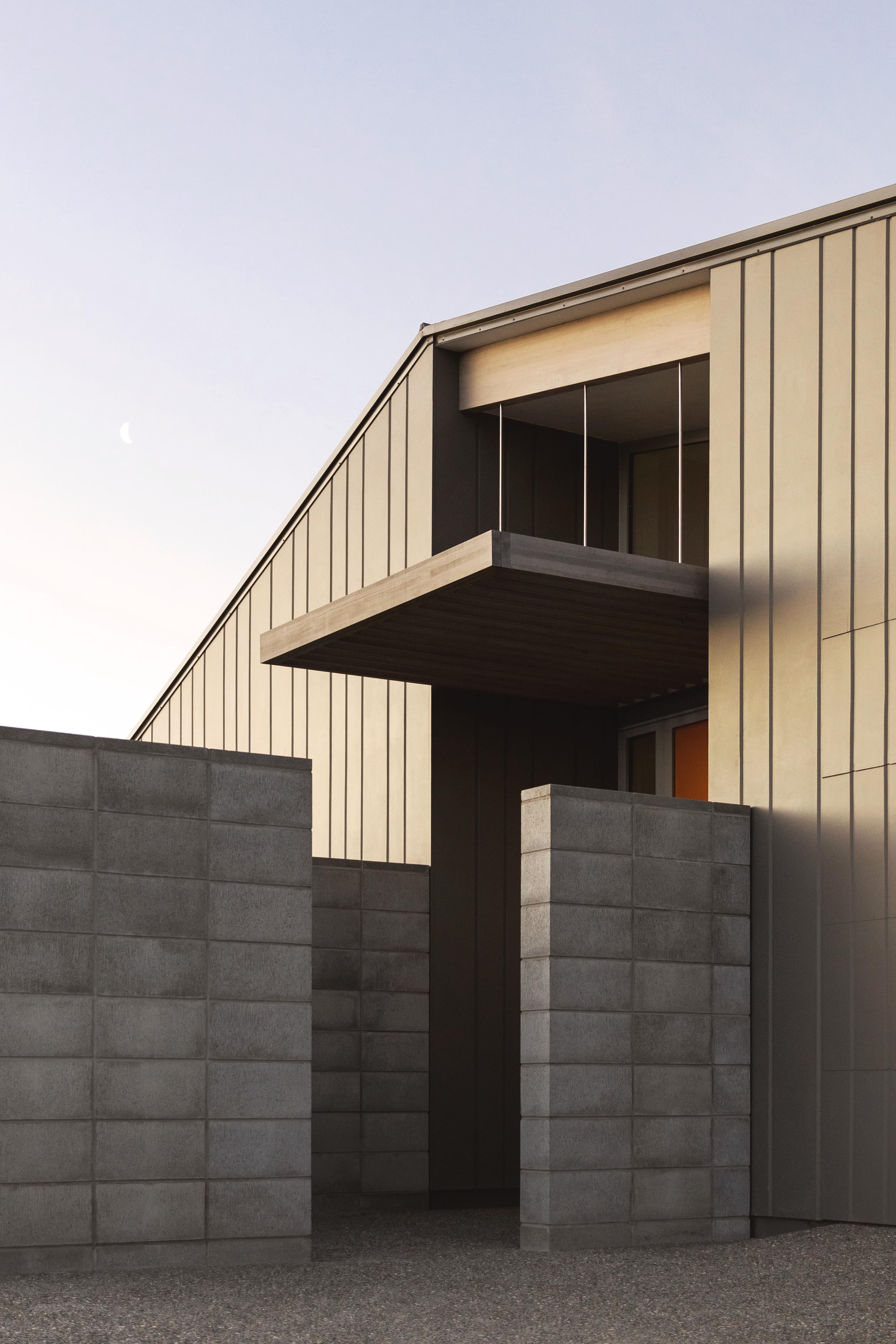
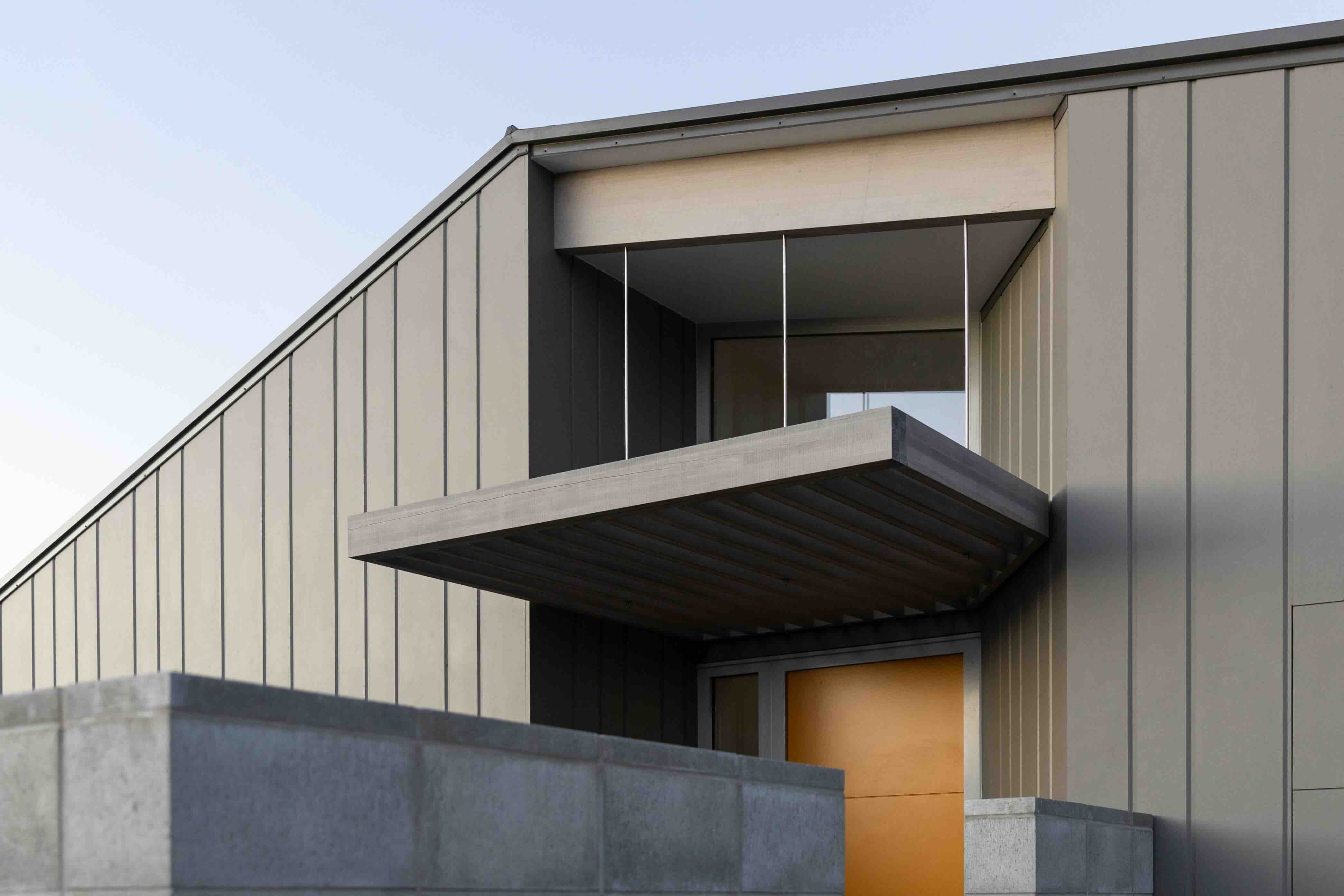
Aesthetically, the most striking feature of the build, particularly from the street, is the Oblique™ Weatherboard cladding from James Hardie – “a durable, low-maintenance exterior cladding that will weather well and minimise maintenance costs”, says Karsten. Importantly, it also creates a bold, unified visual mass, enlivened by the strong vertical rhythm of the cladding profile.
Karsten chose a combination of 200mm and 300mm Oblique™ Weatherboards, “which creates interest and allows flexibility of installation – so you don’t end up with a slither of cladding at the end of a run.” The garage door, meanwhile, is crafted from treated plywood to exactly match the profile of the weatherboard.
The structured feeling of the cladding is brought through the house in the negative detailing around windows, doors and skirtings. A restricted palette ensures each room feels spacious and connected to the others in a flowing, unified whole.
A concrete-block privacy wall at the front entrance, and low gabion walls throughout the landscaping provide beautifully balanced contrast to the texture and rhythm of the cladding. The overall result is a stunning exercise in stylish minimalism, with a distinct vernacular feel – a Karsten signature.
James Hardie
Related Stories: